Welcome, Booster T2!
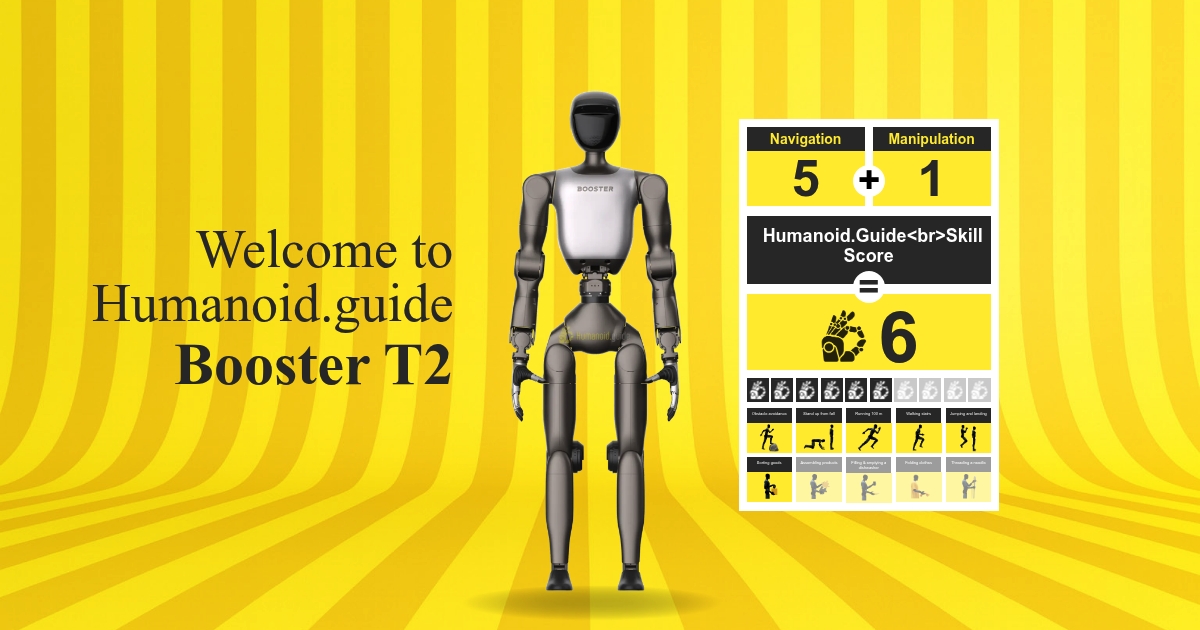
Booster T2 is a bipedal humanoid built as Booster Robotics flagship embodied AI platform for developers, universities, and research teams that need a capable machine for real world motion and task learning. It stands 140 centimeters tall, weighs 43 kilograms, and combines 31 total degrees of freedom with 12 in the hands, giving it a broad physical range for locomotion and upper body interaction. An overall skill score of 6 places it in the capable tier, driven by a top tier navigation rating of 5 out of 5 and an early manipulation rating of 1 out of 5. T2 is designed for fast, responsive operation with a Thor T5000 compute platform, cameras in the head and waist, and connectivity that includes Bluetooth 5.2, Ethernet, USB, Type C, and Wi Fi 6. It is built for real physical work, with up to 10 kilograms of payload, human safe operation, industrial grade joint bearings, a top speed of 7 kilometers per hour, and about 2 hours of runtime per charge.
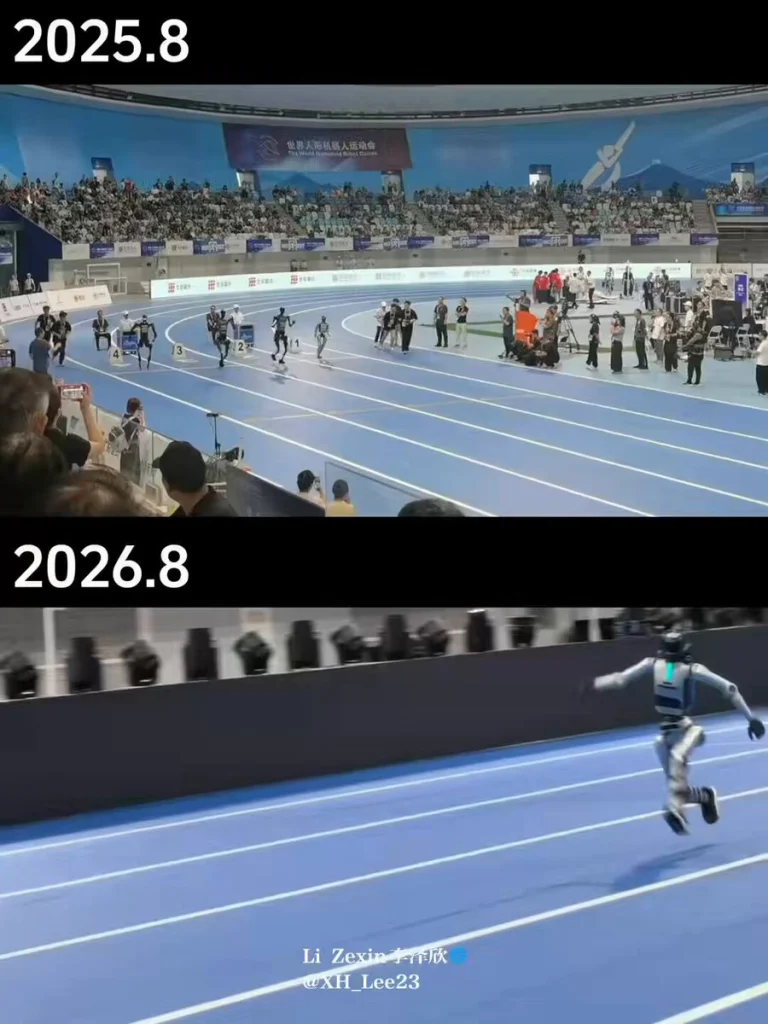
Movement is the strongest part of the package. With navigation rated 5 out of 5, T2 supports obstacle avoidance, can stand up after a fall, can run 100 meters, and can walk stairs, making it useful for dynamic indoor testing where terrain and layouts change during operation. Its capability set also reaches into practical manipulation tasks such as sorting goods, assembling products, filing and emptying a dishwasher, folding clothes, and threading a needle. That mix makes it relevant for embodied AI research that spans perception, balance, arm control, and hand use in a single platform. For labs and developer teams, the value is not just one headline demo, but a broad task envelope that connects mobile autonomy with everyday object handling and structured benchmark work.
Booster T2 is already in production, which matters for teams that want a deployable research robot rather than a concept unit. As Booster Robotics current flagship, it builds on the companys earlier T1 and signals a step toward more complete embodied AI systems that combine onboard compute, vision, whole body mobility, and configurable end effectors in one research platform. Its main markets include education, research labs, competitive robotics, and broader research programs where repeatable access to a humanoid platform can accelerate experimentation. In the wider humanoid landscape, T2 stands out as a practical Chinese entrant focused on giving developers a capable navigation stack and a flexible base for studying how robots perceive, move, recover, and act in human environments.