
Framework puts humanoid operating room robots in support roles
A perspective in npj Digital Medicine proposes a staged path for introducing humanoid robots into operating rooms, beginning with laboratory and simulation testing before any clinical use. According to News-Medical, the authors argue that evidence for safety, clinical benefit, or improved surgical outcomes is still lacking, so early roles should stay low risk and closely supervised.
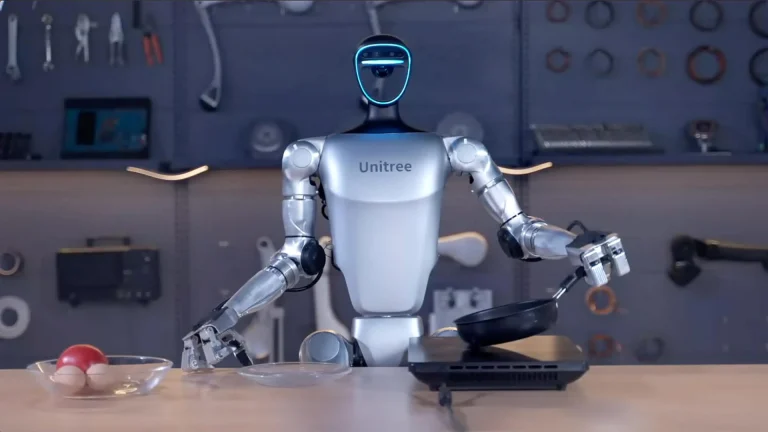
The paper, by Kernbach, Brat, Topol and colleagues, frames humanoid operating room robots as embodied AI support agents rather than autonomous surgeons. Candidate early tasks include stocking supplies, managing equipment, helping prepare and reset operating rooms, supporting cleaning and environmental services, and responding to visual or verbal instructions.
More consequential work, such as selected tasks associated with scrub and circulating nurses, would come only after validation. Direct high risk surgical maneuvers remain outside the proposed early deployment framework.
A support role, not a surgical replacement
The authors distinguish the concept from conventional surgical robotics, which is largely built around precision manipulation at the surgical field. Humanoids are being considered because bipedal mobility and bimanual dexterity could let them operate in human designed rooms, use drawers and touchscreens, and interact with existing equipment without a major rebuild of the operating suite.
The paper describes two possible OR support roles. A humanoid circulating nurse would maintain situational awareness, manage supplies and equipment, operate non sterile devices, and coordinate with teams outside the room. A humanoid scrub nurse would help maintain the sterile field, prepare and deliver instruments in the correct orientation, monitor for contamination, and anticipate procedural steps.
Those are demanding assignments for any robot. The authors point to vision language reasoning, real time perception, bimanual dexterity, and speech based confirmation as enabling technologies, but the article is careful not to treat those capabilities as clinically proven.
Validation is the hard part
The proposed pathway starts with preclinical validation and virtual simulation. Core competencies such as perception, grasping, and handoffs would need to be tested separately from the robot’s ability to understand instructions and complete tasks under human oversight.
The safety list is long. Humanoids in an OR would have to tolerate balance loss risks, hardware faults, electromagnetic interference, fluid exposure, communication instability, and the ordinary messiness of a high stakes clinical environment. The authors also flag privacy and governance issues tied to continuous intraoperative data capture, along with the need for informed consent that explains what the robot will do and how much autonomy it has.
The perspective also leaves room for a practical counterargument. Stable wheeled or task specific platforms may be safer and more cost effective for clearly defined hospital roles, at least initially. The humanoid form is attractive because it can fit into human spaces, but the authors acknowledge that whether it is ultimately the right form for operating rooms remains unresolved.
Source: news-medical.net