China humanoid robots scale output as buyer demand lags
China’s humanoid robot sector is adding production capacity faster than many customers appear ready to absorb it, according to an Associated Press report that contrasts large order claims with still limited commercial use cases.
The country’s robot makers say they have thousands of orders from government and private buyers for humanoids used in settings such as postal centers, hotels and coffee chains. Matrix Robotics, a Shanghai based startup, told AP it has received roughly 1,000 orders for its MATRIX-3 humanoid, a 1.7 meter robot priced at around $99,000 and equipped with hands for finely controlled movements. The company has produced only a few hundred units so far, but says it could deliver 5,000 this year if orders support that output.
New! 2026 Humanoid
Robot Market Report
198 pages of exclusive insight from global robotics experts — uncover funding trends, technology challenges, leading manufacturers, supply chain shifts, and surveys and forecasts on future humanoid applications.

now Google DeepMind
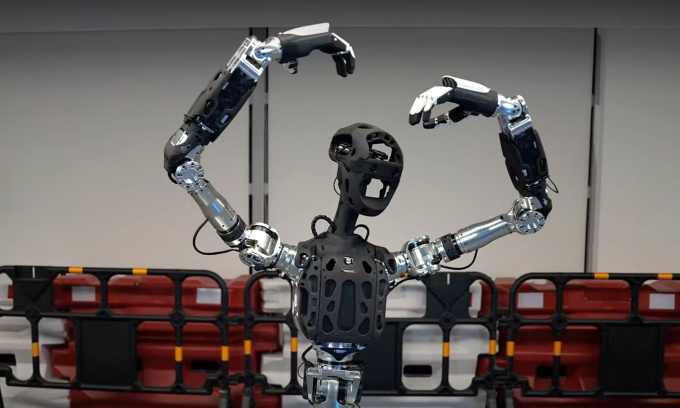
EngineAI, based in Shenzhen, is pitching full size humanoids for roles including security guard and museum guide. Its basic edition costs 180,000 yuan (about $26,600). The company also demonstrates dancing and boxing, which illustrates a common tension in the sector: many machines are highly visible in demos, while routine work in less controlled environments remains harder.
Key facts
- Matrix Robotics MATRIX-3: Nearly 1.7 meters tall and priced at around $99,000.
- Matrix orders: Roughly 1,000, with only a few hundred robots produced so far.
- China in 2025: More than 140 humanoid robot manufacturers and more than 330 models, according to the Ministry of Industry and Information Technology.
- 2025 shipments: More than 13,000 humanoids, with AGIBOT and Unitree each shipping over 5,000, according to Omdia.
- 2026 forecast: Morgan Stanley expects China’s humanoid sales to more than double to around 28,000 units.
Manufacturing strength is ahead of many applications
AP frames China and the United States as the two dominant centers for humanoid robotics research. Morgan Stanley estimates the humanoid robot market could reach $5 trillion. By AP’s account, the United States has an advantage in high level AI computing for robot “brains,” while China has a stronger position in mass production, hardware supply and data collection for training.
The supply side is expanding quickly. China had more than 140 humanoid robot manufacturers and more than 330 models in 2025, according to the Ministry of Industry and Information Technology. The Chinese government also warned last year about bubble risk in the industry, citing the gap between commercialization claims and practical applications.
Some demand is real, but a large portion appears to be institutional and experimental. Morgan Stanley said many of the more than 2 billion yuan (about $295 million) in Chinese humanoid orders in 2025 came from state owned enterprises, including deployments or purchases for power plants, data centers and entertainment. Corporate and academic labs are also buying robots for research.
Samm Sacks, a senior fellow at New America focused on Chinese technology, told AP that most humanoids are still more performative than functional and struggle in messy, unpredictable environments. Chibo Tang of Gobi Partners, a venture firm that invests in robotics companies, put the demand problem more directly: “The use cases of these robots are still so limited.”
Lower prices do not solve the buyer problem
Chinese manufacturers have a cost advantage. Morgan Stanley said greater use of locally made parts has helped make Chinese humanoids at least 20% cheaper than foreign models on average. Some humanoid robots in China are priced below $6,000, while Morgan Stanley estimates the average price could fall to about $21,000 by 2050, down from $46,000 last year.
Even those prices are difficult for broad deployment. The Mercator Institute for China Studies said China’s humanoids are already cheaper than foreign alternatives but still “far too expensive for widespread deployment.” Sacks added that the economics remain difficult because humanoids are expensive to produce, fragile in operation and often dependent on structured environments.
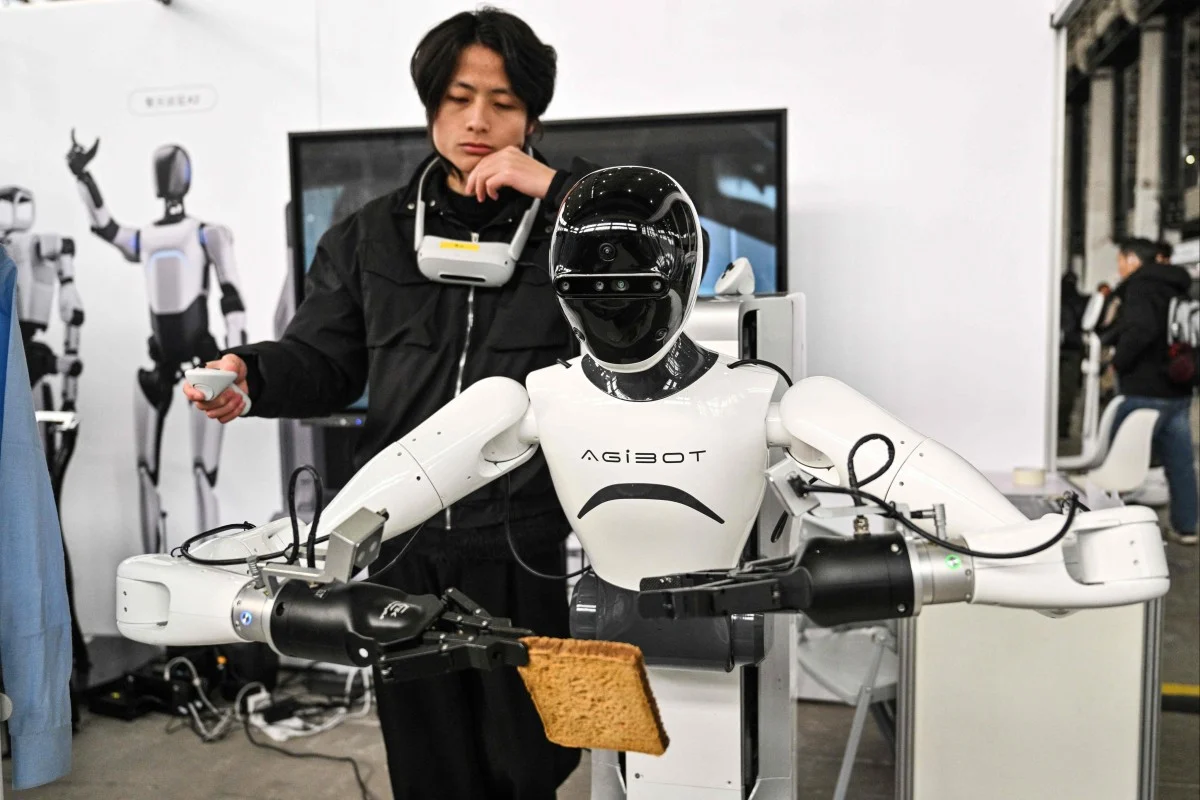
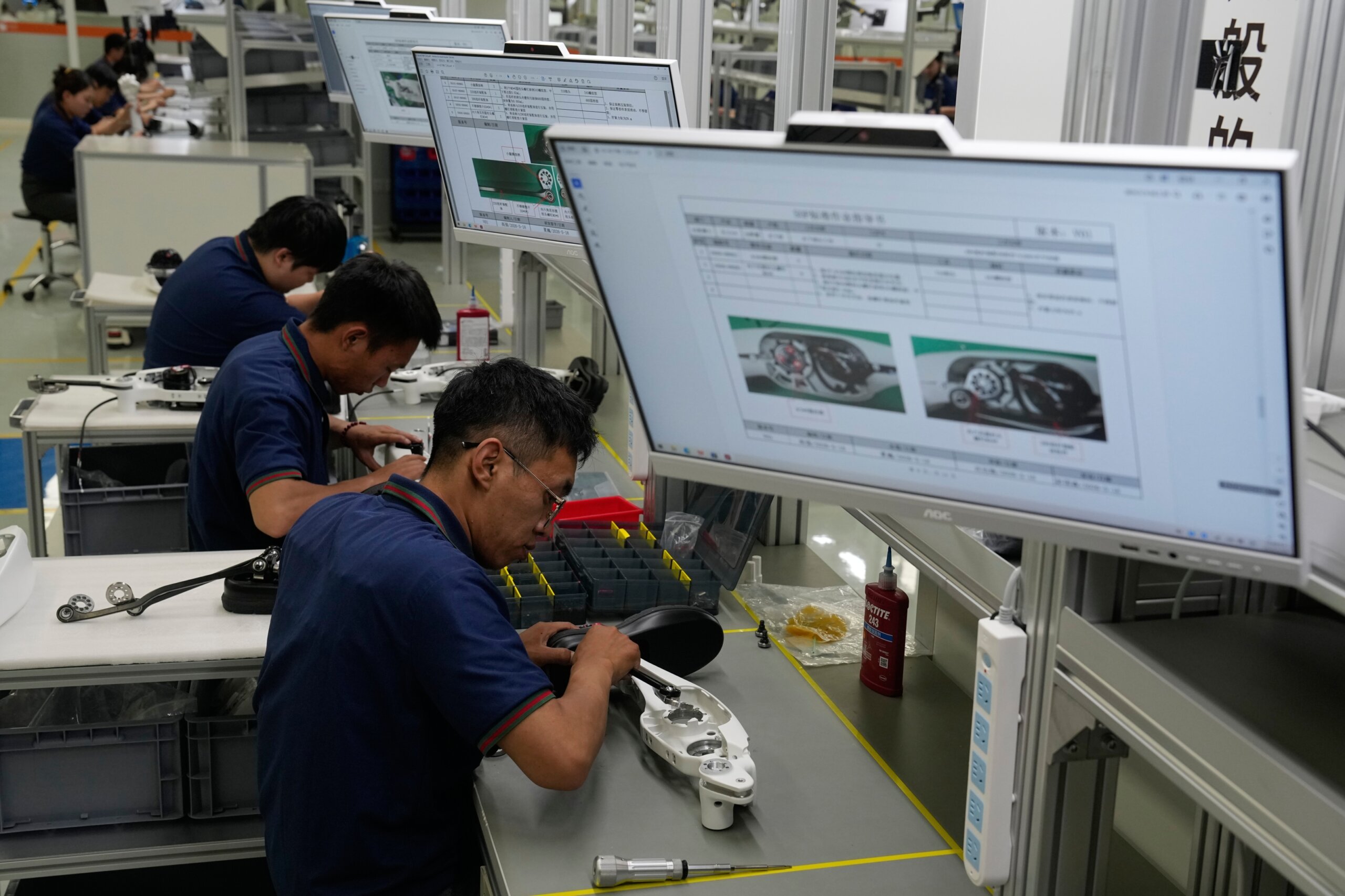
Unitree is one of the clearest scale examples in the AP report. The company said it generated 1.7 billion yuan (around $250 million) in revenue last year and more than 278 million yuan (about $41 million) in profit. Omdia said Unitree and AGIBOT each shipped over 5,000 humanoids in 2025, while U.S. rivals Figure AI and Tesla each shipped a few hundred or less.
Barclays estimated that Chinese humanoid robots accounted for around 85% globally last year. Morgan Stanley expects China’s humanoid sales to more than double this year to roughly 28,000 units, and Omdia forecasts annual shipments of advanced robots could exceed 1 million units by the early 2030s.
Industrial work looks more credible than homes
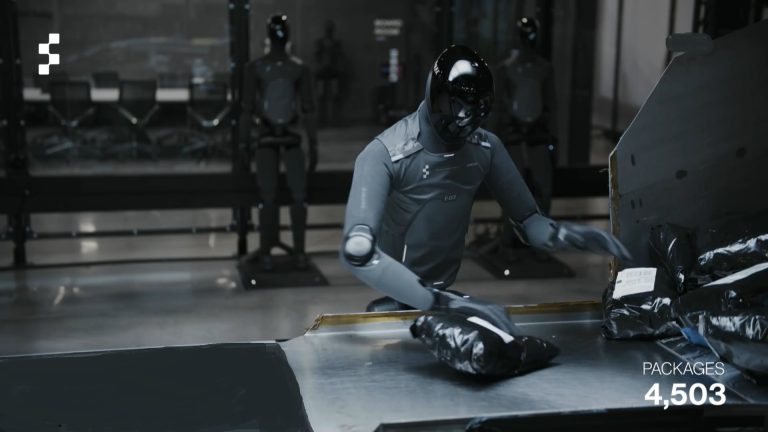
The near term commercial path still appears more plausible in industrial and logistics settings than in homes. Sacks told AP that factories, warehouses and similar environments are more viable targets, although many facilities already use conventional robotic arms for repetitive tasks and may not need large numbers of humanoids.
Omdia analyst Lian Jye Su said humanoids could eventually handle heavy lifting and mundane tasks in warehouses, factories and ports. Matrix Robotics CEO Allen Zhang also pointed to dangerous or repetitive work, while arguing that China has a large household market for chores across hundreds of millions of homes.
The home use case remains thin in AP’s reporting. In Beijing, freelance social media creator Yang Ning tried a cleaning service using a helper robot with mechanical arms and hands. The robot could organize shoes, fold clothes and change garbage bags, but it was accompanied by a human cleaner. Yang described the shoe sorting as “amazing,” while also saying the robot was not very efficient and was too large for a small home.
Data is another bottleneck. Wang Xiaogang, cofounder of SenseTime and chairman of ACE Robotics, said his company is collecting human centric data from factories, retail and offices to guide more advanced robots. Eric Guo, founder and CEO of Shenzhen based AI² Robotics, said training humanoids beyond single tasks will require data from many public and private settings, and that could take years to scale.
Guo’s assessment was blunt: “The mass production capability in (the) robotic area is still at the very early stage.” For China humanoid robots, the factory base is formidable. The customer base is still being proven.
Source: wtop.com