Figure AI demonstrates Helix-02 humanoid robots on 8-hour shifts
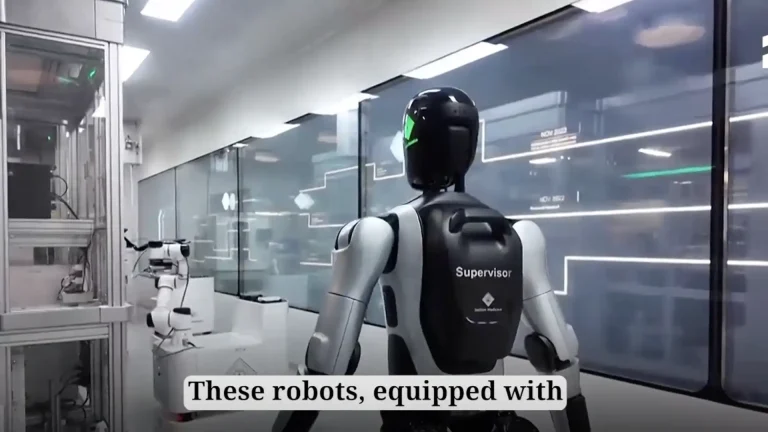
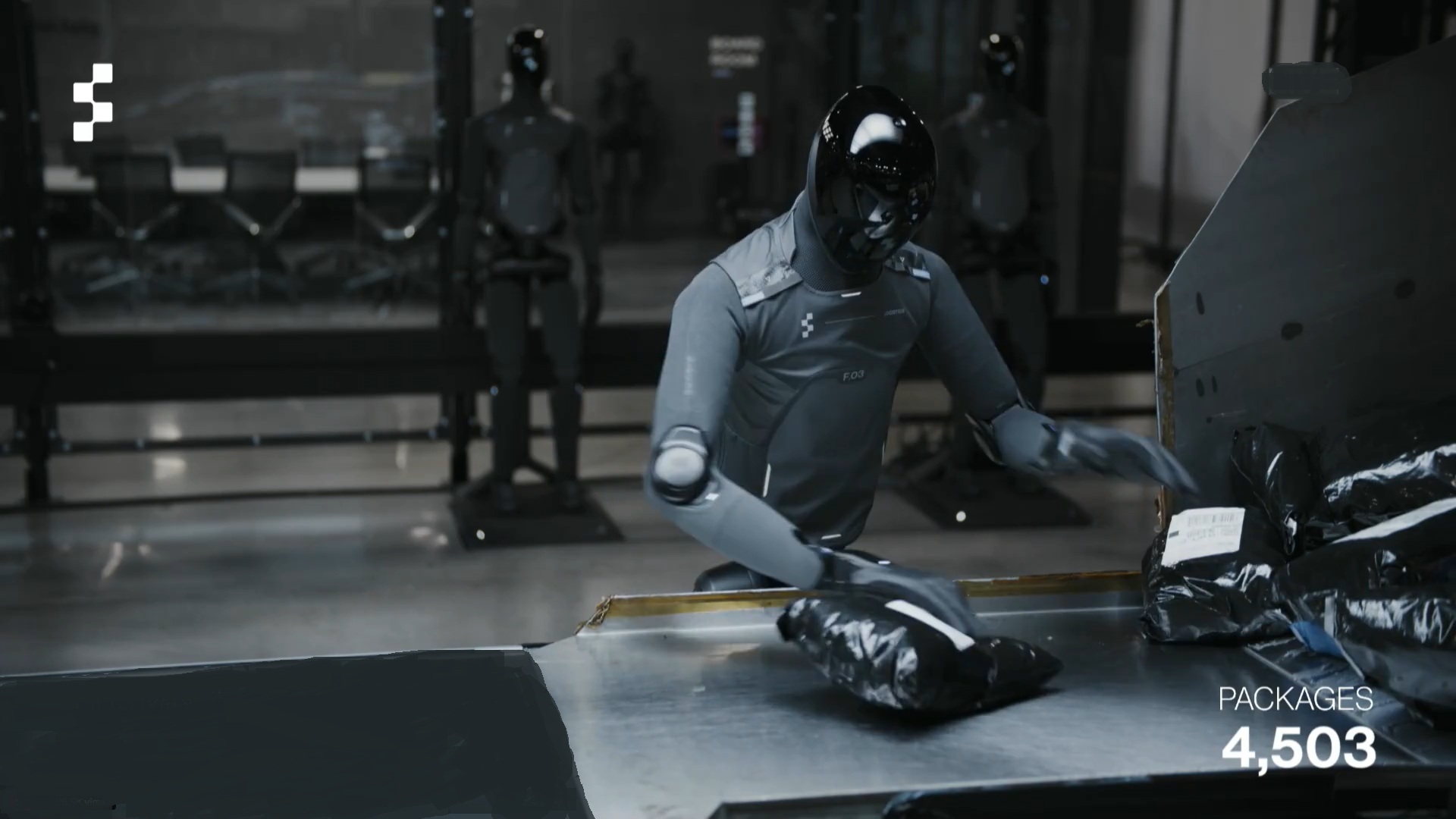
Figure AI says its Helix-02 humanoid robots can now sustain full factory-style eight-hour shifts without human intervention, a claim the company presented in a post on X. For the humanoid robotics market, the announcement matters because long-duration autonomous operation remains one of the clearest barriers between short demos and practical industrial use.
According to Figure AI, the robots operated at human performance levels while running fully autonomously on the company’s Helix-02 AI system. As Interesting Engineering reports, the announcement is one of Figure’s strongest public claims so far around human-scale robotic labor in real-world settings.
Helix-02 humanoid robots and the 8-hour shift claim
The company framed the update around shift-length autonomy rather than a single isolated task. Figure AI said a team of humanoid robots could run a full eight-hour shift without intervention, extending the discussion from manipulation benchmarks and short task clips to the operational question of whether a humanoid can remain productive for an entire work period.
The source text does not provide detailed throughput numbers, error rates, or a task-by-task breakdown for the eight-hour run. That leaves open key questions for operators, including how much of the shift involved continuous work, what types of factory tasks were included, and how performance compares with earlier deployments under standardized conditions.
The claim also follows Figure AI’s earlier work with BMW. The source notes that Figure 02 humanoid robots were tested at BMW Group Plant Spartanburg in South Carolina, and that the company had previously said its robots completed 10-hour shifts there while moving more than 90,000 parts and supporting production tied to over 30,000 BMW vehicles.
Those earlier manufacturing references give the new announcement more context than a lab-only demonstration. At the same time, the eight-hour figure remains a company-stated result, and the source text does not mention independent validation or third-party benchmark data.
How Helix-02 combines control and manipulation
Figure AI describes Helix-02 as a unified neural network that lets humanoid robots walk, manipulate objects, balance, and coordinate movement continuously using onboard sensors. The company contrasts that approach with conventional industrial robots, which often separate locomotion and manipulation into different control systems.
According to the source, Helix-02 combines vision, touch, proprioception, and whole-body control into a single learning system for longer-horizon tasks in dynamic environments. Inputs come from head cameras, palm cameras, fingertip tactile sensors, and full-body proprioception, then translate into coordinated motion across the legs, torso, arms, wrists, and fingers.
Figure AI also introduced what it calls System 0, a learned whole-body controller trained on more than 1,000 hours of human motion data. The company said this replaces more than 109,000 lines of hand-engineered C++ code with a neural control system intended to maintain stable, human-like motion.
That architectural point is notable because humanoid deployment is constrained not just by object handling, but by the need to keep balance and posture while working over long periods. A single control stack that spans mobility and fine manipulation is central to Figure’s argument that humanoids can operate in spaces designed for people rather than for fixed automation.
Task range beyond the factory floor
To support the case for general-purpose capability, Figure AI pointed to several demonstrations outside a factory line. In one example, a humanoid robot autonomously unloaded and reloaded a dishwasher in a full-sized kitchen over four continuous minutes without resets or human intervention.
The company also showed fine motor tasks including unscrewing bottle caps, extracting pills from organizers, pushing exact syringe volumes, and picking metal parts from cluttered bins using tactile sensing and in-hand vision. These examples matter because they combine contact-rich manipulation with the kind of object variation that fixed industrial automation usually avoids.
Figure AI further said Helix-02 supports multi-robot collaboration. In another demonstration described in the source, two humanoid robots reset a bedroom in under two minutes by hanging clothes, making a bed, taking out trash, closing books, repositioning furniture, and coordinating around shared objects without a central controller.
For practitioners, that mix of domestic and industrial tasks suggests Figure is positioning the platform around transferability rather than single-site optimization. The company argues that future humanoid robots must work in shared human spaces such as factories, warehouses, and homes, where they need to react in real time to people, objects, and other robots.
What the announcement means for the humanoid market
The broader significance is competitive as much as technical. Interesting Engineering places Figure AI in direct competition with Tesla, Agility Robotics, and Apptronik, all of which are trying to commercialize general-purpose humanoid robots for industrial work.
In that context, the eight-hour shift claim is less about a single milestone than about the metrics the sector is starting to emphasize. Attention is moving from short demonstration clips toward endurance, intervention rate, task continuity, and the ability to coordinate full-body motion over an entire shift.
What remains unclear is how Figure AI will document these claims for customers evaluating real deployment. Buyers will likely want more detail on uptime, recovery from errors, safety behavior in shared spaces, and performance consistency across task mixes.
If Figure can substantiate long-duration autonomous work in production environments, it would strengthen the case that humanoids are moving into an operations phase rather than a demonstration phase. The next step for the industry is not simply longer videos, but repeatable data showing that humanoid systems can hold performance over time inside active workplaces.
Source: interestingengineering.com