Humanoid HMND 01 secures Bosch manufacturing deal for Europe
Humanoid has signed Bosch to manufacture its Humanoid HMND 01 robots for the European market, giving the UK company a production partner as it tries to move from pilots to larger deployments. The May 21 announcement matters because it sets out an alternative scaling model for humanoid robots: rather than building most of the stack internally, Humanoid is assembling a network of industrial partners around the HMND 01 platform.
Humanoid HMND 01 manufacturing shifts toward Bosch
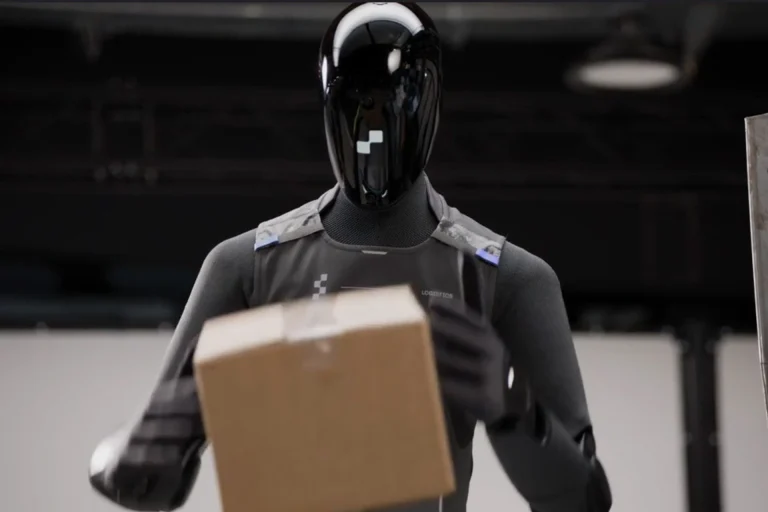
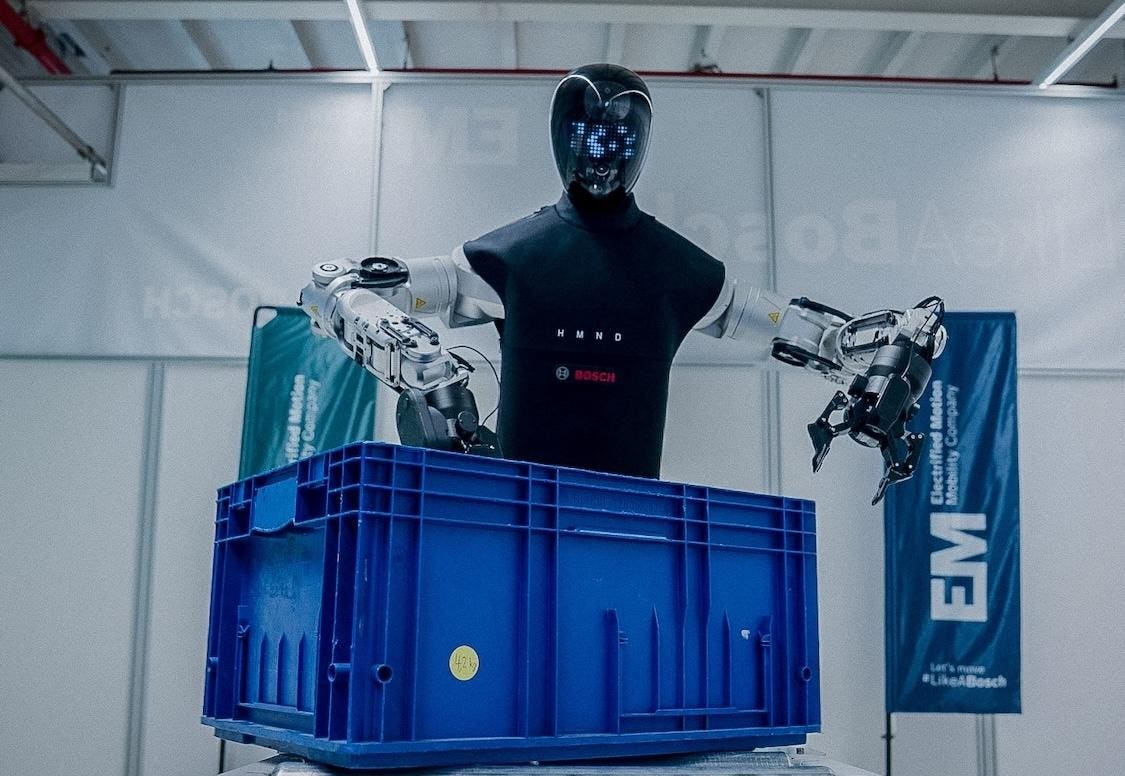
According to Forbes, Bosch will build HMND 01 robots for Europe following a March 2026 proof of concept at one of Bosch’s logistics facilities. In that trial, Humanoid’s robots autonomously moved boxes from conveyors to trolleys across five different sizes, weights and footprints. The companies are also exploring whether Bosch actuators, drives, and sensors could be integrated into future HMND versions.
That combination of contract manufacturing and possible subsystem supply is notable in a market where many humanoid developers are still deciding how much of the robot they want to own directly. For Humanoid, the Bosch arrangement appears aimed at closing the gap between a working pilot and a repeatable production process, especially for industrial customers that need confidence in manufacturing quality and supply continuity.
Humanoid founder and CEO Artem Sokolov described the agreement as a step that bridges proof of concept validation and large scale deployment. The company said its goal is to shorten the path between innovation and real-world integration, with Bosch acting as a manufacturing partner focused on industrial settings such as logistics and manufacturing.
Why Humanoid HMND 01 is taking a partner-led path
The Bosch deal follows another announcement made six days earlier involving Schaeffler. In that agreement, Schaeffler is set to provide components for the robot, Humanoid plans to deploy more than 1,000 robots at Schaeffler facilities, and component purchasing is expected to scale to support delivery of upwards of 100,000 robots by 2031. Taken together, the two deals outline a supply chain and customer strategy at the same time.
As Forbes reports, this is the opposite of the heavy vertical integration pursued by some competitors. The article points to 1X, which builds elements including motors, batteries, copper coils, and even the tendons in robot limbs, and to Figure as another company pushing to own more of its stack. Humanoid instead appears to be concentrating on research, design, integration, and the software and systems work needed to ship a usable humanoid, while relying on established industrial groups for parts and production capacity.
That approach could also be a financial necessity as much as a strategic preference. Forbes says Humanoid has raised under $100 million, far less than Figure at around $2 billion and Apptronik at almost $1 billion. By using Bosch factory space and Schaeffler hardware, Humanoid may be able to scale without first spending heavily on its own manufacturing footprint or trying to develop every subsystem internally.
What Bosch and Schaeffler gain from the deal
For Bosch and Schaeffler, the appeal is straightforward. Both companies get a path into the humanoid robot market and a commercial customer relationship without having to fund a full humanoid hardware and software program themselves. Bosch’s head of IP, Peter Svejkovsky, said the company wants to advance the scaling of humanoid robotics and sees its global production infrastructure and industrialization expertise as the basis for that role.
The tradeoff is that partner-led scaling does not remove execution risk. When a robot maker relies on outside suppliers and manufacturers, it gives up some control over timing, priorities, and product roadmaps. The source article makes the same point from the other side: doing everything in-house can also dilute focus if a company is forced to become expert in every component instead of concentrating on the system that customers actually buy.
The next test will be whether these agreements translate from pilots and procurement plans into sustained shipments of working robots in industrial environments. Bosch’s possible role in future HMND hardware, the long-term service model, and any investment or ownership terms were not disclosed. Even so, the deal suggests that Europe’s industrial incumbents see humanoid robots less as a distant research project and more as a manufacturing category worth entering now.
Source: forbes.com