From Spectacle to Scale
The proofs of concept are finished. The hard part – a business model that actually scales – is only just beginning.
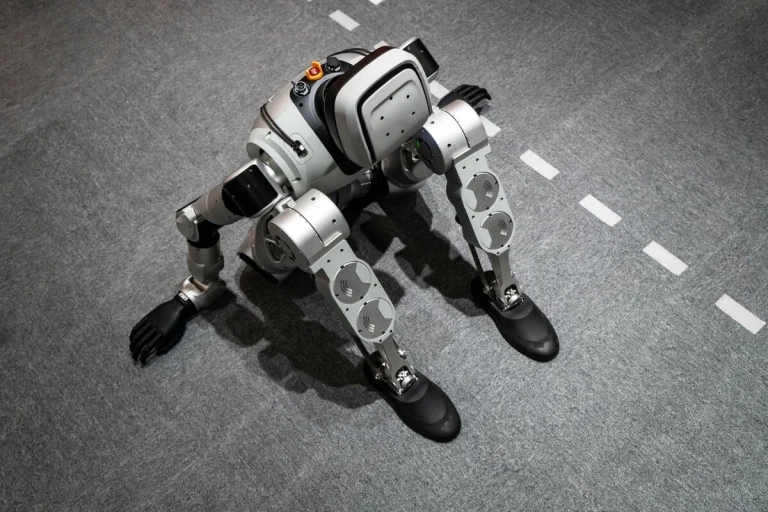
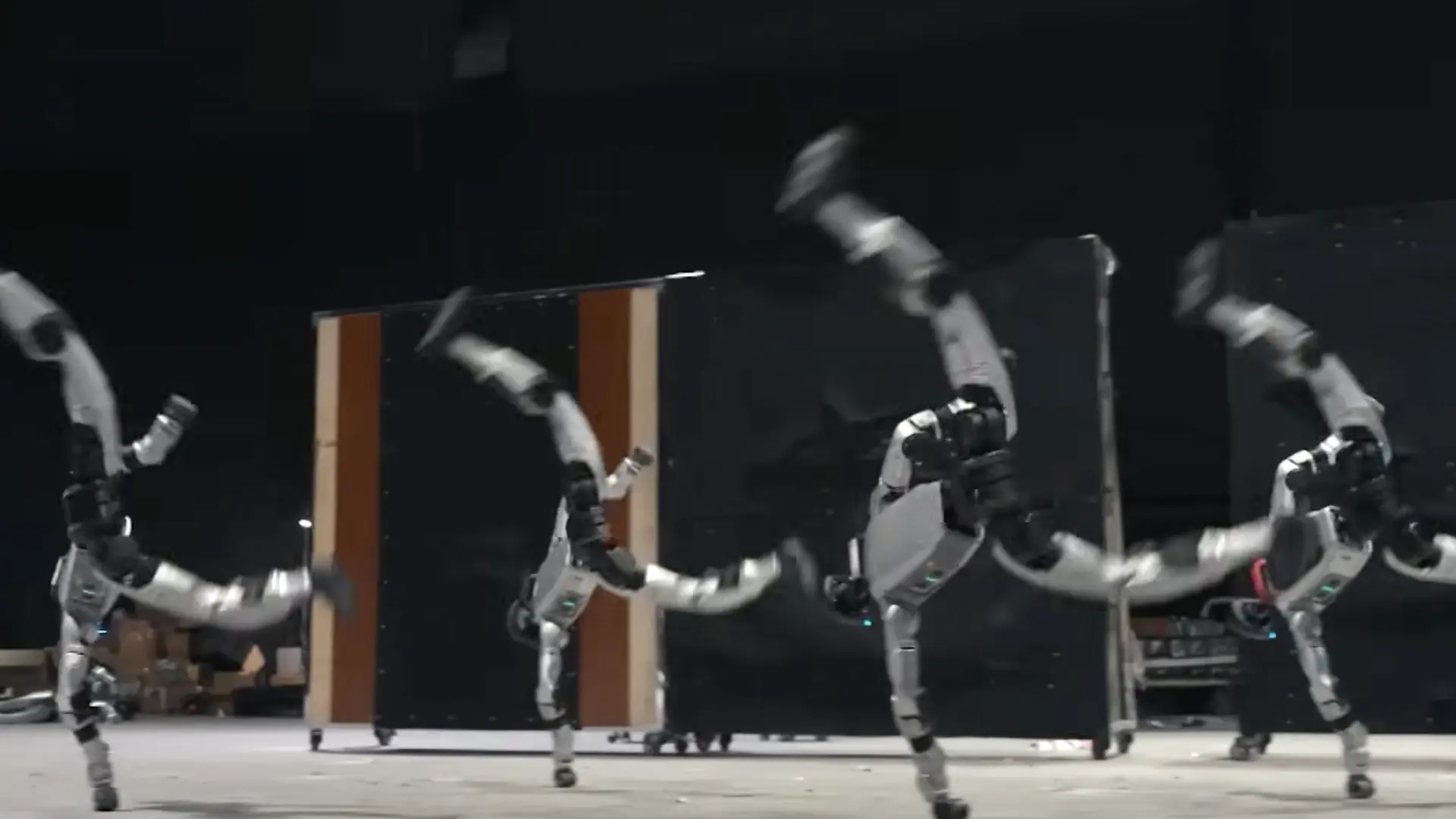
Humanoid robots have travelled from movie screens to stage-managed dance routines, and the hype has exploded with them. But the message from players across the sector in Tokyo was unusually grounded: the demos work. What nobody has cracked yet is how to turn a crowd-pleasing machine into a business that makes money at volume.
The market is tiny. The forecasts are not.
Today the entire category is worth roughly $2–3 billion – a rounding error in industrial automation. The projections tell a different story.
Analysts see the market reaching the tens of billions by 2035, and – once services and supply chains are counted – as much as $5 trillion by 2050. The chart is plotted on a logarithmic scale; each gridline is a tenfold jump.
Capital is arriving faster than revenue.
Annual investment has climbed from $700 million in 2018 to more than $4 billion last year – close to a sixfold increase in seven years.
Start-ups such as FigureAI have secured enough venture funding to clear billion-dollar valuations long before the unit economics are proven. The bet is on what the technology becomes, not what it sells today.
13,000 humanoids. Half a million industrial robots.
The first real use case is clear – manufacturing. But the gap between today’s working fleet and decades-old factory automation is enormous.
The Humanoid Robot Supply Chain
Supplier Strategy and Market Positioning 2026–2027
Get the ReportWhy the hard problem isn’t the body. It’s the world.
Google’s AI research arm calls humanoid robotics one of its key focus areas. It has partnered with Boston Dynamics on the newly commercialised Atlas, and is extending its Gemini Robotics architecture into the physical world.
Carolina, who leads robot mobility at DeepMind, frames the real differentiator bluntly: the edge is understanding the nuance and complexity of the human world. Much of what looks impressive in demos, she argues, is still memorised, pre-defined sequences – not intelligence reacting in the moment.
The goal is robots that can do genuinely dexterous things – folding origami, packing a lunch box, even tying shoelaces – combining fine manipulation with whole-body control and high-level reasoning. Bring an accelerating hardware curve together with accelerating intelligence, and fixed behaviours give way to machines that think situationally.
“Embodied intelligence is the next frontier.”Carolina – Google DeepMind, robot mobility
Four shifts that became mainstays.
Common sense is a safety feature.
Putting a machine into a space built for people resets the safety question. DeepMind treats it as a multilayer problem.
From climbing ladders to fingertips.
One of the original pioneers of humanoid robotics, Honda shifted its focus around 2013 – from locomotion toward higher-level movement like climbing ladders, and now toward manipulation and multi-fingered hands.
Locomotion research was once cheap, running on low-performance GPUs. Today, far greater compute resources have transformed what’s possible in movement. Manipulation, the chief engineer notes, is the function that delivers real value to a customer – and that transition is still unfinished.
On the current state of the art, his assessment is refreshingly free of hype. And on competition, he’s equally direct: Chinese companies are strong at precise hardware, and the path forward is to combine that with better AI.
Today’s humanoid can “somehow do a breakdance – not beyond that.”Frontier Robotics – chief engineer, Honda
China leads on units – and on willingness.
China already produces the majority of humanoids, at prices below Western peers. Adoption appetite tracks the same way: a Mitsubishi survey found 60% of Chinese consumers willing to let a humanoid help with daily tasks. Japan and the US come in noticeably lower – a cultural gap that could itself shape where the technology lands first.
There’s a new safety dimension, too. Unlike industrial robots confined to a cage, humanoids can be remotely controlled – and if one is hacked, that becomes a critical safety problem. Formal safety and cyber-security standards, the analysts agree, simply aren’t in place yet.
New! 2026 Humanoid
Robot Market Report
198 pages of exclusive insight from global robotics experts — uncover funding trends, technology challenges, leading manufacturers, supply chain shifts, and surveys and forecasts on future humanoid applications.

now Google DeepMind
A few are making money. Most are posting losses.
Bloomberg Intelligence frames humanoids as a potential next big tech platform – but the industry is at the point where companies are only starting to work out what, and when, will actually pay.
Expect easy entry and a spread of machines by capability – some for industrial work, some eventually for housework – with different cost tiers for simpler versus more complex robots. The winning move is matching the right business strategy to the right kind of humanoid. The platform’s defining breakthrough, in the analyst’s words, hasn’t arrived.
The industry is still waiting for its “ChatGPT moment.”Bloomberg Intelligence – analyst, Tokyo
For now, the gap between hype and reality stays wide.
But even if only a fraction of these forecasts materialise, humanoids move from niche machines to a defining force in the economy. The demos are done. The decade of deployment has begun.