Welcome, LingBot-Touch!
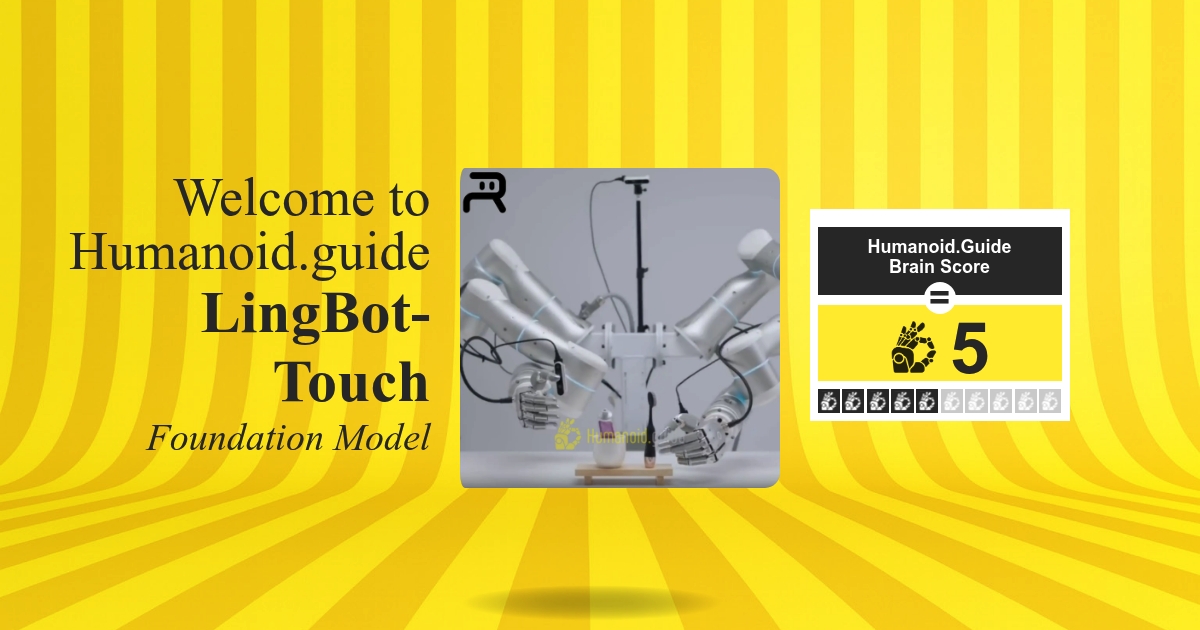
LingBot Touch is a software foundation model from Robbyant, also known as Ant Lingbo Technology, an embodied AI company within China’s Ant Group. Its focus is touch, placing it in a different category from physical robot hands or complete humanoid platforms. The model belongs to Robbyant’s LingBot family and is intended to complement other robot software rather than operate as an independent robot controller. Its training corpus contains nearly 5,000 hours of touch recordings collected from gloves and robot hands. That training background makes tactile data central to the model’s identity, rather than treating touch as a secondary addition to a primarily visual or language oriented system. LingBot Touch has a Humanoid Guide Brain Score of 5 out of 10, placing it in the developing range. This rating should not be mistaken for a declaration of complete robotic autonomy. The product is best understood as a specialized software component within a larger embodied AI system, with its own training data, integration requirements, and evaluation context.
The key technical distinction is the separation between a foundation model and the machinery surrounding it. A tactile model sits within a broader system that also includes sensors, control software, mechanical hardware, and application specific safeguards. Evaluating such a component therefore requires more than observing a finished robot demonstration: the contribution of the model must be distinguished from the rest of the system. For LingBot Touch, the documented training material includes recordings from both gloves and robot hands, providing a concrete basis for discussing its development without assigning unsupported capability ratings. Its relationship to Robbyant’s LingBot VLA also establishes an integration context, rather than positioning it as a complete replacement for every other layer of robot software.
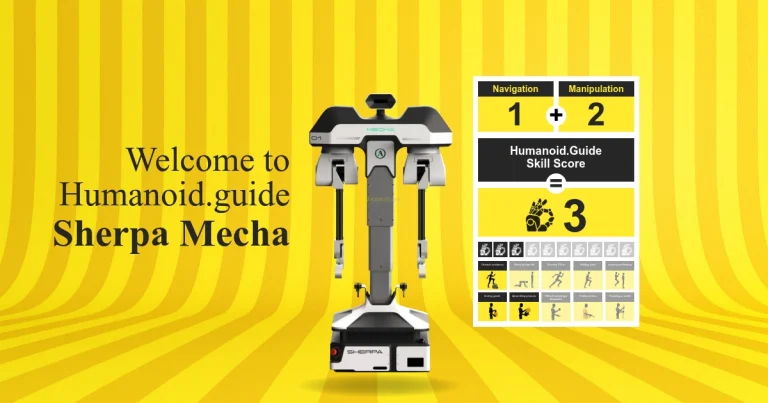
LingBot Touch is listed with a November 2026 release date and a price of zero dollars on Humanoid Guide, where its ordering status is available on backorder. That storefront listing should be distinguished from software licensing, commercial support, or deployment costs. Robbyant also identifies GitHub and Hugging Face as distribution channels for the model. Sharpa and XHand are named as hardware platforms used in testing, which establishes an evaluation connection without implying a broader commercial partnership. More broadly, the project reflects growing attention to tactile data within embodied AI research. Its significance lies in treating touch as a dedicated foundation model topic alongside the vision and language approaches that dominate much of the field.