Welcome, π*0.6!
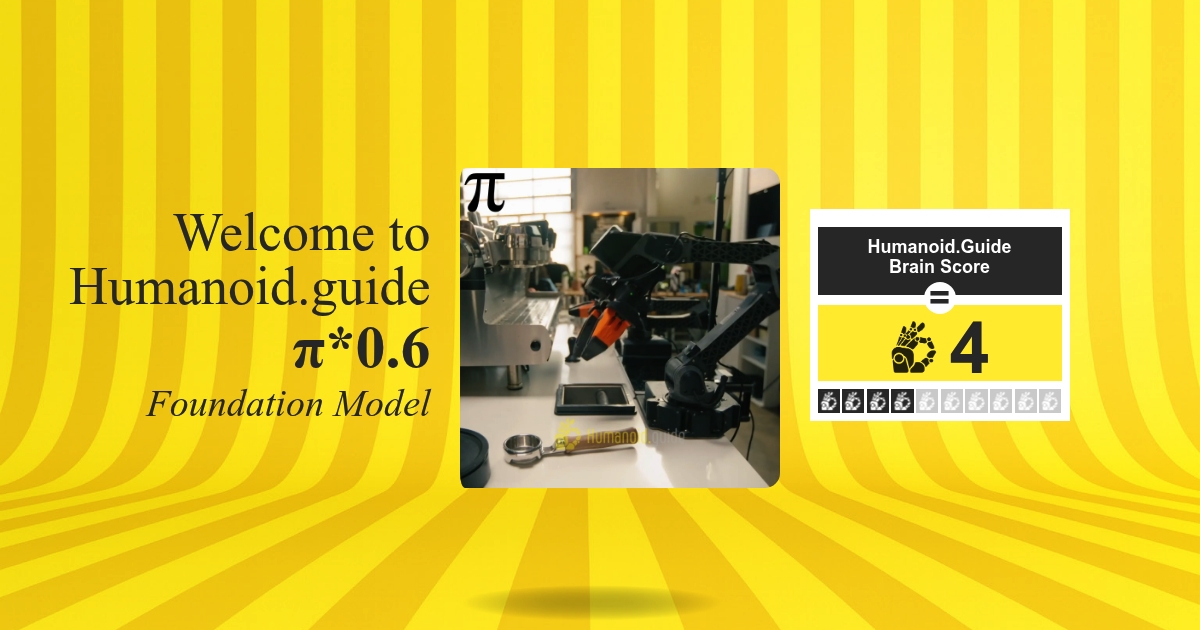
π*0.6 is a robot foundation model developed by Physical Intelligence, a robotics AI company based in San Francisco. Introduced on November 17, 2025, it belongs to the software layer of robotics rather than being a physical robot or a complete hardware platform. The model builds on π0.6 and centers its development approach on Recap, a training method that combines human demonstrations, corrective intervention, and subsequent robot practice. This progression places continued training at the center of the model’s identity, rather than treating the initial demonstration dataset as the end of development. Human involvement remains part of that process, supplying examples and corrections before further practice. Its Humanoid.Guide Brain Score is 4 out of 10, placing it in the developing range. That rating gives π*0.6 a measured position within the emerging robot foundation model landscape. The central distinction is its training methodology and its relationship to Physical Intelligence’s broader work on software for robotic systems.
The technical context for π*0.6 is the distinction between a training process and a finished deployment. Demonstrations, corrections, and practice represent different sources of training information, and evaluating a model requires examining how those sources are used. For anyone assessing robot foundation models, useful questions include how an evaluation is structured, what constitutes successful completion, and whether results remain consistent across repeated trials. These considerations matter when interpreting a developing model’s significance, because a single overall score is not a substitute for a detailed assessment. π*0.6’s 4 out of 10 Brain Score provides a broad maturity indicator, not a guarantee of suitability for any particular application.
π*0.6 is listed on Humanoid.Guide with an interest option and an availability status of backorder. Physical Intelligence provides further information through its official website, including a dedicated article about the model. The listing should be understood as an entry for robotics software, not an offer of a complete humanoid robot. For prospective adopters, practical next steps include contacting the relevant provider and clarifying access terms, deployment requirements, and commercial arrangements before making plans. More broadly, π*0.6 represents a developing approach within robot foundation model research, where the training process itself is a central subject of development. Its significance lies in that research direction rather than a claim of universal readiness.