Sanctuary AI deploys its Physical AI on industrial robots
Sanctuary AI has deployed technology developed alongside its Phoenix humanoid on an industrial wire insertion task, reporting a success rate above 99.5% and a 2.54 second cycle time. The trial used robotic hands rather than a complete humanoid to insert flexible wired plugs into moving targets on a live conveyor at a global Tier 1 automotive supplier.
The result came from 313 insertion trials conducted over 40 minutes, CEO Daniel Friedmann told Forbes. Sanctuary calculated the success rate by comparing successful and unsuccessful insertions. Friedmann said the cycle time was benchmarked against the customer’s existing line performance, although the company did not disclose the human cycle time or other comparative data.
A humanoid control stack without the full body
Startup Fortune identified the control system as Carbon. Sanctuary describes its broader technology as Physical AI and says it can operate currently available industrial robots with off the shelf end effectors or custom hardware developed by the company.
The approach gives Sanctuary access to factory applications without requiring customers to deploy Phoenix as a complete mobile humanoid. Friedmann said the company is using existing commercial platforms while humanoid hardware develops toward mass commercialization. He still described Sanctuary as a full stack robotics company developing both hardware and Physical AI.
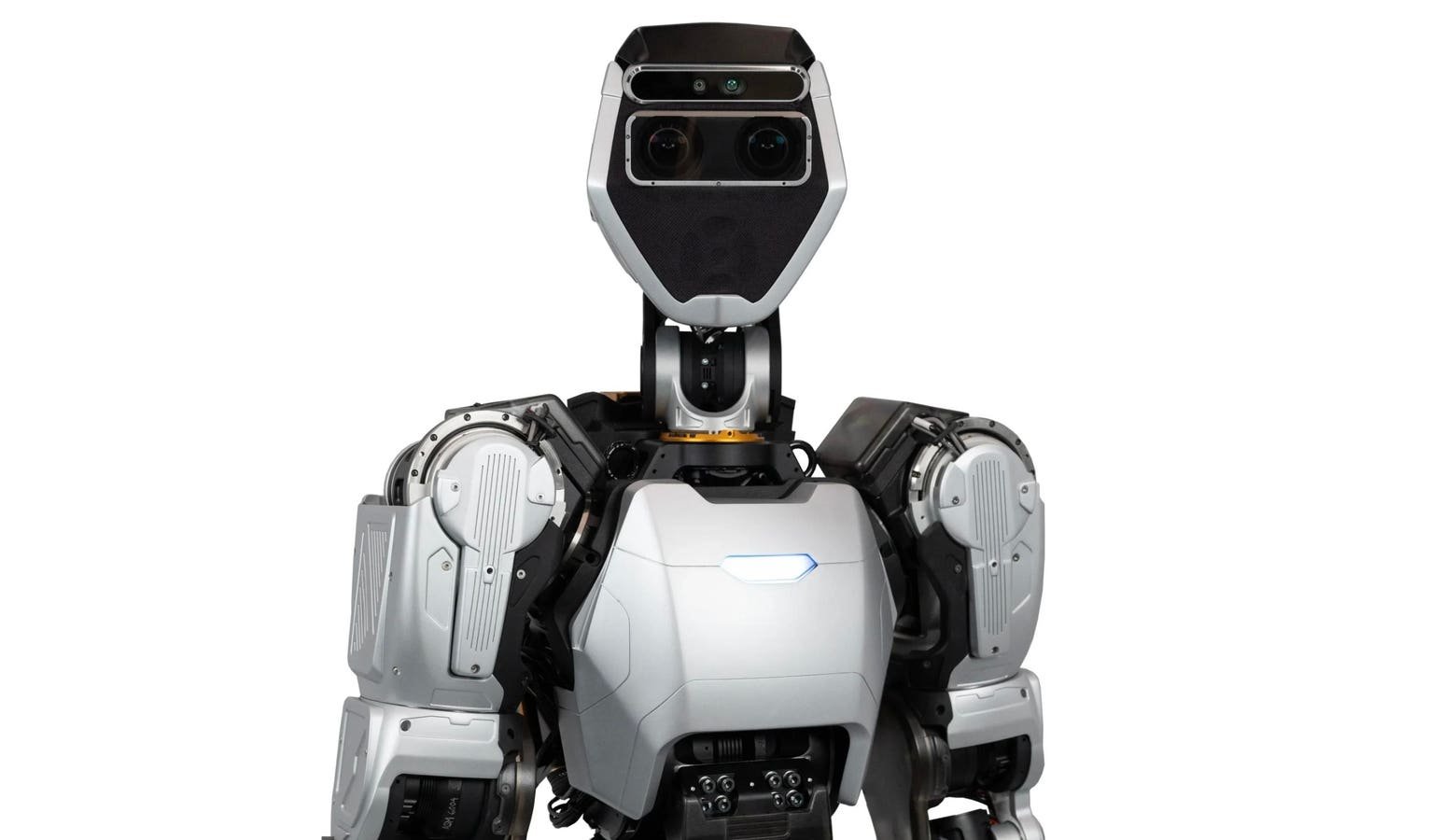
Phoenix remains part of that program. According to Forbes, the Generation 8 platform has a torso, arms and head mounted on a wheeled base, with changes intended to improve manufacturability and sensor data. Sanctuary says work on industrial robots will also support later intelligent systems, including industrial humanoids.
Promising benchmark, limited validation
The wire task is technically relevant to humanoid development because it demands contact rich manipulation of flexible components while the target is moving. Conventional automation has not handled this particular application, according to Friedmann. The reported performance therefore provides a useful indication of the dexterity stack’s potential, but the evidence remains narrow.
The automotive installation is still a proof of concept, not a production deployment. Sanctuary has not provided reliability data from longer runs, details about intervention rates, or customer return on investment. Its deployment target is a few weeks, with the actual schedule varying according to task complexity.
The test also does not validate Phoenix as a complete factory worker because locomotion, whole body coordination and autonomous navigation were absent. It does show that Sanctuary can separate its manipulation software and hands from the humanoid body and test them against an actual production benchmark. Production operation over longer periods will be the more demanding measure.
Sources: Forbes, Startup Fortune