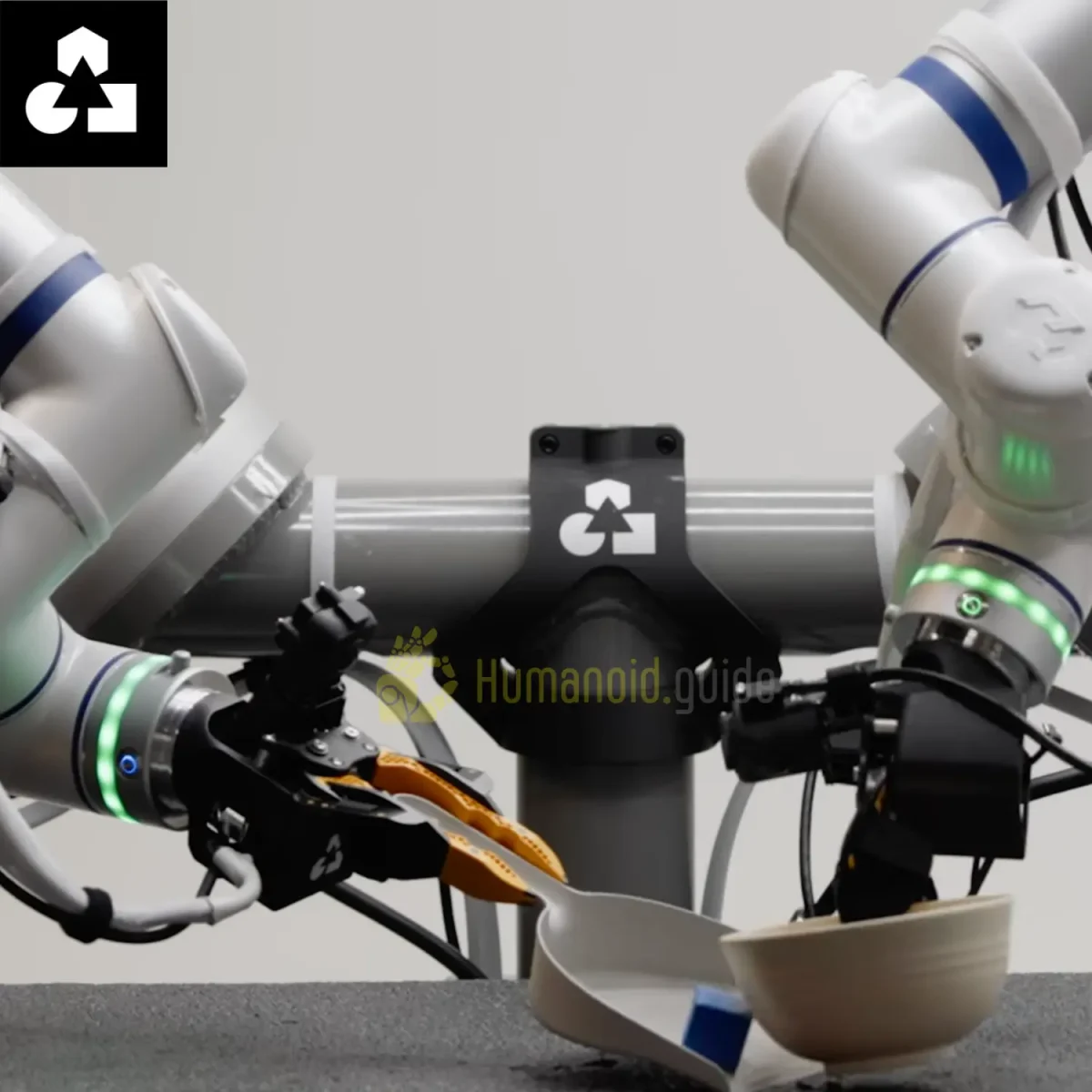
GEN-1.5
$ 0

GEN-1.5 is an embodied foundation model that learns new manipulation tasks from 3-12 second demonstrations, generalizes across simulated and real robots, and recovers from errors through intelligent improvisation without requiring any code or fine-tuning.
Available on backorder
Brain Score
 6
6

Specifications and details:
| Nationality | US |
|---|---|
| Website | https://generalistai.com/ |
| Model type | Foundation Model |
| Manufacturer | Generalist AI |
| Release date | August 2026 |
Description
GEN-1.5 transforms robot learning by enabling machines to master new tasks from minimal demonstration. Show the model a three-to-twelve second video of any task. The robot then performs that exact task without any code changes. This breakthrough eliminates months of programming overhead. No gradient updates required. No fine-tuning necessary. The system learns directly from what humans show it. Consequently, deploying robots across new applications becomes dramatically faster and cheaper. Researchers compare this moment to GPT-3’s arrival in 2020. The foundation model had trained for over eight months continuously, absorbing vast quantities of physical interaction data. Every metric improved throughout that period. The scaling approach proved that embodied AI follows predictable improvement patterns. This discovery opens entirely new possibilities for robotics.
GEN-1.5 demonstrates remarkable generalization across diverse physical scenarios. The model watches demonstrations in simulated environments and transfers those skills directly to real robots. Furthermore, humans can demonstrate tasks with their own hands. The robot then reproduces that behavior immediately. This cross-embodiment capability bridges the gap between human intention and robot execution. Additionally, the model combines demonstrated skills into new sequences. Show it two different tasks. GEN-1.5 chains them together and generates all the intermediate motions automatically. The robot recovers from mistakes through strategies it never explicitly learned. Moreover, it improvises novel approaches to reach the same goals. If the normal method fails, the model discovers alternative manipulation strategies. This adaptability represents a fundamental shift from rigid, pre-programmed automation toward flexible, intelligent physical agents.
New! 2026 Humanoid
Robot Market Report
198 pages of exclusive insight from global robotics experts — uncover funding trends, technology challenges, leading manufacturers, supply chain shifts, and surveys and forecasts on future humanoid applications.

now Google DeepMind
Contact Humanoid.guide
Website: www.generalistai.com