
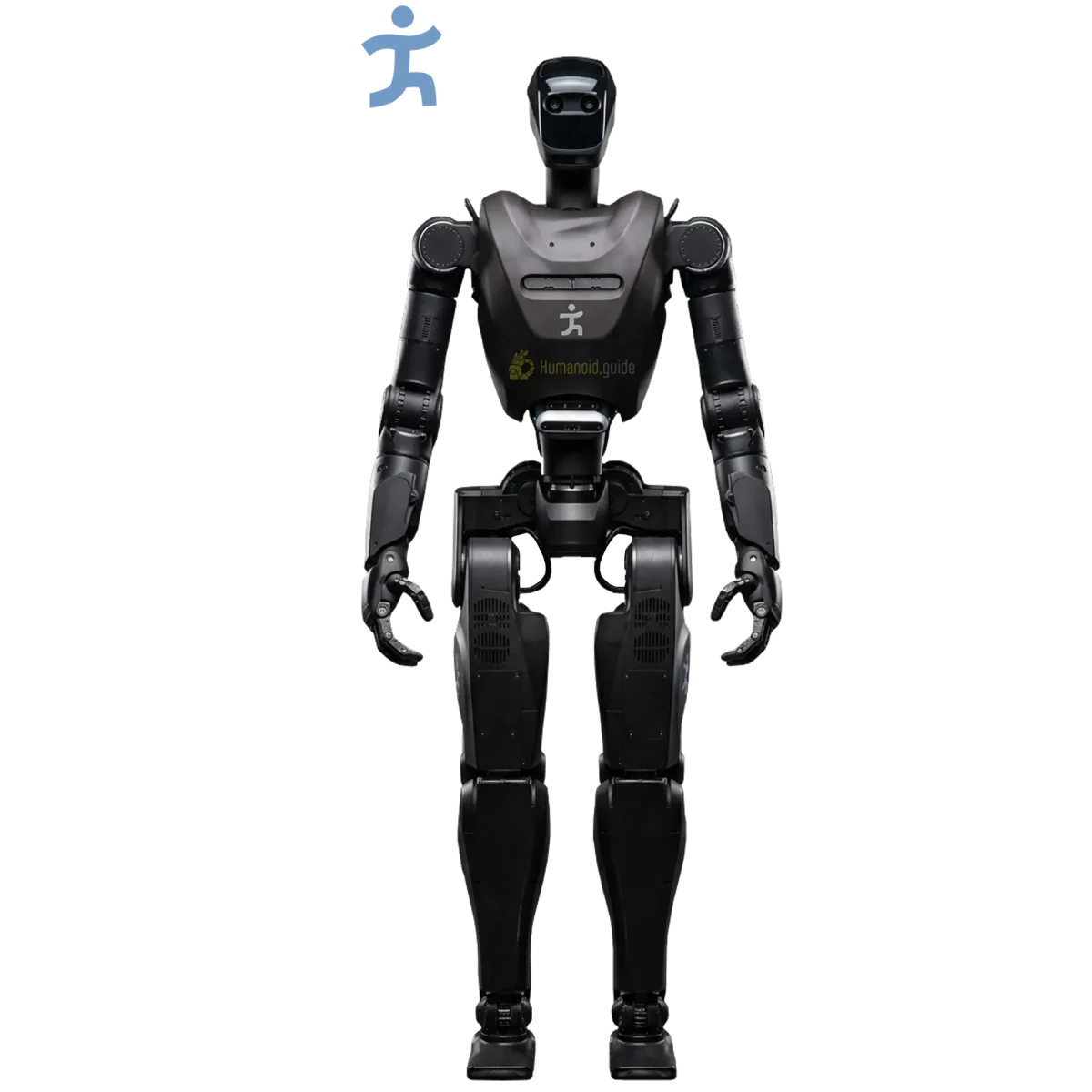
Alex
500 000 USD

IHMC (Florida Institute for Human and Machine Cognition)
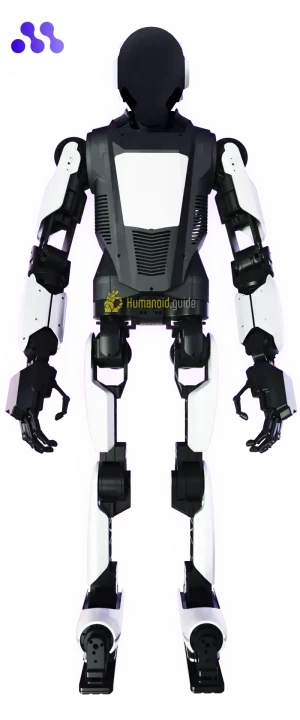
Alex is IHMC’s fully electric, 29-DoF biped research humanoid, funded by the US Navy and Army. With onboard power, stereo vision and five-finger hands, it targets outdoor urban operations, military scenarios and disaster response.
Skill Score
 2
2

Specifications and details:
| Availability | Prototype |
|---|---|
| Nationality | US |
| Website | https://robots.ihmc.us/ |
| Degrees of freedom, overall | 29 |
| Degrees of freedom, hands | 6 |
| Height [cm] | 175 |
| Max speed (km/h) | 3 |
| Strength [kg] | 4 |
| Weight [kg] | 85 |
| Runtime pr charge (hours) | 2 |
| Safe with humans | No: a research robot for hazardous environments / operates under supervision |
| CPU/GPU | Onboard computers |
| Ingress protection | N/A |
| Camera resolution | N/A |
| Connectivity | Wireless teleoperation (off-tether) |
| Operating system | IHMC whole-body control and behavior software / open Alex SDK |
| LLM integration | N/A |
| Latency glass to action | N/A |
| Motor tech | Custom high-power electric actuators |
| Gear tech | Low-friction transmissions |
| Main structural material | Aluminium alloy |
| Number of fingers | 5 per hand |
| Main market | Defense, Disaster response, Research |
| Color | Black |
| Manufacturer | IHMC (Florida Institute for Human and Machine Cognition) |
Description
Alex is a fully electric biped humanoid robot from IHMC, the Florida Institute for Human and Machine Cognition. This American research institute has built humanoids for more than two decades. The Office of Naval Research, the Army Research Laboratory and other agencies fund Alex. Unlike most humanoids, Alex aims to leave the lab and work in the real world. In particular, IHMC wants it to operate in dangerous places where humans face high risk.
Alex builds on the lessons of Nadia, IHMC’s previous humanoid. Nadia became famous online for playing ping-pong and boxing. However, it mixed electric and hydraulic actuators and mostly stayed in the lab. Alex uses powerful custom electric actuators and carries its own computers, sensors and battery. As a result, it can move freely outdoors without a tether.
New! 2026 Humanoid
Robot Market Report
198 pages of exclusive insight from global robotics experts — uncover funding trends, technology challenges, leading manufacturers, supply chain shifts, and surveys and forecasts on future humanoid applications.

now Google DeepMind
The team designs Alex for military missions and disaster response. For example, the robot should walk up to a building, open a door and explore inside. That way, it can assess a hazard before any soldier or first responder enters. Its five-finger hands let it grab handles and tools like a person. Moreover, operators can control it remotely, so it can act as a human avatar.
I’m Olivia, Humanoid Analyst at Humanoid.Guide
My mission, together with the team, is to help your organization understand the landscape, compare solutions, and move toward successful robot deployments.
In May 2026, Alex passed its first off-site test without a safety tether. During the demo in Maryland, it walked across rocky gravel, slick surfaces and uneven pavement. In the lab, it has also opened and walked through a pull door on its own. Meanwhile, IHMC shares an open SDK so other researchers can build on its work. In short, Alex marks a major step toward humanoids that can handle messy, unpredictable environments.
Download the Humanoid Robot Market Report here
Website: robots.ihmc.us