UBTECH Humanoid Revenue Surges in 2025 Results
UBTECH has reported a sharp acceleration in its humanoid robotics business for 2025, marking a significant shift in both revenue structure and industrial deployment. According to the company’s annual results, total revenue reached 2.01 billion yuan, up 53.3 percent year on year, while gross margin rose to 37.7 percent from 28.7 percent in 2024. Net loss narrowed by 31.9 percent to 790 million yuan.
The most notable change came from full-size embodied AI humanoid robots and related solutions. Revenue from this segment increased from 35.6 million yuan in 2024 to 821 million yuan in 2025, a more than 22-fold rise. The category accounted for 41.1 percent of total revenue, up from 2.7 percent a year earlier, becoming UBTECH’s largest revenue stream.
From Pilot Projects to Scaled Delivery
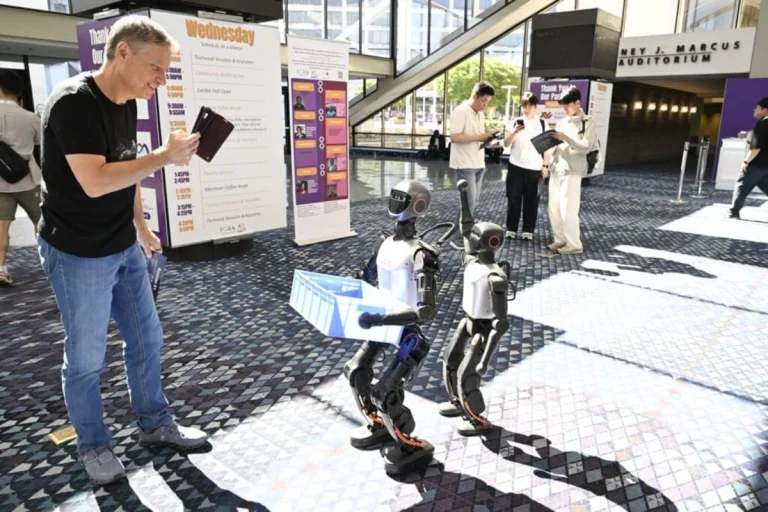
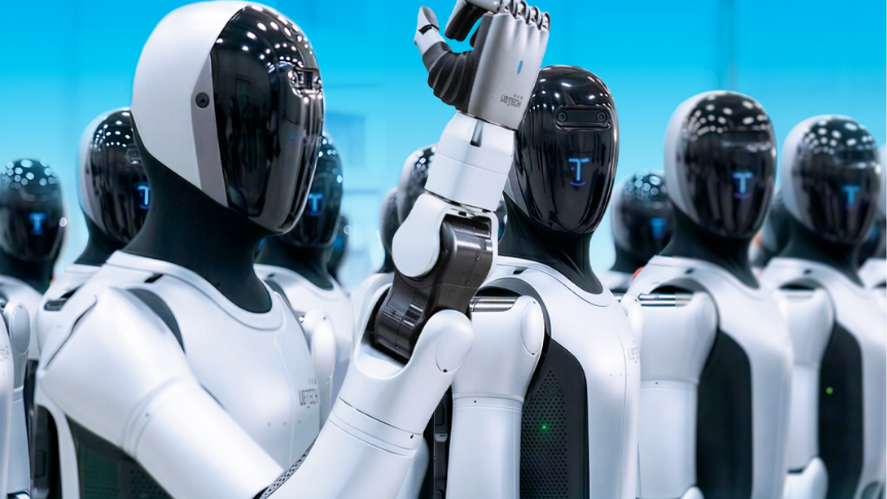
UBTECH stated that cumulative sales of its full-size embodied AI humanoid robots reached 1,079 units in 2025. The Walker S series, comprising Walker S, Walker S1, and the third-generation Walker S2, transitioned from technical validation to larger scale delivery during the year. The Walker S2 began mass delivery at the end of 2025 and is now deployed across multiple industrial scenarios.
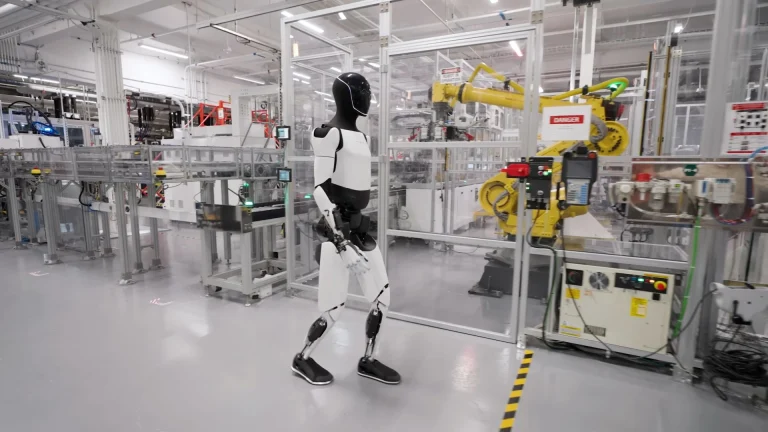
In manufacturing environments including automotive, 3C electronics, and new energy battery production, the Walker S series is focused on material handling, sorting, and quality inspection. Reported use cases include palletizing and bin handling in constrained spaces, grasping stacked or flexible materials, SPS material kit verification, charging gun connection checks, and air conditioner leak detection. The robots interface with existing manufacturing systems to integrate into established workflows.
UBTECH attributes part of this progress to its Thinker embodied AI foundation model, which it describes as enabling more autonomous decision making and task execution. In handling scenarios, the Walker S2 can autonomously determine palletizing strategies and manage bins of varying heights using full-body control. In inspection and sorting tasks, the platform combines visual perception and manipulation capabilities to operate in narrow or cluttered environments.
Manufacturing Capacity and Product Roadmap
By the end of 2025, UBTECH reported annual production capacity for the Walker S series exceeding 6,000 units. The company has also initiated research and development on a new generation of full-size humanoids targeting broader commercial and educational markets, leveraging core technologies developed for industrial models.
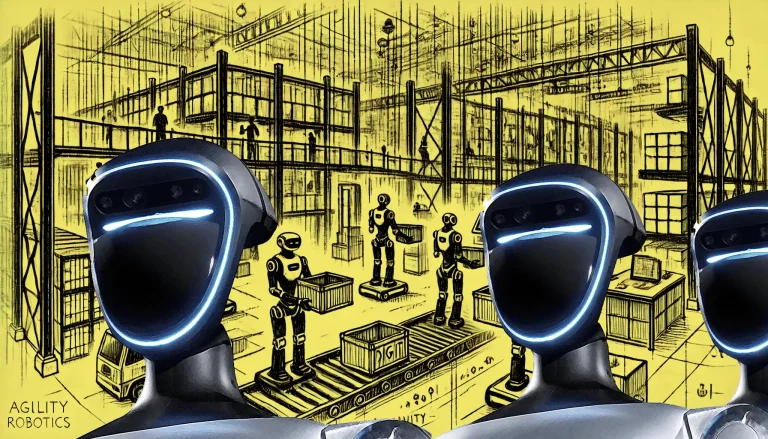
Beyond industrial deployments, UBTECH is promoting embodied AI humanoids in universities as teaching and research platforms. In logistics and warehousing, the company is deploying integrated systems that combine bipedal humanoids with wheeled dual-arm robots for sorting and handling tasks.
Other business segments in 2025 included logistics smart robots and solutions, contributing 629 million yuan, and consumer smart hardware, generating 499 million yuan. Non-embodied AI humanoid products and solutions accounted for 48 million yuan with 12,759 units sold.
Full-Stack Development and Data Infrastructure
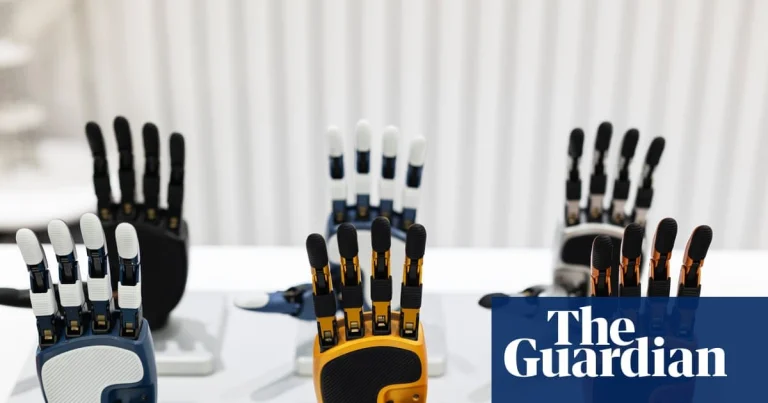
UBTECH links its humanoid expansion to long-term investment in core subsystems, including high performance servo drivers, dexterous hands, motion control, visual perception, semantic VSLAM, and multimodal interaction. In 2025, the company released fourth and fifth generation dexterous hands and continued development of its BrainNet 2.0 architecture and Co-Agent framework for coordinated autonomy.
The company also reported development of an industrial world model, Thinker-WM, and head-mounted pure binocular vision technology. To support model training and validation, UBTECH has established humanoid robot data collection and testing centers in Wuxi, Sichuan, and other regions. It aims to collect more than 10 million industry specific data points annually, combining real machine teleoperation data with simulation data generated through world models.
As of December 31, 2025, UBTECH held 2,985 authorized patents, including 508 overseas.
Implications for the Humanoid Market
The 2025 results indicate a transition from exploratory pilots to structured industrial rollouts for full-size humanoid robots. With more than 1,000 units delivered and production capacity scaling into the thousands, UBTECH’s data points to early commercial validation in manufacturing environments.
For robotics operators and integrators, the key questions now concern reliability at scale, total cost of ownership, and the ability of embodied AI models to generalize across varied tasks and facilities. UBTECH’s strategy centers on extending industrial experience into commercial and educational sectors, while continuing to iterate on lightweight design, joint integration, dexterous manipulation, and autonomous control.
The company’s revenue shift suggests that full-size humanoid robots are moving from a marginal contribution to a core business driver. Whether this trajectory continues will depend on sustained deployment performance, supply chain execution, and ecosystem development around applications and data.
Source: autonews.gasgoo.com