KIRO plans KAREX-M humanoid for Antarctic heavy lifting
The Korea Institute of Robotics & Technology Convergence (KIRO) is developing KAREX-M, a hybrid mobile humanoid intended to install and maintain observation infrastructure in Antarctica. According to kspost.biz, the project has 6 billion won in government funding for August 2026 through December 2030, with two integrated platforms planned for Antarctic missions around 2030.
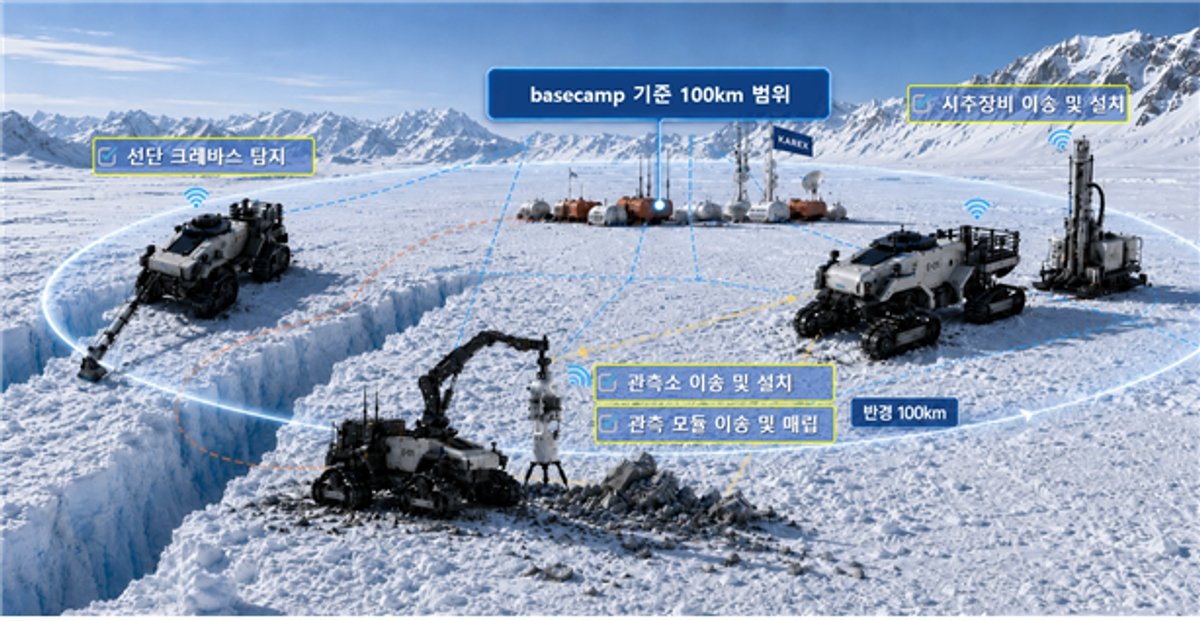
The KAREX-M humanoid design combines a wheel and track mobile base with a hydraulic dual arm upper body. Its humanoid configuration is confined to the upper body, rather than a bipedal walking system. The planned work includes transporting and installing heavy observation equipment, giving the project a specific field maintenance role beyond exploration.
Hydraulic handling and a 200 km range target
KIRO’s design calls for a mobile mechanism that can actively switch between wheels and continuous tracks for snow, ice and rough rock. A battery and generator hybrid power system is intended to support up to 200 kilometers of travel within a 100 kilometer operating radius on a single refueling.
The planned upper body includes a hydraulic crane and two robotic arms. The project targets lifting loads of up to 100 kilograms within a 3 meter work radius, alongside precision object manipulation. That figure is a platform handling target, not a stated payload rating for each arm.
For navigation, the researchers plan to develop AI based route planning and hazard detection for unpaved polar terrain, including crevasses. A remote operation and monitoring system is intended to let operators hundreds of kilometers away inspect robot status in real time and direct complex tasks. The operating concept therefore combines autonomous travel with remotely directed manipulation, rather than promising autonomous execution of every field task.
Antarctic experience underpins the development plan
The project builds on KIRO’s earlier KAREX exploration platform. According to kspost.biz, that robot completed a 54 kilometer autonomous run during Antarctic trials in 2024 and accumulated 267.74 kilometers over 30 days, with more than 71 operating hours. The report also describes a 2025 uncrewed mission through roughly 20 kilometers of hazardous crevasse terrain where expedition members were prohibited from walking.
Those results concern the predecessor’s mobility, while KAREX-M adds the proposed heavy handling equipment. KIRO is leading the work under Choi Young-ho, head of its Next-Generation Platform Research Group. Participants include robotics startup Robitec, POSTECH, Handong Global University, Hanyang University and the Korea AI & Robot Industry Association.
Researchers plan staged testing at domestic snowfield sites and in Antarctica to evaluate driving, manipulation and remote operation stability. The final phase targets two completed KAREX-M platforms carrying out observation infrastructure construction missions in Antarctica around 2030.
Source: 코리아스타트업포스트