Welcome, DG-4F!
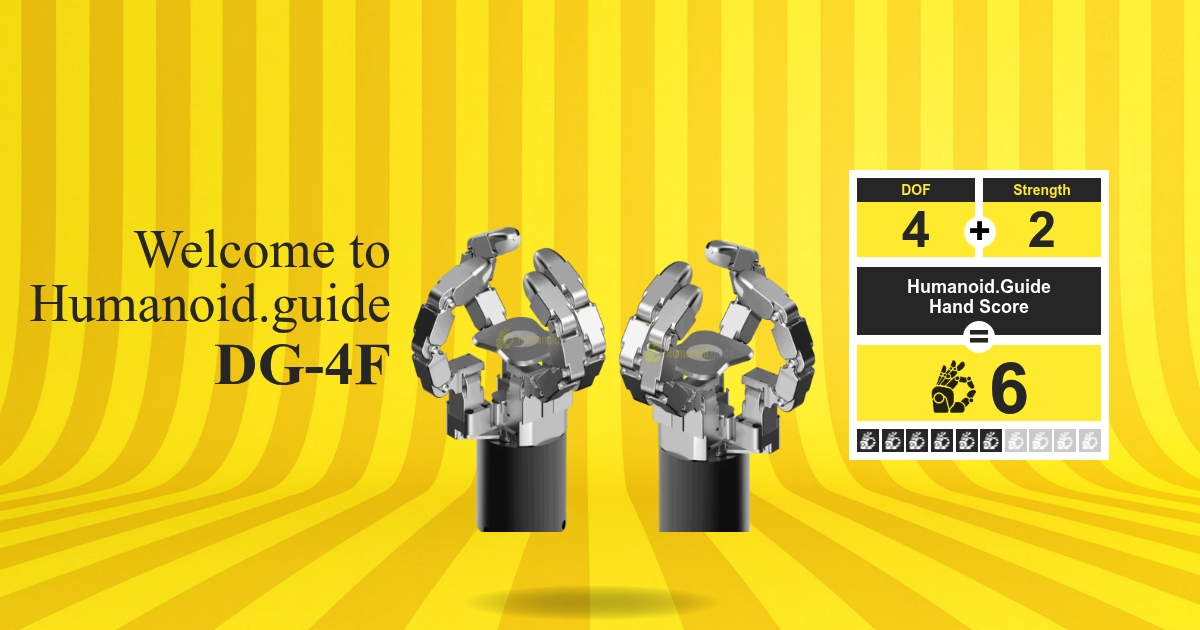
Tesollo’s four finger robotic hand occupies the capable tier with an overall Humanoid.Guide Hand Score of 6 out of 10. Its assessment combines a Degrees of Freedom rating of 4 out of 5 with a Strength rating of 2 out of 5, giving it a stronger standing for dexterity than for grip strength within this scoring framework. These are category ratings, not measurements of joint count, lifting capacity, or applied force. The distinction matters when comparing robotic hands because flexibility and strength address different handling requirements. A higher dexterity rating does not automatically imply a higher load capacity, and the overall score should not be treated as a substitute for application testing. For buyers, the useful starting point is this balance between the two categories rather than the headline score alone. The hand belongs to Tesollo’s Delto Gripper family and is positioned for industrial and research settings where the choice of end effector depends on the intended handling task.
The clearest technical distinction in the assessment is the gap between the two category ratings. Degrees of Freedom receives 4 out of 5, placing it toward the upper end of that scale, while Strength receives 2 out of 5. For an engineering team comparing hands for research or component handling, this provides a useful basis for deciding which questions to investigate first. Dexterity requirements and force requirements should be evaluated separately, with acceptance criteria tied to the intended objects and operating conditions. Neither rating establishes a specific payload, contact force, positioning accuracy, or successful task outcome. A practical evaluation should therefore connect the score profile to measurable requirements rather than treating the overall rating as universal suitability.
The hand is listed as in production, with an advertised price of USD 12,000 and an option to inquire about pricing. Its manufacturer, Tesollo, is based in Incheon, South Korea, and provides information through tesollo.com. For prospective purchasers, production status is a useful starting point, but purchasing decisions should also establish delivery timing, configuration, support arrangements, and the scope of the quoted price. Its broader significance lies in the tradeoff highlighted by the assessment: robotic hands should be compared across distinct dimensions rather than ranked solely by a single total. A capable overall score paired with different dexterity and strength ratings encourages a more specific discussion about application fit, evaluation priorities, and procurement requirements.