SF Tech Week 2026: a week in the physical AI rooms
Lars-Fredrik Forberg, co-founder, Kinetic Blocks AS. San Francisco and Palo Alto, 5 to 11 October 2026.

SF Tech Week ran from 5 to 11 October with over 1500 events across San Francisco, Palo Alto and the wider Bay Area, and although most of the programme concerned AI agents and go-to-market, a growing share dealt with robotics and physical AI, which is the part of the week this account covers, together with the Nordic programme that made it considerably easier for a small Norwegian company to find its way in. The format was panels and fireside chats rather than keynotes, admission was free for most events and the speakers were consistently strong, although a large part of the real conversation takes place at private dinners and closed sessions that never appear on the public calendar.
The Future of Capital
The week opened on Monday 5 October with a panel on how AI agents change the way capital is allocated in marketplaces, where Brian Mac Mahon (Expert DOJO VC), Richard Sheng (UpHonest Capital), Jeff Zielinski (Buy&Ship), Ankita Shrivastava (TikTok), Ujwal Chaudhari (Visa) and Mark Smart (WiziumAI) discussed agents that negotiate and transact on behalf of buyers and sellers. Agent-to-agent commerce recurred across the AI side of the week, although my own view is that end users will care little about how agents negotiate behind the scenes, and that the more lasting question for a marketplace is whether the goods being traded can be trusted.
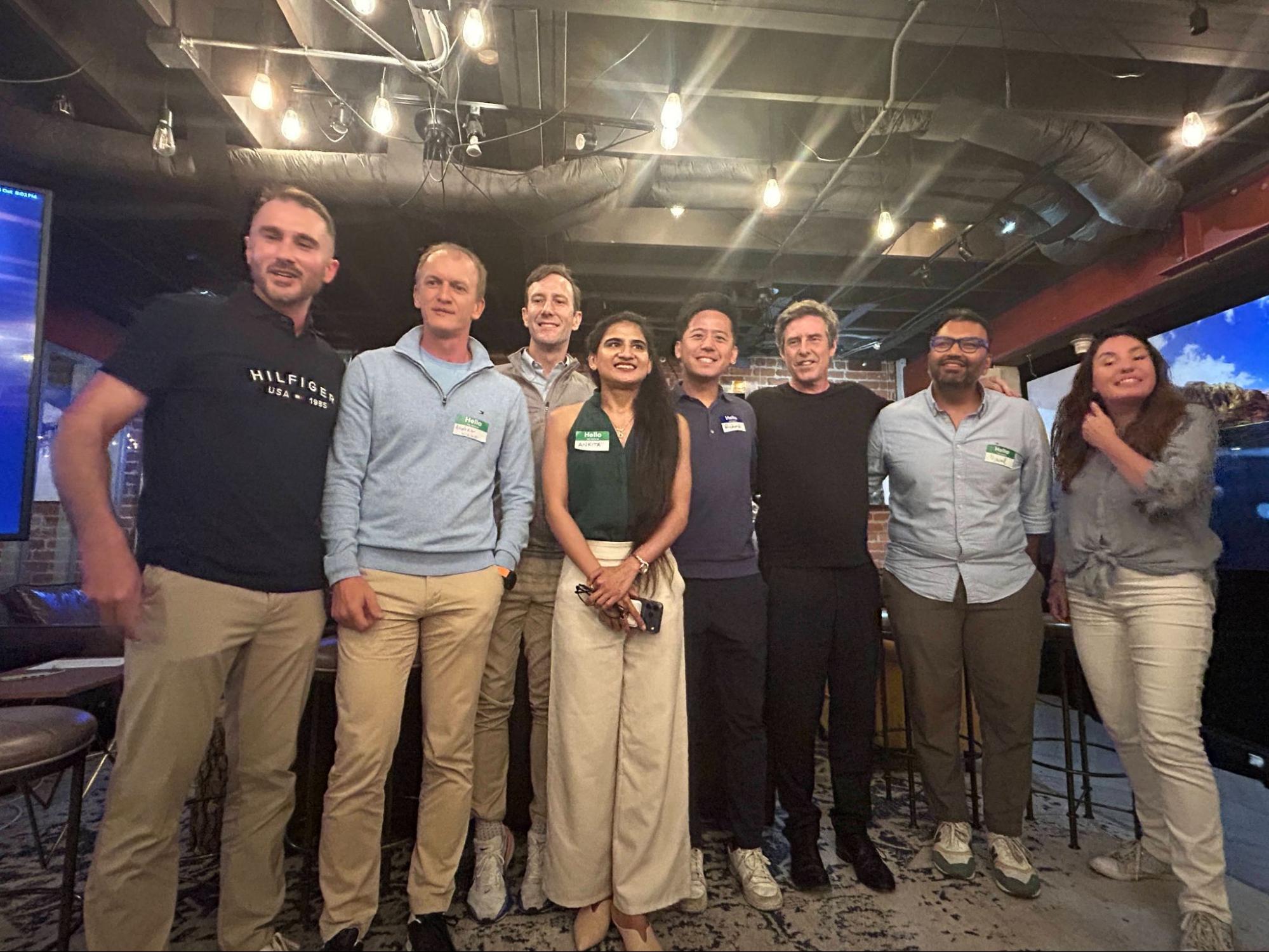
Speakers after The Future of Capital, 5 October. From left: [moderator], Jeff Zielinski (Buy&Ship), Mark Smart (WiziumAI), Ankita Shrivastava (TikTok), Richard Sheng (UpHonest Capital), Brian Mac Mahon (Expert DOJO VC), Ujwal Chaudhari (Visa) and the organiser.
Three rooms we reported from
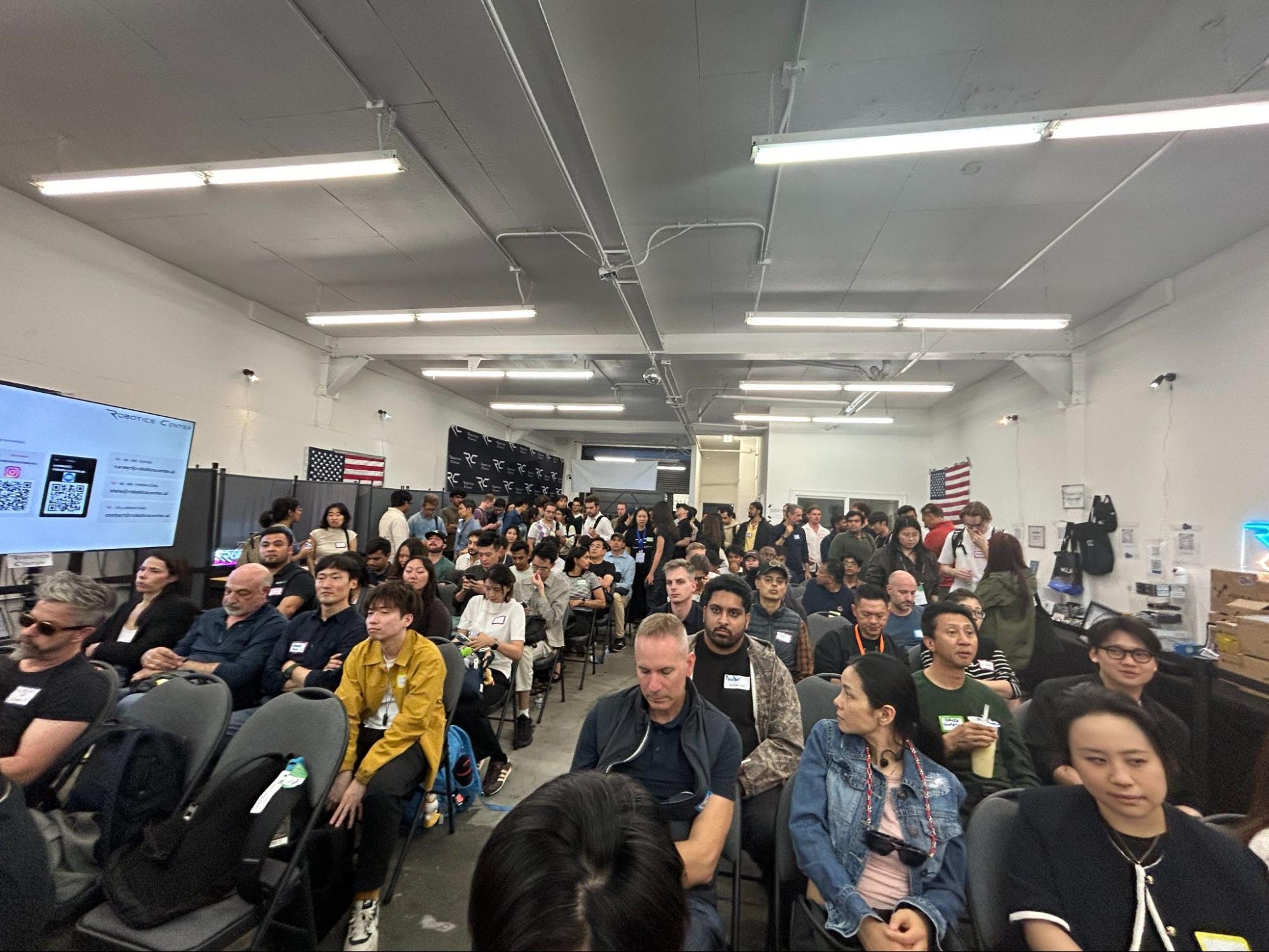
The data layer of physical AI. Physical AI Operators #02, organised by Rachael Wang at the Robotics Center in SoMa on 6 October, brought AgiBot, Astera Robotics and Veesion together on data as the bottleneck for physical AI. Full report: kineticblocks.com/newsletter/data-layer-of-physical-ai
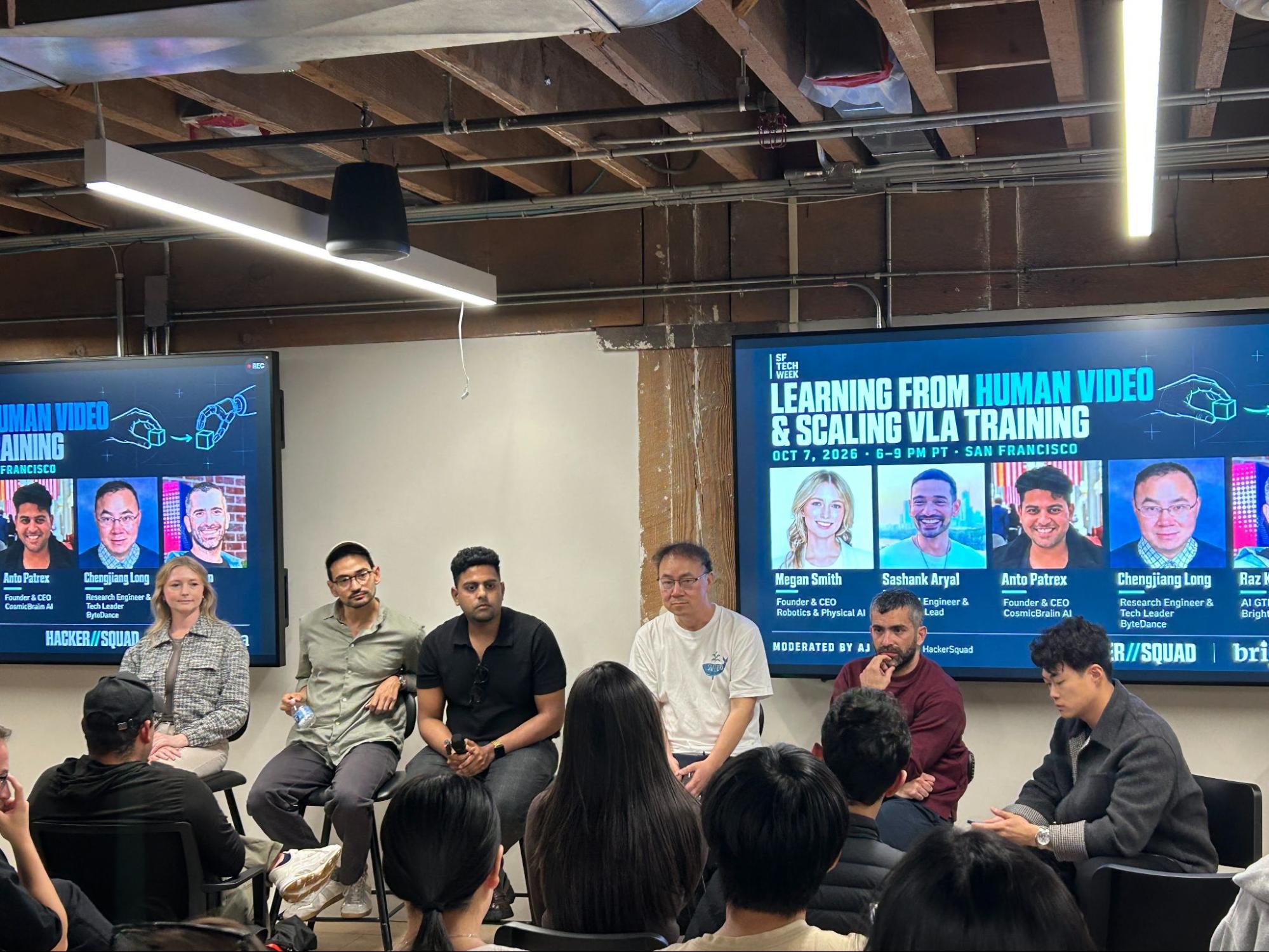
Learning from human video. On 7 October HackerSquad and Bright Data hosted a panel on learning from human video and scaling VLA training, moderated by AJ Chan of HackerSquad, with Megan Smith (Robotics & Physical AI), Sashank Aryal (Voxel51), Anto Patrex (CosmicBraiin AI), Chengjiang Long (ByteDance) and Raz Kaplan (Bright Data). The question was whether human video without action labels improves robot generalisation, and Chengjiang Long set out the four gaps that separate a web video from a usable training example. Full report: kineticblocks.com/newsletter/learning-from-human-video
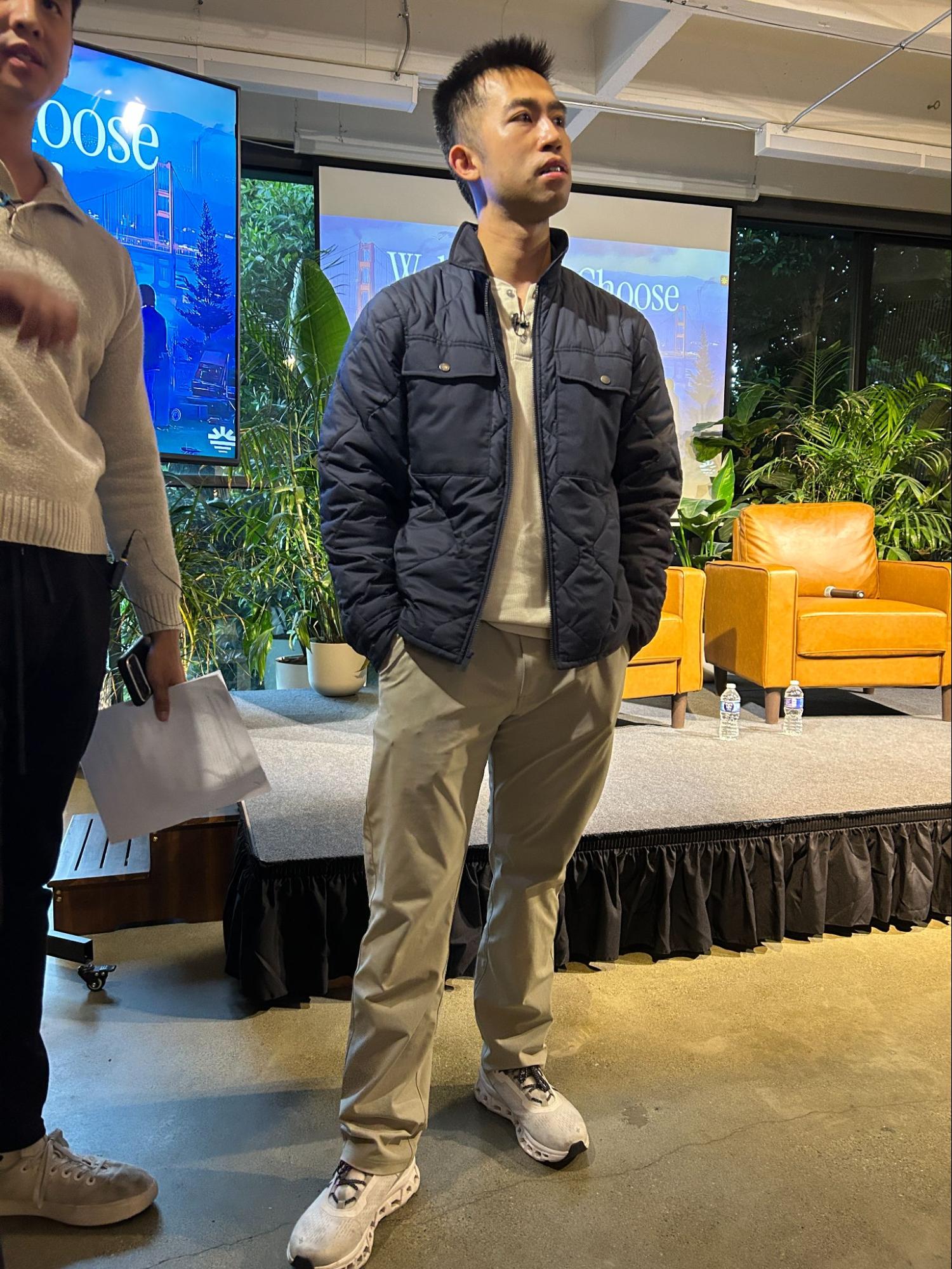
Deployment is the moat. Jason Ma, co-founder and Chief Scientist of Dyna Robotics, explained at Savant VC on 8 October how a robot folding towels in a paying customer’s laundry produces data that flows back into the model, and why Dyna sees the shift from VLA to world action models as the next step. Full report: kineticblocks.com/newsletter/deployment-is-the-moat
AI Visionaries Forum: physics first, then the robot
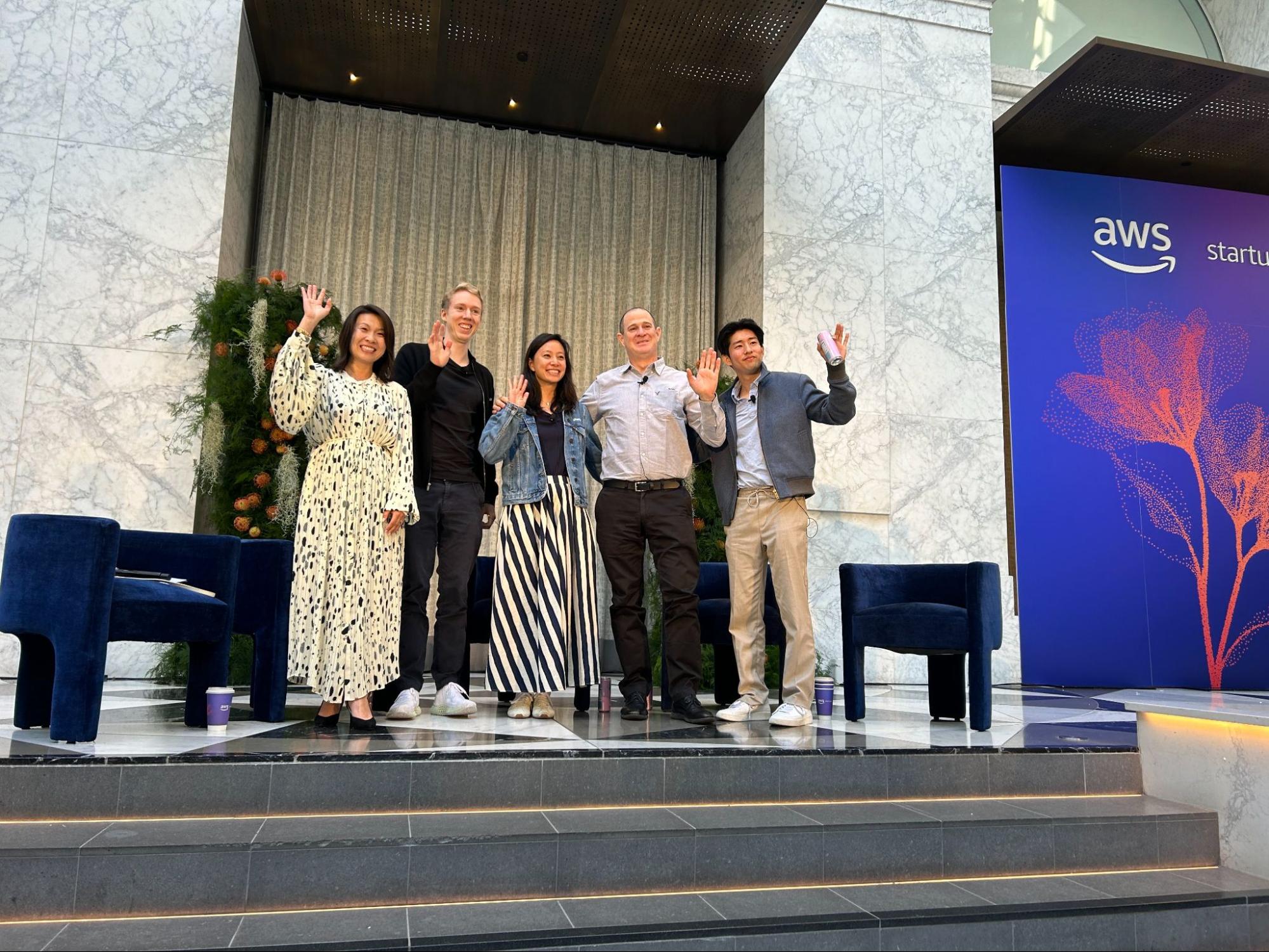
On Tuesday 6 October the AI Visionaries Forum on the AWS Startups stage brought Kristina Shen (Chemistry), Ariel Shulman (Bright Data), Fan-Yun Sun (Moonlake AI) and Andrew Wooten (Rhoda AI) together, moderated by Grace Velker of AWS. Wooten described how Rhoda AI trains on internet-scale video, around 500,000 hours by the company’s own count, because egocentric footage alone is too narrow to generalise, and argued that a model should first learn how the physical world behaves and only then solve the translation to a particular robot, in the same way that large language models needed internet-scale text before they could handle language. The panel preferred general pre-trained models over task-specific ones, described a commercial model in which the robot company takes responsibility for the customer’s own measures such as cycle times and reliability, and noted that reliability problems multiply as tasks are split across hardware and software layers. For a marketplace the implication is that demand will extend beyond egocentric capture to broad video collections, provided their rights can be documented.
RoboCon Physical AI Salon: PrismaX and Moonlake
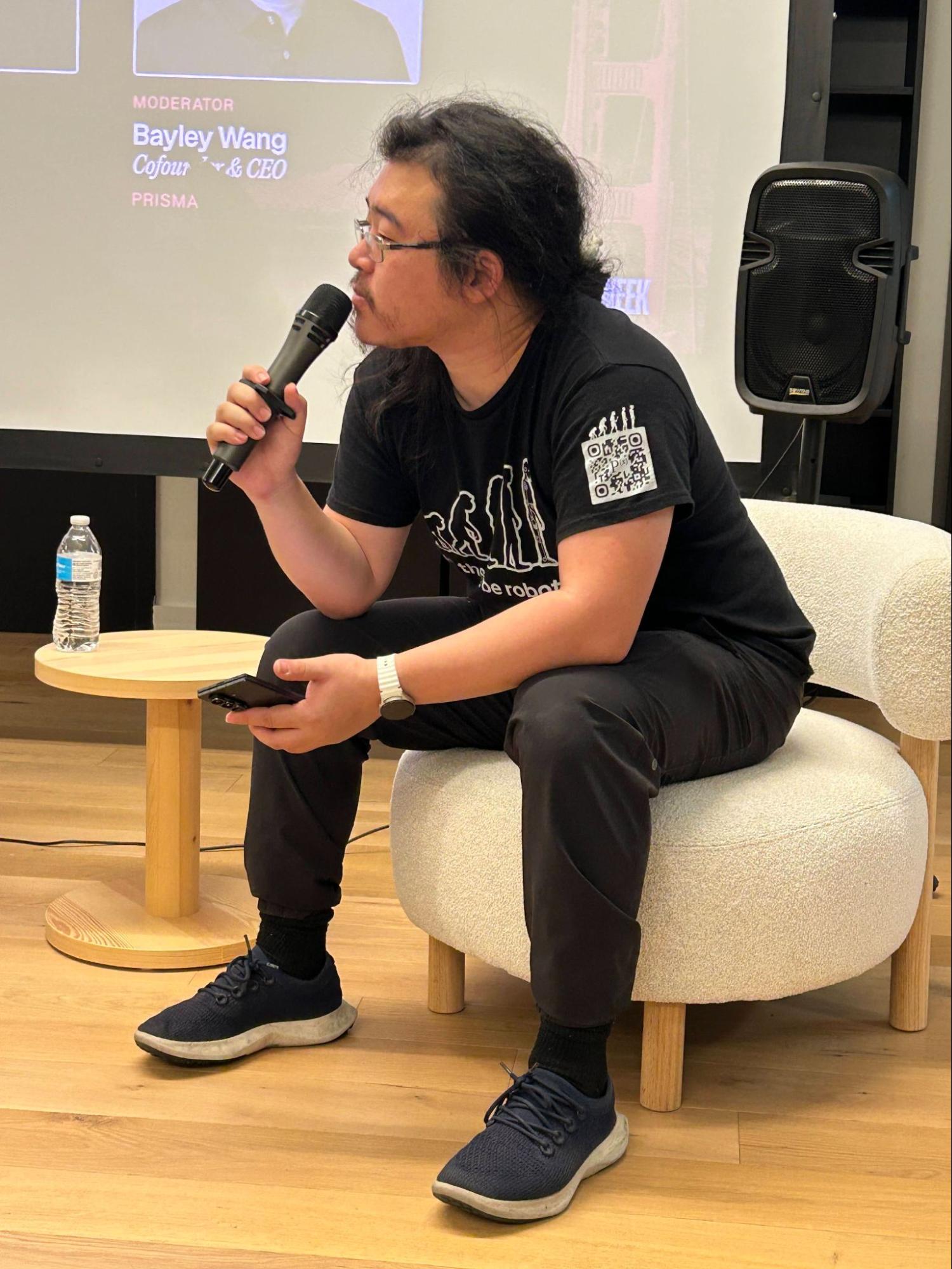
The salon hosted by PrismaX and Moonlake combined robot demonstrations and short panels, with Bayley Wang (co-founder and CEO, PrismaX) moderating Sharon Lee (co-founder, Moonlake) and Vivek Gopal Ramaswamy (Senior AI Product Manager at Agility Robotics). The common thread was that models now generalise across tasks that looked out of reach two years ago, while running them reliably on a real machine in a real site remains a harder problem, which Sharon Lee summed up as “you are only as good as how you deploy”. The panel agreed that simulation reduces hardware testing but struggles with contact-rich manipulation and foot-ground contact, that the choice between engines such as Isaac Sim and Genesis affects how well policies transfer to the real robot, and that edge hardware forces a trade-off between large foundation models and lighter task-specific policies. Vivek pointed to a practical blocker for data collection, since warehouse operators tend to regard footage recorded in their own facilities as their intellectual property.
The Nordic way in
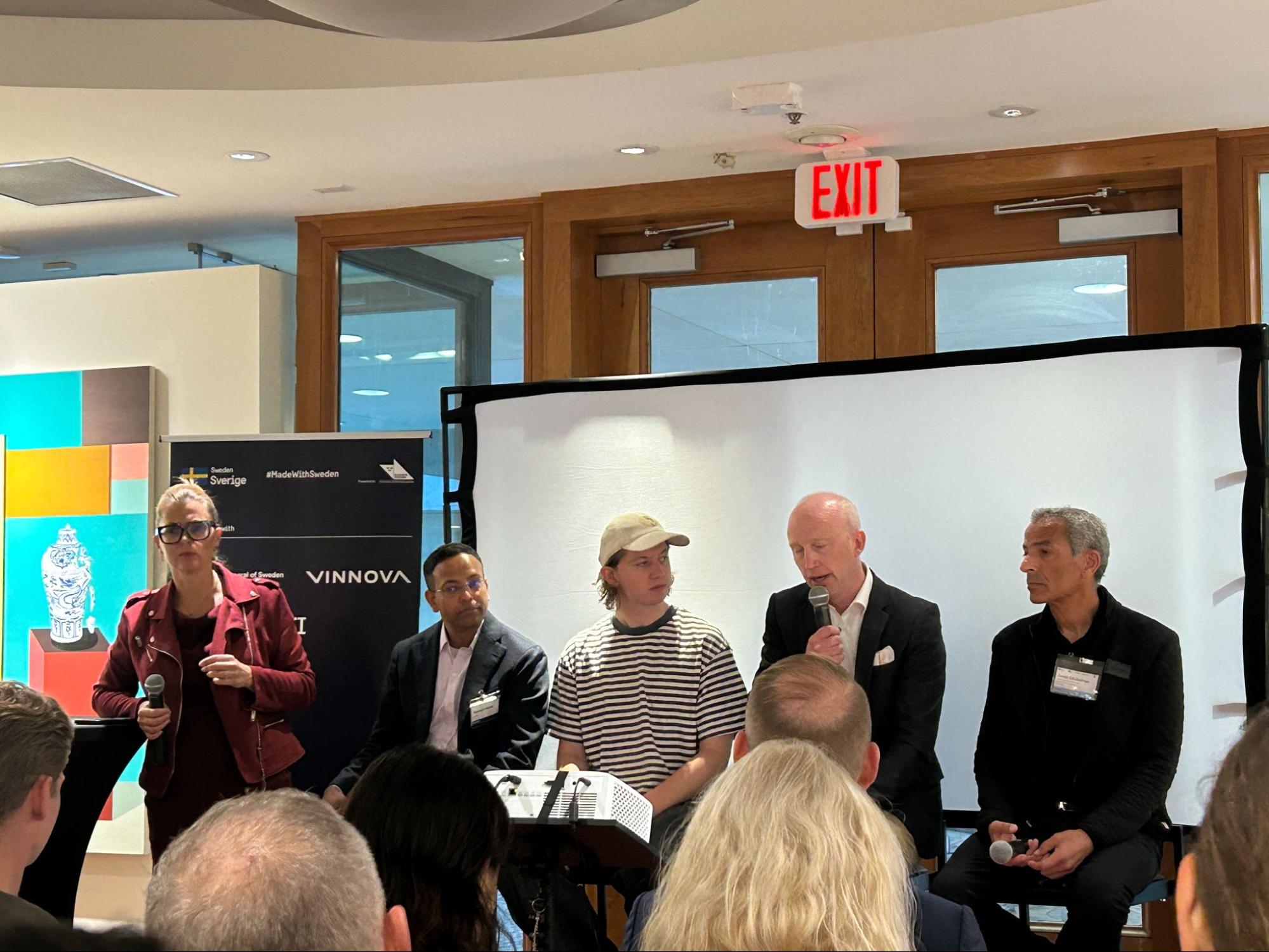
Swedish House. Business Sweden, led in San Francisco by Malin Samuelsson, ran Swedish House throughout the week together with the Consulate General of Sweden and Vinnova, which made it considerably easier to meet speakers and other guests and gave a Norwegian company the same access as the Swedish delegation.
- How AI Is Transforming the Physical World, 6 October. A breakfast panel with Eva Nahari, Bibhrajit Halder, Isak Rizell (Pylero AI), Nicholas Tengelin (Rebl Industries) and Jumbi Edulbehram (NVIDIA), where Halder argued that large AI companies will buy into verticals such as hospitals, mines and construction rather than only supply the models that run them, a pattern already visible in General Catalyst’s acquisition of Summa Health.
- Nordic Founders Connect, 8 October, hosted with Osborne Clarke and YEoS, where Henrik Bergström of Osborne Clarke advised Nordic founders against establishing a Delaware entity before the business case for it is clear.
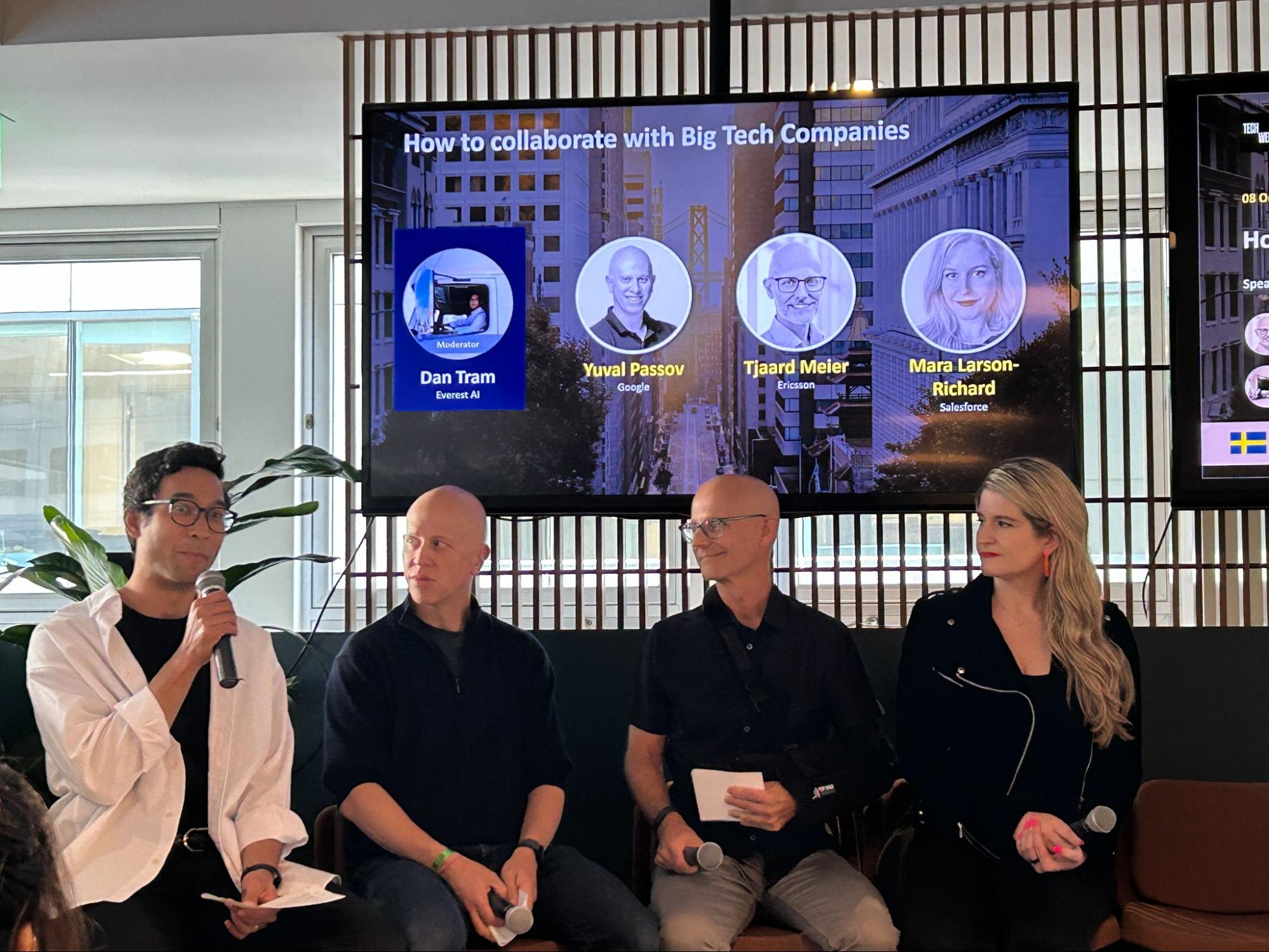
- How to collaborate with Big Tech Companies, 8 October, with Yuval Passov (Google), Tjaard Meier (Ericsson) and Mara Larson-Richard (Salesforce), moderated by Dan Tram (Everest AI), where Larson-Richard argued that a company that wants to work with large technology firms has to be present in San Francisco, because that is where the decisions are made.
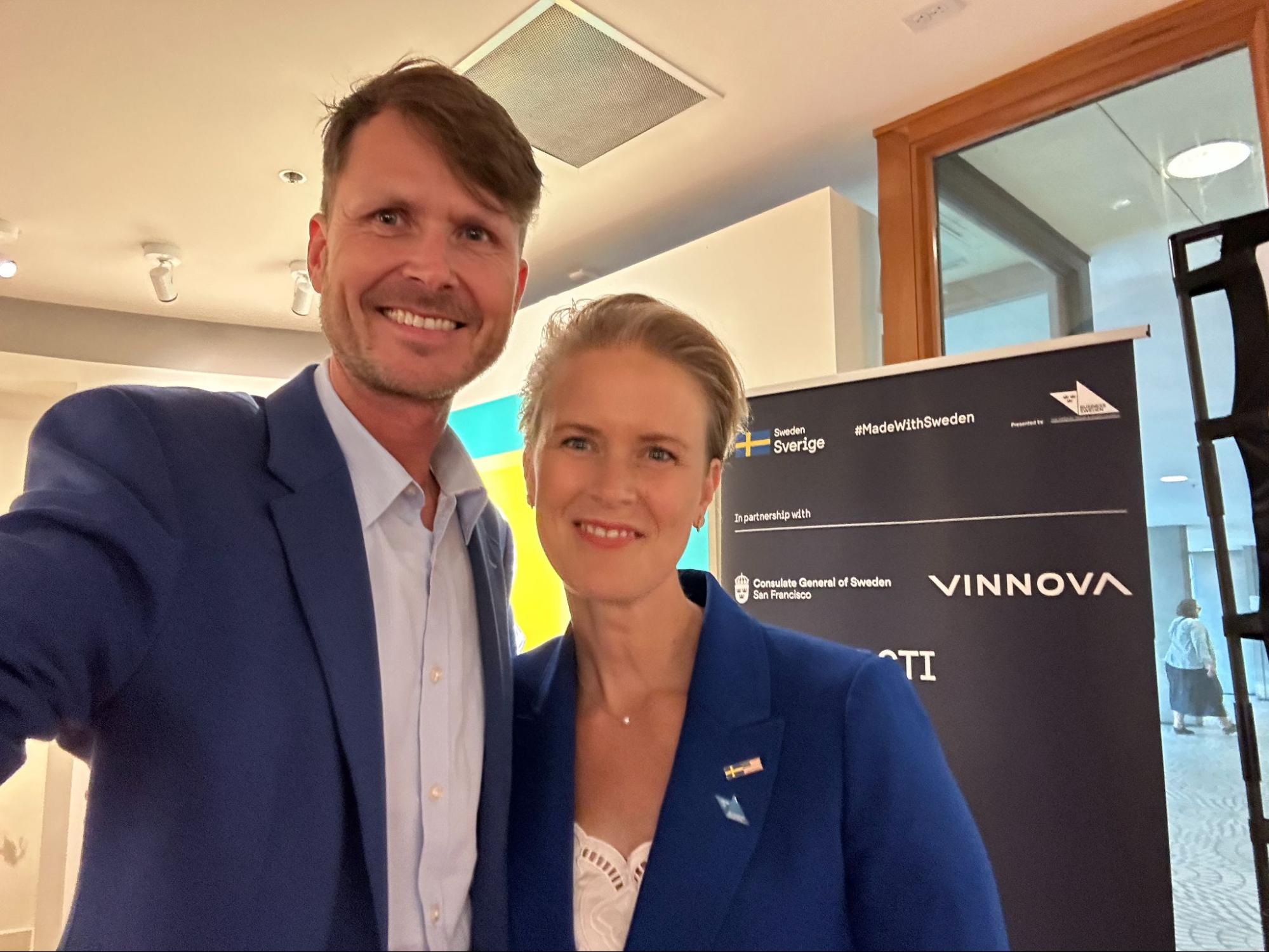
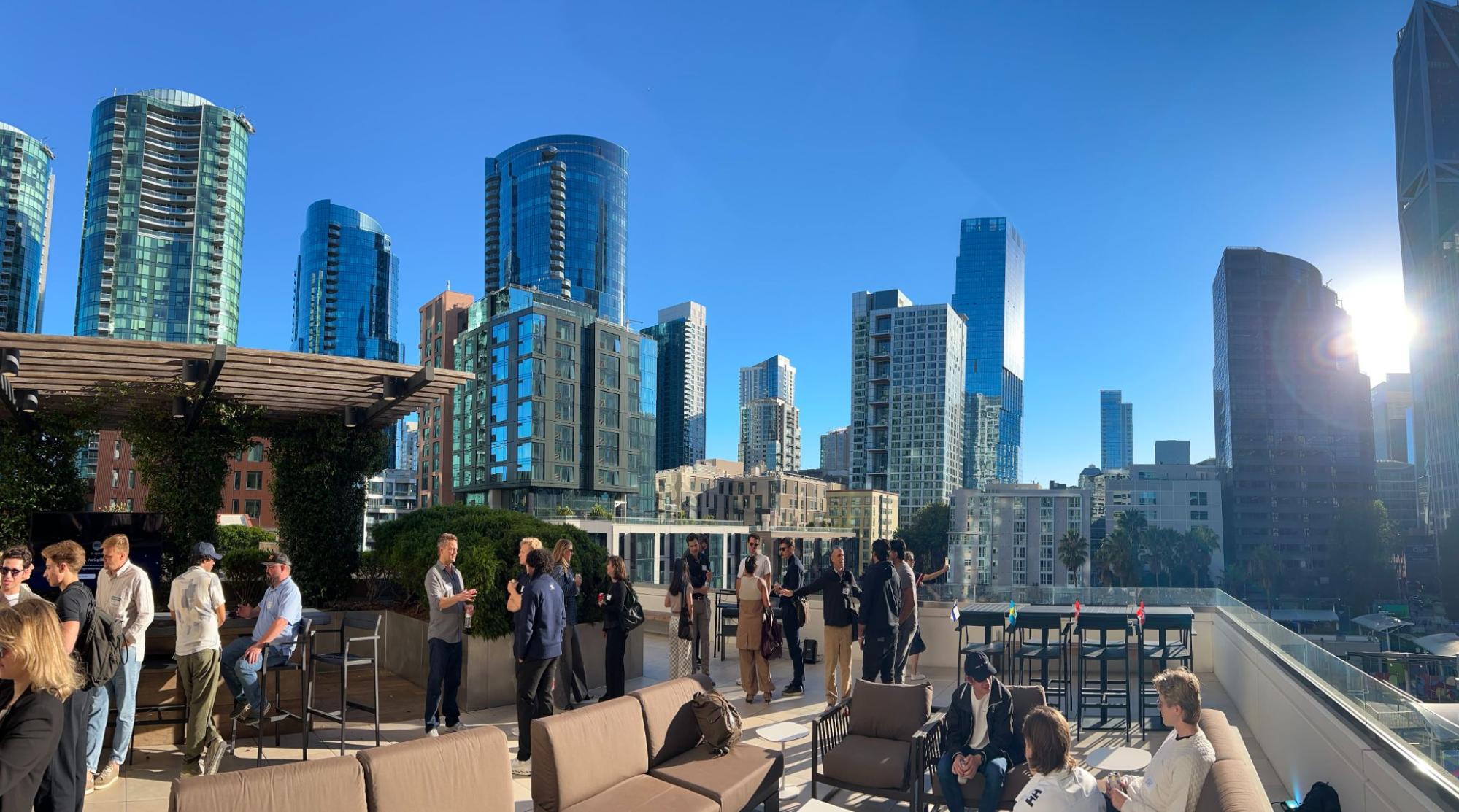
Innovation Norway’s rooftop. On Wednesday 7 October Innovation Norway, together with Business Finland, Vinnova, Green Transition Initiative, Business Sweden and Innovation Center Denmark, hosted the Nordic Rooftop Happy Hour for several hundred founders, investors and students, and Jon Halvard Bolstad Olsen, Head of Innovation Norway, also met us at Nordic Innovation House in Palo Alto.
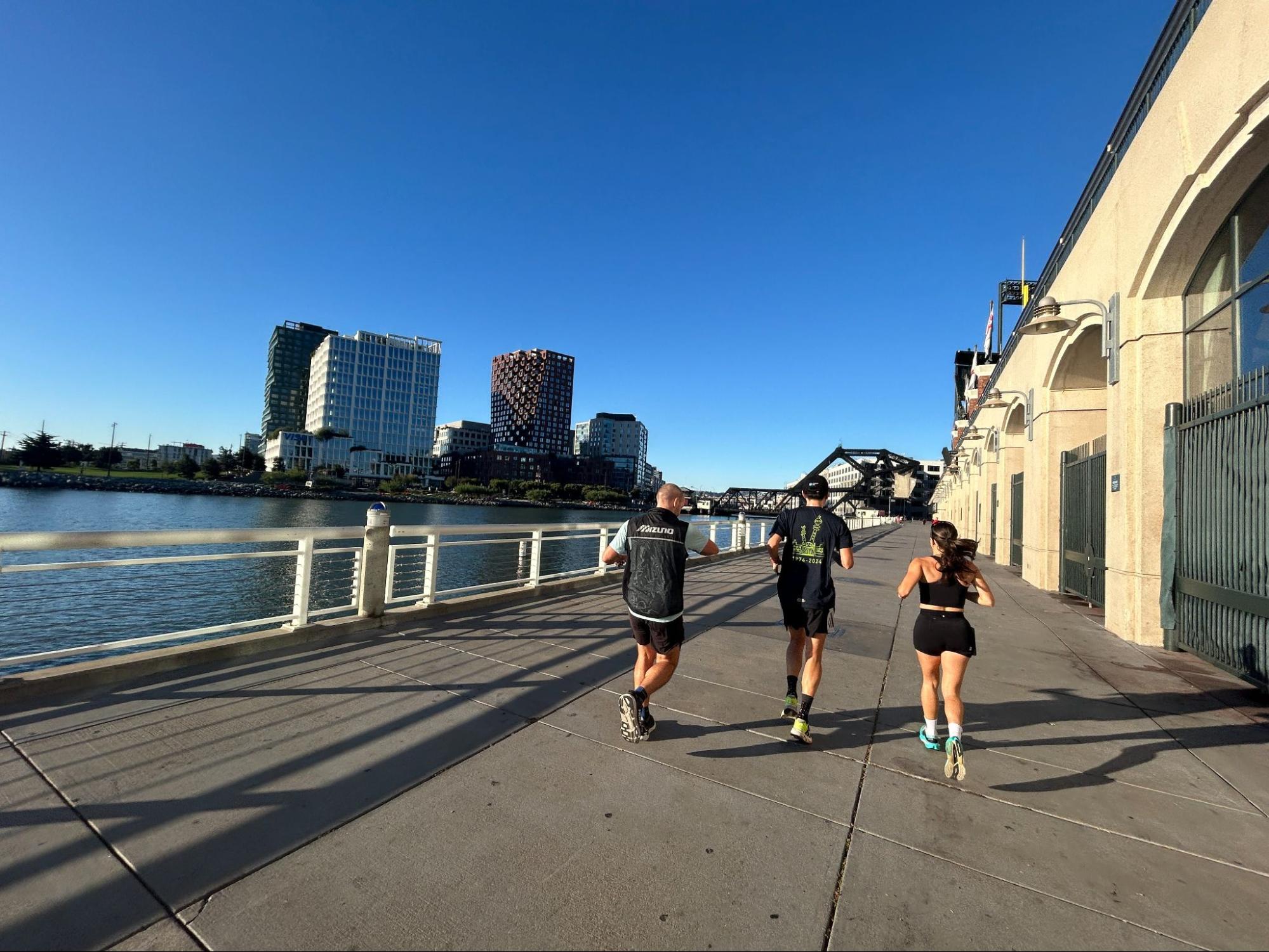
Running with Dealmaker. Some of the better conversations started outside the programme, including a morning run organised by Dealmaker from the Ferry Building along the waterfront.
What did we miss
Saturday Robotics. On 10 October the Saturday Robotics reading club gave the floor to Hongyu Li of Brown University and NVIDIA, who argued that the interface between a learned model and a robot should sit in what cameras see, meaning points, pixels and motion flow, so that moving a model to a new robot requires a thin translation layer rather than thousands of new hours of robot data. The club’s write-up notes that most remaining failures occur in grasping and execution rather than in the plan, which places the bottleneck at the point of physical contact, and that two thirds of the training data for the NVIDIA world model presented came from a single bimanual teleoperation dataset. Write-up: https://www.linkedin.com/pulse/333-perceiving-predicting-planning-physical-interaction-1ao7c?utm_source=share&utm_medium=member_ios&utm_campaign=share_via
Bay Area Founders Club. Dr Paul Fang’s club holds closed roundtables for researchers from the frontier labs, and the next one, in Atherton on 18 October, is organised around AI security and control: whether AI favours attackers or defenders, how to detect self-improving systems, how to verify AI-written code and whether prompt injection can be solved. Event page: luma.com/ispcjmq1
What we take home
Regular presence in San Francisco matters more than any single event, since the signals about which data is in demand reach those who are in the city first, and the week also confirmed that among more than a hundred new connections only a handful turn into working relationships, which in this market depend on warm introductions far more than on cold outreach. Data collection is scaling quickly among competitors such as Mecka and Maxinsights, by their own statements, which makes provenance, licensing and measurable quality the questions an independent marketplace has to answer.
Disclosure (for HG): Humanoid.guide holds a stake in Kinetic Blocks AS, where the author is co-founder. Humanoid.guide’s editorial line is independent of Kinetic Blocks, and this article is published on both sites.
Source: humanoid.guide