Corporate Preparation for Autonomous 24/7 Humanoid Workers – Enterprise License
$ 1 912
Enterprise Users License
Roughly 13,000 humanoid robots shipped in 2025, and most corporate pilots still stall – not because the robots cannot do the work, but because the enterprise around them was never asked to be ready. This 130-page report is the preparation manual: what a 24/7 humanoid worker actually is, what it costs over five years, what it does to your workforce, which standards apply and which do not yet exist, and a dated five-year plan with owners, budgets and gates. Read more about the report here
This is an enterprise license: unlimited internal users at one organization, and the right to quote the report in board papers and internal strategy documents. For a single named user, click here.
Specifications and details:
Description
The robots are ready. The question is whether your organization is.
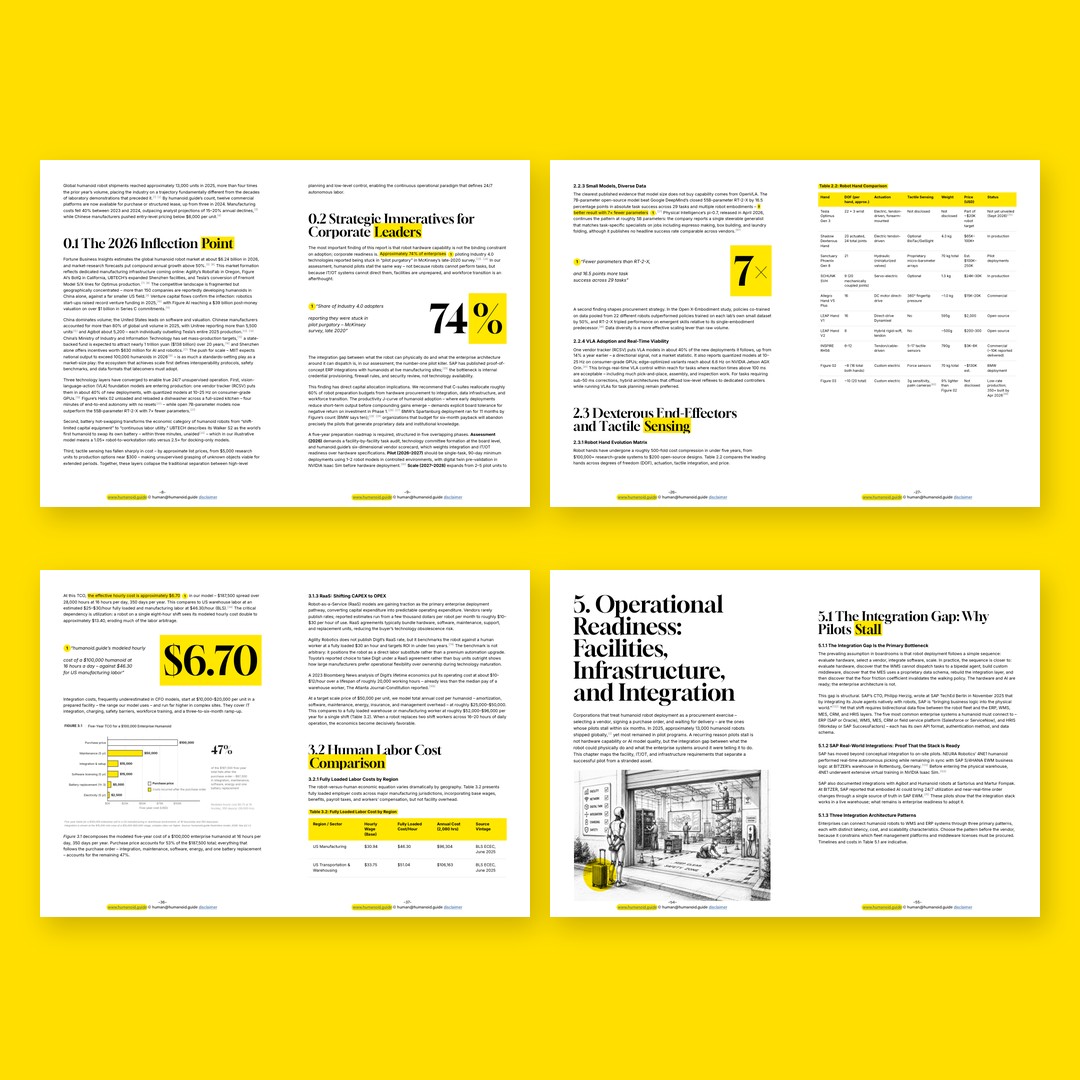
Roughly 13,000 humanoid robots shipped in 2025, more than 80 per cent of them from Chinese manufacturers. Twelve commercial platforms are on the market, and payback periods have moved from vendor slides into CFO spreadsheets. Yet 74 per cent of Industry 4.0 adopters remain stuck in pilot purgatory – the constraint is readiness, not robots.
Humanoid deployment is not an engineering project with a business sponsor. It is a board decision with an engineering component. This report is written for the people who sign the purchase order: what a 24/7 autonomous worker actually is, what it costs over five years, what it does to the workforce, which standards apply and which do not yet exist – and a dated five-year plan with owners, budgets and gates.
Inside the report
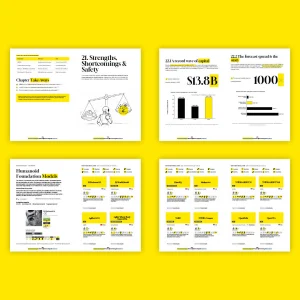
- 130+ pages, ~36,000 words – Executive Summary, 11 chapters and a full reference list
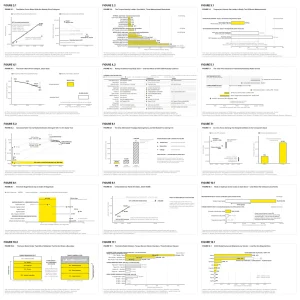
- 16 figures, 24 tables, 251 sources – primary where they exist, with every model assumption printed
- A five-year TCO model and six payback scenarios: the modeled hourly cost of a $100,000 humanoid at 16 hours a day is $6.70, against $46.30 for US manufacturing labor
- Governance framework, first-mover versus fast-follower analysis, the productivity J-curve and a six-dimension vendor scorecard
- Facilities, networks, three integration architecture patterns, digital twins and maintenance economics
- Workforce transition: displacement and creation dynamics, union positions in four jurisdictions and a five-phase reskilling framework
- Safety and compliance: ISO 10218:2025, the humanoid-specific drafts, the EU Machinery Regulation, the AI Act and Cyber Resilience Act, OSHA – and the liability vacuum in between
- Eight industry verticals ranked by readiness, and a five-phase 2026–2031 roadmap with KPIs, budgets and a year-by-year action plan per stakeholder
Written for
Boards and CEOs · CFOs · CHROs · CIOs and CTOs · COOs and plant leadership · legal, risk and compliance · corporate strategy, consultancies and investor teams.
PDF, delivered immediately. Free updates throughout the 2026 cycle. Second Edition – September 2026.