UC San Diego tests humanoid robots in preclinical surgery
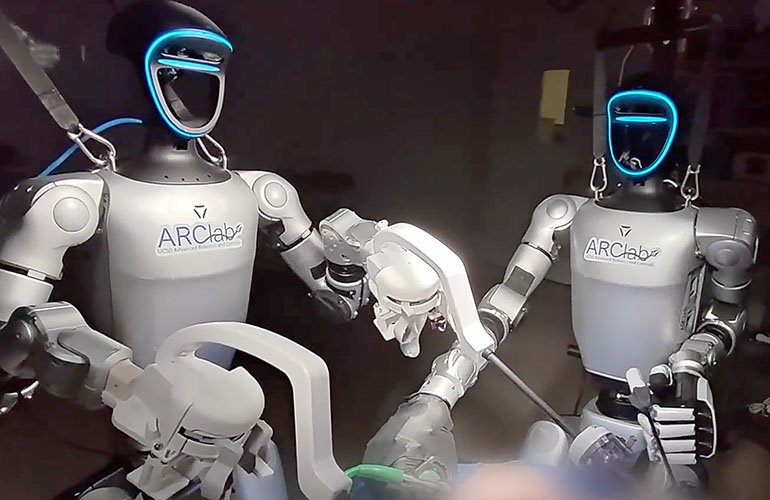
UC San Diego researchers have used teleoperated humanoid robots in a preclinical surgery trial, including one procedure in which a humanoid assisted a human surgeon and another in which two humanoids worked side by side on a large non primate mammal.
The procedures involved laparoscopic gallbladder removal, according to Medical Design & Outsourcing. The researchers describe the work as a first of its kind study and a proof of concept for bringing general purpose humanoid bodies into operating rooms, first as assistants and later as surgeon controlled systems for procedures.
Michael Yip, one of the paper’s senior authors and a faculty member in UC San Diego’s Department of Electrical and Computer Engineering, said the study points to a possible role for humanoids in surgery. “This study shows that humanoid robots have a viable future in the field of surgery,” Yip said.
Key facts
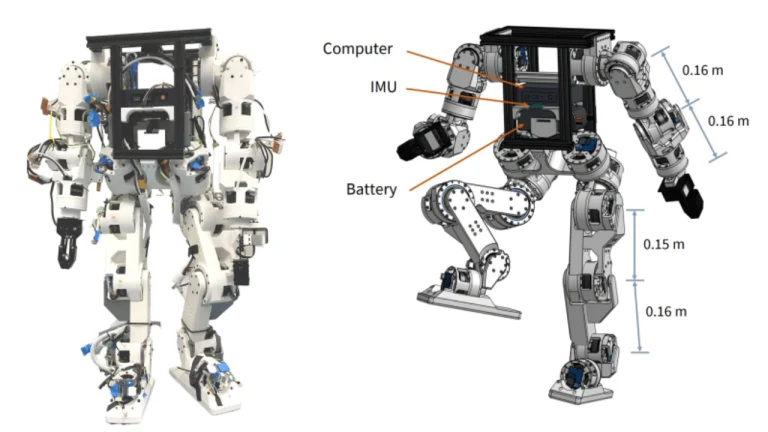
- Robot size: 5 feet tall
- Robot weight: 60 pounds
- Tooling: Researcher built adapters allowed the humanoids to hold traditional surgical tools
Why use a humanoid body in surgery?
The researchers frame humanoid surgery robots as a lower space, more deployable alternative to dedicated surgical robotic systems, not as a like for like replacement ready for clinical use. The source article says existing surgical robots are designed around specific functionality and indications for use, while the humanoids used here were presented as more versatile platforms for different procedures and support tasks.
Yip linked that versatility to access. “Remotely operated and autonomous humanoid robots have real potential for amplifying access to critical surgeries to which patients would otherwise not have access,” he said in a UC San Diego release quoted by the source. He pointed to remote communities, austere environments and search and rescue scenarios as possible deployment settings.
The physical format is part of the argument. At 5 feet tall and 60 pounds, the humanoids are relatively compact compared with room scale surgical robotics installations. Surgeons in the study also said the robots fit well in the operating room and that controlling the humanoid felt natural, according to the report.
Latency and recalibration slowed the trial
The study is still early stage work. Medical Design & Outsourcing reported that latency became a problem after the humanoids had to be recalibrated several times during the surgeries. As a result, the procedures took “much longer” than a comparable procedure performed with an existing surgical robotic system.
That limitation is central for any serious reading of the result. A humanoid body that can hold conventional tools and stand in a normal operating room is useful only if control, calibration and timing can meet surgical workflow requirements. The source does not claim the system is ready for patients.
The UC San Diego team is also looking beyond direct teleoperated surgery. Yip said one goal is to develop an “autonomous surgical assistant” that could handle physical tasks such as fetching tools for surgeons or cleaning up the operating room after a procedure.
For humanoid robotics, the trial is a rare example of the form factor being tested against a highly constrained, high precision task rather than a public demonstration. The reported gap between successful completion and surgical system level speed is where the hard engineering work remains.
Source: medicaldesignandoutsourcing.com