Welcome, KEPLER!
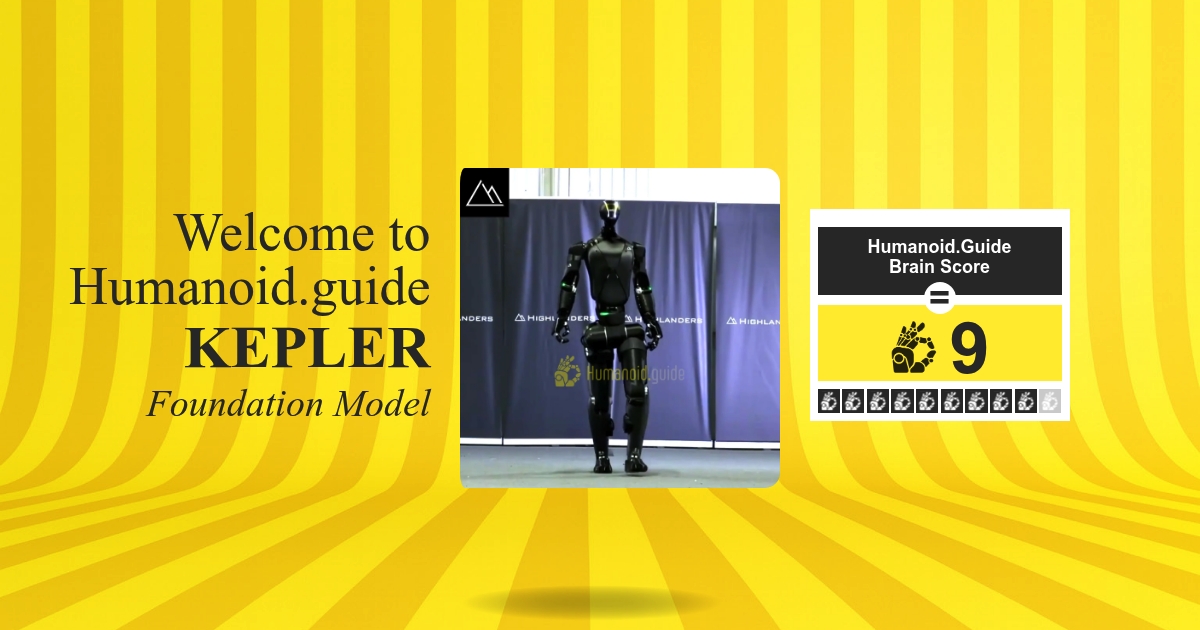
KEPLER is Highlanders’ foundation world model for humanoid robots, built as the core intelligence layer of the company’s physical AI platform. Rated 9 out of 10 on the Humanoid.Guide Brain Score, it sits in the state of the art tier for this category. Rather than specializing in a single narrow behavior, KEPLER brings together long term reasoning and rapid physical control so a robot can interpret its surroundings, plan across extended sequences, and respond quickly when conditions change. Its design centers on a world model that predicts how actions will shape the environment before motion begins, helping support safer and more reliable behavior. KEPLER is also structured to improve continuously through data gathered from robots operating in everyday settings, so system performance can scale with fleet experience. This combination of planning, prediction, and experience driven learning positions KEPLER as a general purpose brain for humanoid systems that need to carry out complex activities, adapt to unfamiliar situations, and sustain useful work over long periods with limited human oversight.
A key technical idea behind KEPLER is the unification of deliberative reasoning and low latency control inside one foundation model. Instead of treating planning and actuation as isolated modules, it links future oriented decision making with immediate physical responses, which is essential when robots must act in environments that keep changing. The world model approach gives the system a predictive layer for evaluating likely outcomes before execution, while training draws on simulation, teleoperation, and real world robot experience to strengthen reliability. This architecture supports complex activities that unfold over many steps, especially where context matters, interruptions occur, and the robot must keep adjusting its behavior without constant human correction.
KEPLER was released in 2024 by Highlanders, Inc. in Japan and is currently listed as available on backorder. Its role as the intelligence engine behind Highlanders’ physical AI platform gives it significance beyond a standalone software product, since it represents the company’s approach to scalable humanoid autonomy. Continuous learning from fleet data points toward a deployment model where every operating robot contributes to future system improvement, creating a compounding advantage in performance and robustness. In the broader humanoid landscape, KEPLER reflects the shift toward foundation models that aim to provide reusable cognitive infrastructure for many tasks instead of building separate control stacks for each individual behavior.