US humanoid robot ban aims at China’s robotics lead
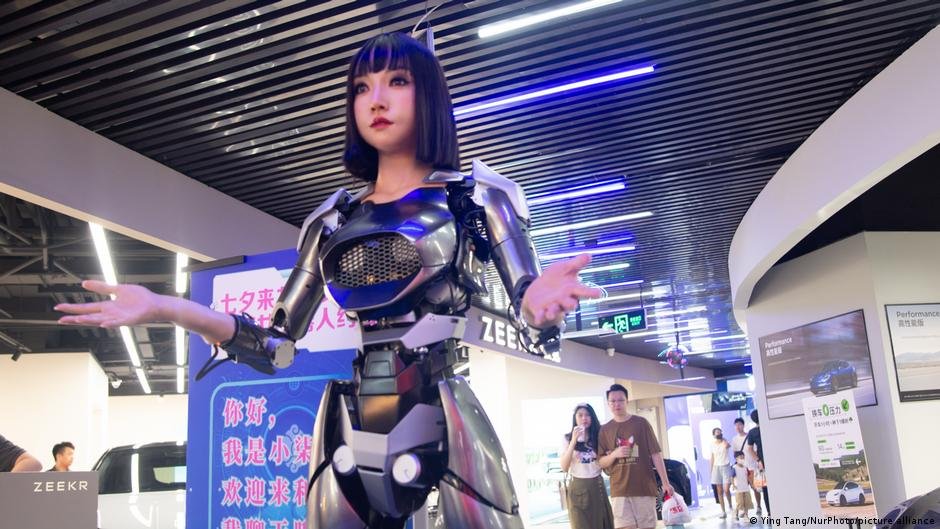
The Trump administration has barred new foreign made humanoid and quadruped robots from entering the United States, with the Federal Communications Commission citing unacceptable national security risks, according to DW.
The rule is framed broadly, but the target is hard to miss. Barclays says China accounted for 85% of humanoid robot deployments last year, and DW reports the measure is widely seen as aimed at Chinese suppliers.
Security case centers on data and remote control
The FCC said humanoid and quadruped robots can collect data that could be used to surveil Americans, support foreign intelligence services, or allow remote commandeering of machines. US officials also point to possible risks around critical infrastructure and the dual use nature of robots that can operate in civilian or military settings.
Unitree Robotics, described by DW as a leading Chinese robot maker, appears on the Pentagon’s list of firms with links to the Chinese military. Its robots have been used in army exercises. Researchers have also shown security flaws in Unitree robots that let attackers take control with a voice command and then use one robot to control others.
The report adds a useful caveat: the threat is still largely theoretical because most commercial humanoid robots remain in early stages of development. The broader concern in Washington is that a large population of lower cost Chinese robots could feed real world data back into Chinese AI systems.
Protection for US makers, pressure on Chinese volume
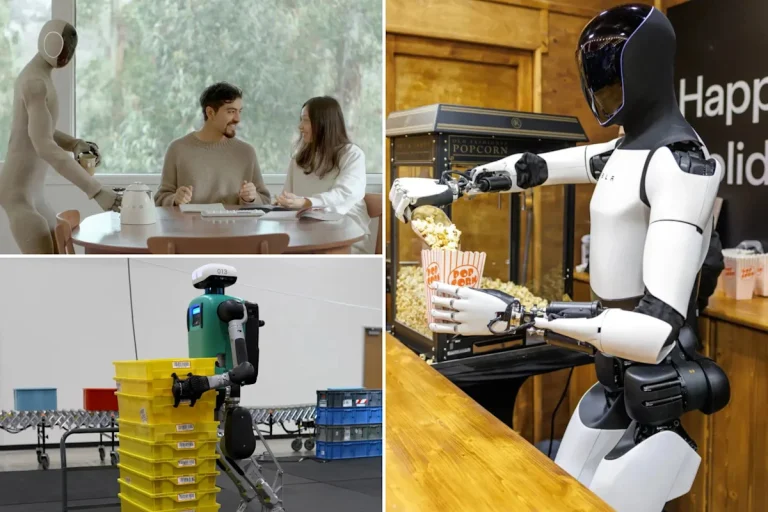
The administration has also made clear that it wants to support domestic robotics companies. DW names Figure AI, Tesla Optimus and Agility Robotics among the US players that could be shielded from higher volume Chinese competitors, whose robots often cost half the price or less of US rivals.
The production gap is already large. Omdia says China has six firms in the top 10 robotics rankings, and those companies shipped nearly 11,600 humanoids last year, compared with a few hundred from US firms. Bank of America has forecast around 90,000 shipments by the end of this year.
Rush Doshi, director of the Initiative on China Strategy at the Council on Foreign Relations, described the ban as “one of the most significant actions taken so far in support of the US robotics ecosystem.” Critics are less convinced that import restrictions will build the missing pieces of that ecosystem. Georg Stieler, an advisor to the robotics industry, wrote that “Restrictions can reduce security exposure, but they do not by themselves create a competitive domestic ecosystem.”
China has rejected the accusations, saying the US is using national security as a pretext for protectionism. DW says Beijing is expected to impose countermeasures, potentially including curbs on raw materials that US robotics firms need to scale production.
Market stakes are still mostly forecast
Barclays estimates the humanoid robot market is currently worth $2 billion to $3 billion and could reach $200 billion by 2035 in its most optimistic scenario, assuming progress on brains, brawn and batteries. Elon Musk has made a much larger claim for Tesla Optimus, saying it could become “the biggest product ever” with long term sales potentially reaching $10 trillion.
Musk has said robots that currently sell for about $100,000 could eventually cost $20,000 to $30,000 at scale. DW notes that combining the Barclays forecast with Musk’s target price would imply roughly 7 million to 10 million humanoid robots sold each year by 2035.
Near term demand is expected to come from repetitive and physically demanding work in warehouses and factories, with health, elderly care and household chores farther out. For now, the US humanoid robot ban is less about blocking a mature product category than about controlling access to a field both governments expect to become strategically relevant.
Source: dw.com