Renesas humanoid robotics push targets physical AI systems
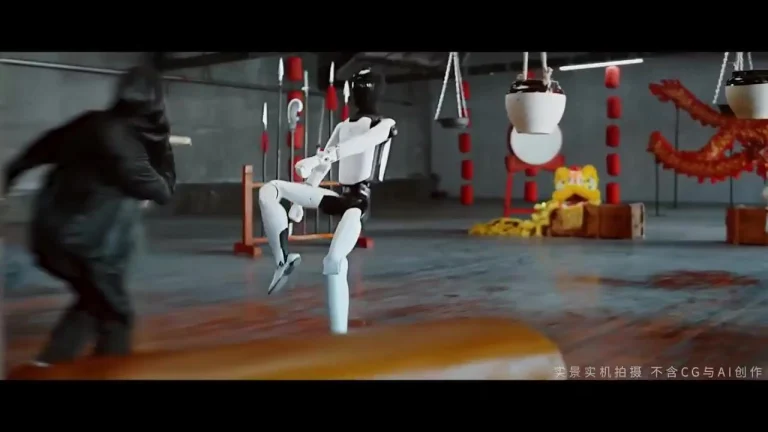
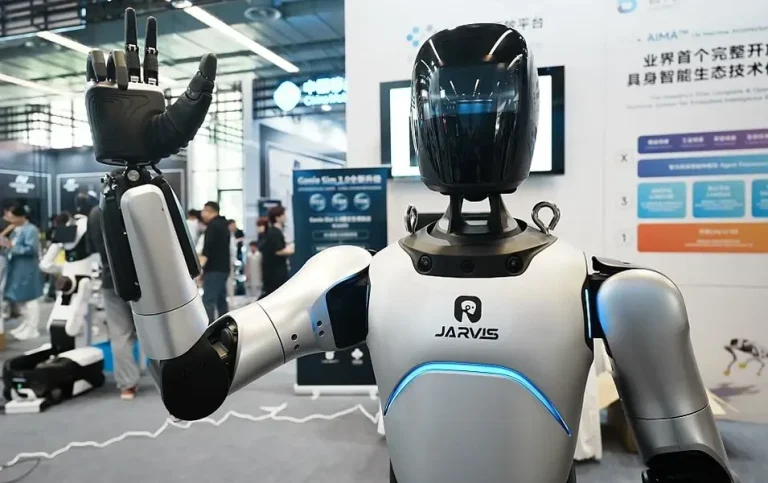
Renesas is positioning humanoid robotics as a target market for its embedded processing, sensing, motion control and power management portfolio, using the term physical AI to describe robots that must perceive, decide and move safely in real time.
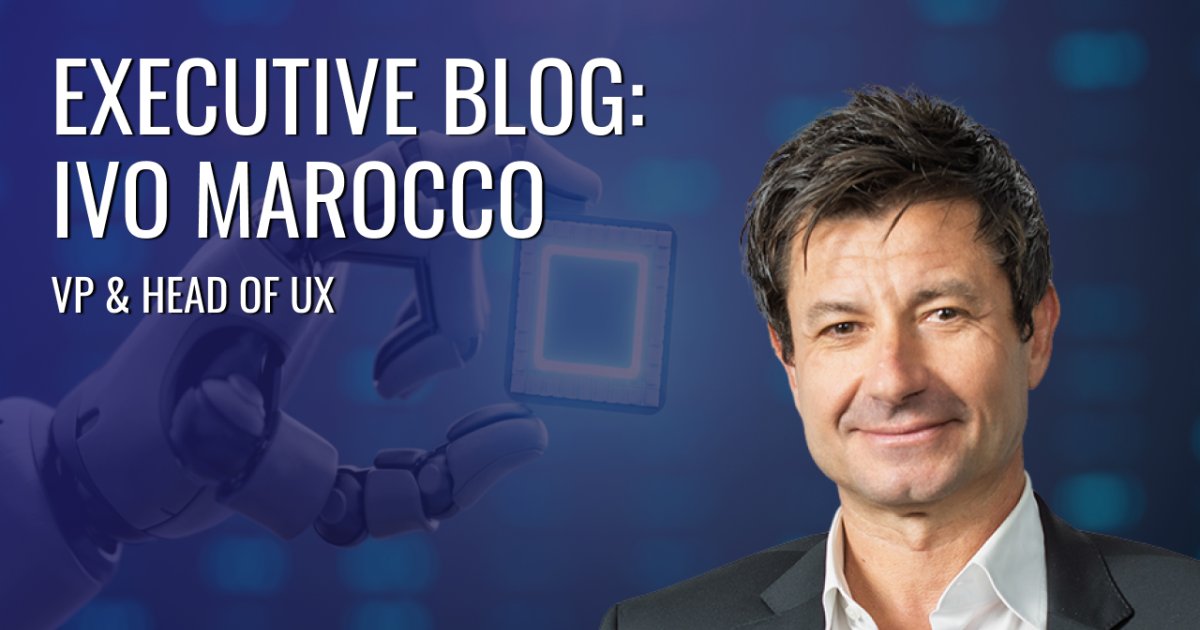
In a July 13 blog post, Ivo Marocco, Renesas vice president and head of UX and technical marketing, argues that humanoid systems cannot rely entirely on cloud resources for critical control. According to Renesas, cloud computing may still support training, updates, fleet learning and higher level planning, but balance, movement, perception and safety need local processing inside the machine.
The company also cites projections that humanoid robotics could double annually through the end of the decade, with long term expectations for deployments potentially reaching one billion by 2050. Those figures are presented as market expectations, not Renesas shipments or contracts. The more concrete disclosure is how the company is organizing its humanoid robotics business.
Renesas outlines four technical domains
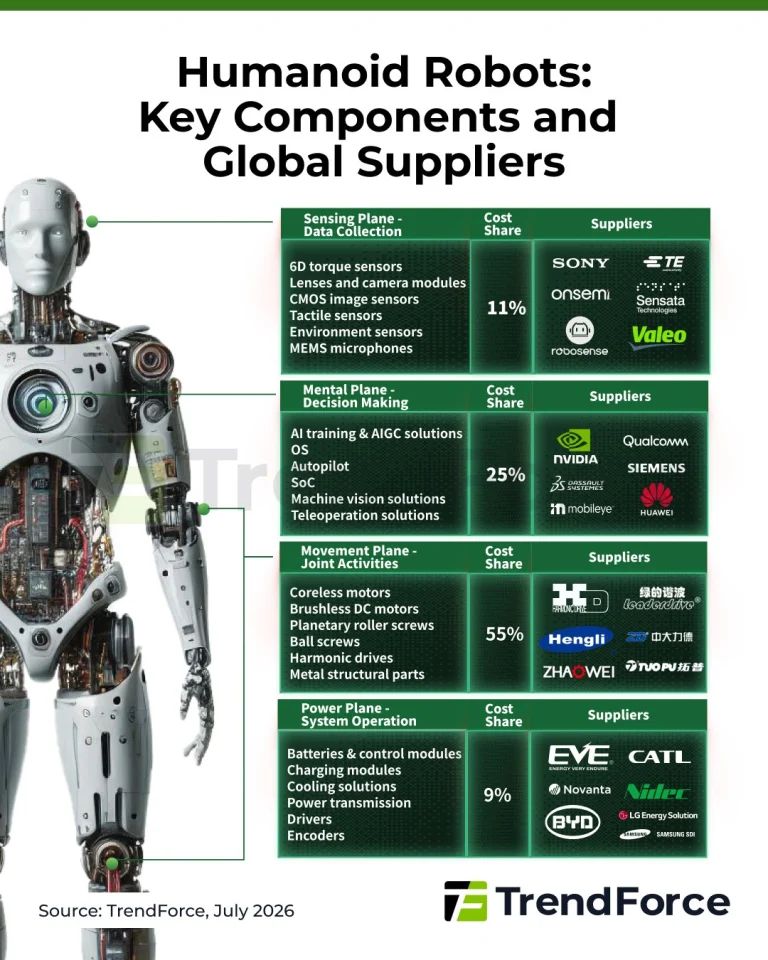
Renesas humanoid robotics work is being grouped into Brain and Motion, Sensing, Actuation and Power Management. The Brain and Motion domain combines edge AI with deterministic control under limits on latency, memory, compute resources and power consumption.
Sensing covers synchronized input from vision systems, inertial sensors and position sensors, along with force, touch and environmental sensing. Actuation includes motor control microcontrollers, gate drivers, power devices, feedback loops and control algorithms for responsive movement. Power Management covers battery management, power conversion, charging systems, thermal optimization and distributed power delivery.
That framing is consistent with the way humanoids are actually built. A bipedal robot is not a processor with limbs attached; it is a timing sensitive electromechanical system where perception, servo control, thermal limits and safety behavior interact continuously. Renesas is making a supplier case that its industrial automation, automotive electronics, advanced driver assistance systems, motor control, embedded processing, sensing and power expertise can transfer into those subsystems.
More platform support, less standalone silicon
The post describes a push beyond individual semiconductor components into subsystem and platform work. Renesas says customers need reference designs, software frameworks, development environments, simulation tools and implementation guidance to reduce complexity and speed deployment.
Areas named in the blog include dexterous robotic hands, servo motor control systems, sensing architectures, high performance vision, robot development kits and safety precertifications. Renesas also points to Renesas 365, described as an intelligent, cloud based platform for embedded systems design and lifecycle management that connects the design process across software and hardware teams.
This is not a humanoid product launch. The blog does not name a robot customer, deployment, benchmark, price or schedule for a complete humanoid platform. It is still useful as a signal from a large embedded and power supplier: humanoid builders are being courted with subsystem level integration rather than isolated parts catalogs.
Source: renesas.com