Ukraine funds combat humanoid robots through Brave1 grant
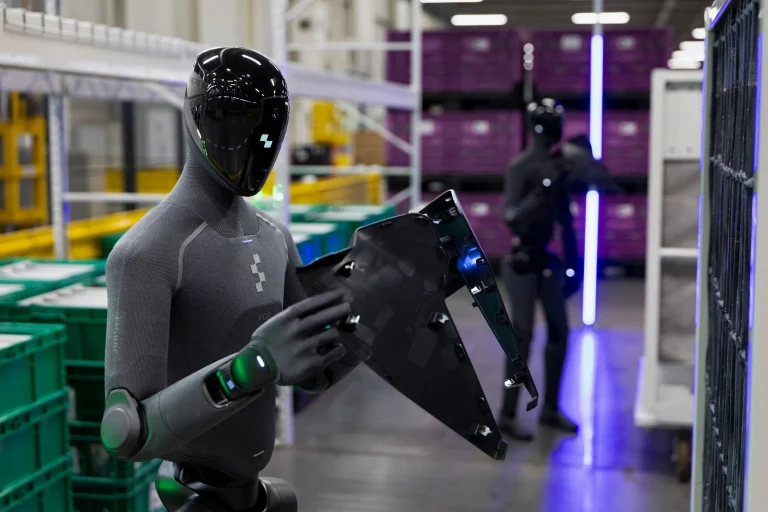
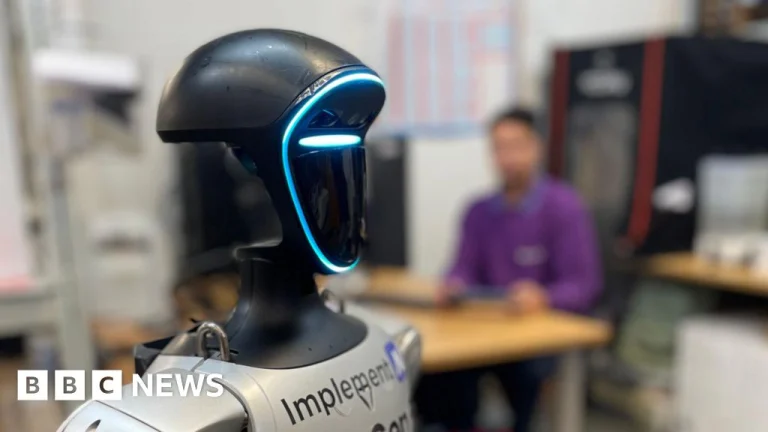
Ukraine’s Brave1 defense cluster has opened a grant competition for domestic bipedal humanoid robots built for military tasks, according to Euromaidan Press, citing Tech Times. The report describes it as the first state program to treat combat humanoid robots as a separate defense procurement category.
The funding move is still early stage. Brave1 is not committing Ukraine to fielding humanoid systems in the near term, and the source does not name grant recipients, funding levels, or deployment schedules. It does, however, put bipedal platforms into the same rapid testing pipeline Ukraine has used for other battlefield technologies.
“We see how quickly the humanoid robotics industry is developing worldwide, in China and the United States. We see that such robots have value for strengthening our military capabilities. That is why we are moving in this direction,”Andrii Hrytseniuk, Brave1 CEO
Battlefield requirements are harsher than factory humanoid work
Ukraine’s interest in humanoids is easy to understand at the task level. A human shaped robot can, in theory, use stairs, move through narrow corridors, operate inside buildings, and interact with equipment designed for people without rebuilding the environment.
The Ukrainian battlefield is a different operating envelope from a factory floor. Euromaidan Press describes expected conditions that include GPS denial, electronic warfare pressure, rubble, flooded trenches, mud, shell craters, blast effects, dirt, extreme temperatures, and enemy attack. A military humanoid would also need to be repairable in field conditions.
The only humanoid robot cited as having been tested in real combat conditions in Ukraine so far is the Phantom MK-1. The reported limitations are basic but consequential: low payload capacity, no water protection, short autonomous work time, and high technical complexity.
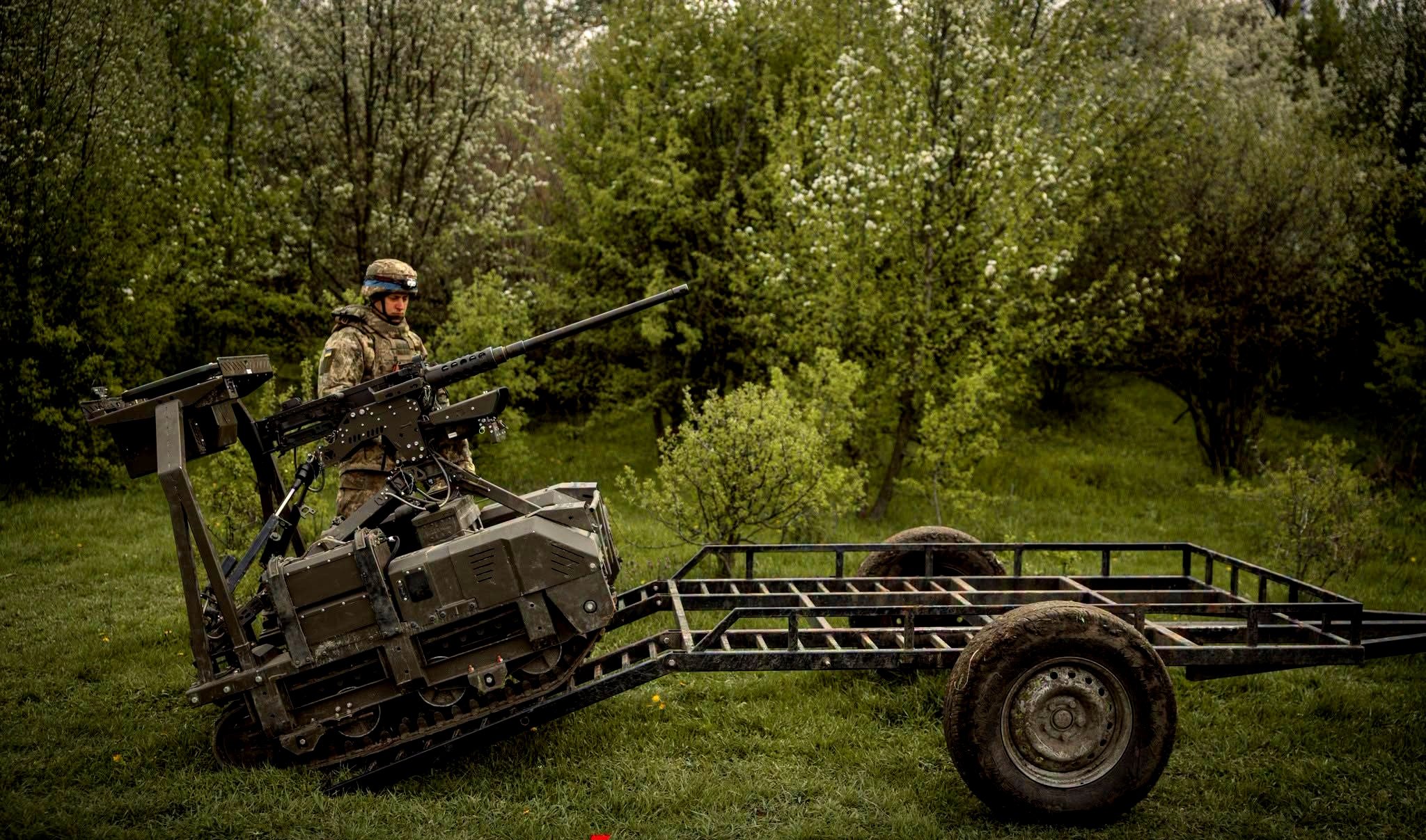
Wheels and tracks still dominate Ukraine’s robot war
Brave1’s staged approach appears to reflect those constraints. Rather than asking developers to produce a fully autonomous combat humanoid immediately, the grant allows simpler platforms that can be improved and expanded with new functions.
Ukraine’s current ground robot ecosystem is still built around wheeled, tracked, and four legged systems. The source says those configurations are succeeding because they are simpler, cheaper, and easier to replace.
The scale of that non humanoid ecosystem is already substantial. Ukraine’s Defense Forces received 1,028 ground robotic complexes worth 487 million UAH ($11.7 million) through the DOT-Chain Defense marketplace by mid 2026. The Defense Ministry also codified 67 new ground robot models in the first half of 2026, none of them bipedal.
Connectivity remains a hard constraint. Defense Ministry adviser Serhii “Flash” Beskrestnov warned in May 2026 that ground robots face a more difficult communications environment than aerial drones because terrain, urban infrastructure, tree lines, and cover interfere with control signals. For a bipedal system, losing the link is not just a mission control problem. It can also become a mobility and balance problem on broken ground.
The useful reading of the Brave1 grant is therefore narrow but real. Ukraine is funding domestic work on combat humanoid robots, while its own war data still favors platforms that are faster to build, easier to recover, and more disposable.
Source: euromaidanpress.com