Genesis AI unveils Eno, a headless humanoid with dexterous hands
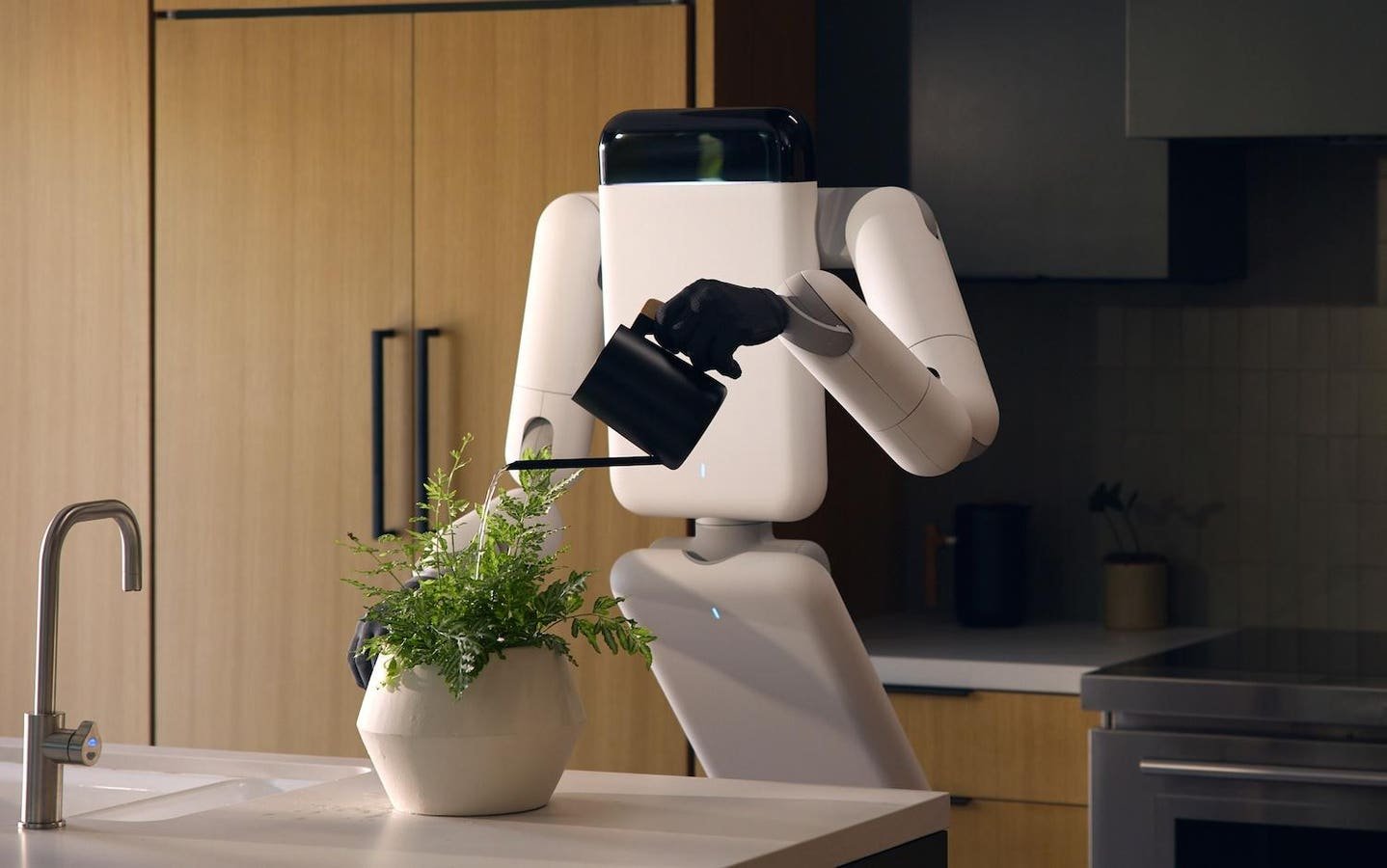
Genesis AI has unveiled Eno, its first humanoid robot, with a smooth headless body, a wheeled base and a pair of highly dexterous hands. According to Forbes, which received a private look at the robot in San Carlos, California, Eno is still an early prototype, with industrial customer deployments planned for late 2026 and home use much later.
The Genesis AI Eno prototype is a deliberate break from the exposed joints, metal surfaces and head based layouts common across current humanoid platforms. The company describes its design philosophy as “human in function, not in form.” Motors, gears, hinges and cabling are hidden internally, and Forbes reports that the exterior has no visible screw holes.
Genesis AI came out of stealth in 2025 with a $105 million seed round. The Forbes article names former Google CEO Eric Schmidt and French telecom billionaire Xavier Niel among its backers.
A humanoid without the usual human cues
Eno has arms and hands, but no face, no head and no legs in the current version. The arms rise from a minimalist articulated body on wheels. Genesis AI CEO Zhou Xian told Forbes, “Why do robots need to have a head?” He added that a head mainly provides somewhere to place cameras.
The company is also planning an optional chest screen. Forbes describes it as a display intended to show what the robot plans to do before it acts, rather than a face or animated personality layer. The screen version had not yet reached its first build when Forbes visited, according to the article.
Zhou framed the system as a tool that can fold down and stay out of the way when not in use. Eno also avoids the pet like or character driven cues some consumer facing robot makers use, which is a useful design choice if Genesis wants the robot evaluated as equipment rather than as a social device.
The hands carry the technical argument
The strongest hardware claim in the Forbes report is Eno’s hands. Each hand has 20 actuated degrees of freedom, different finger lengths, an onboard camera and tactile sensors. The hands are also described as back drivable, a design feature relevant to safe contact and compliance around people.
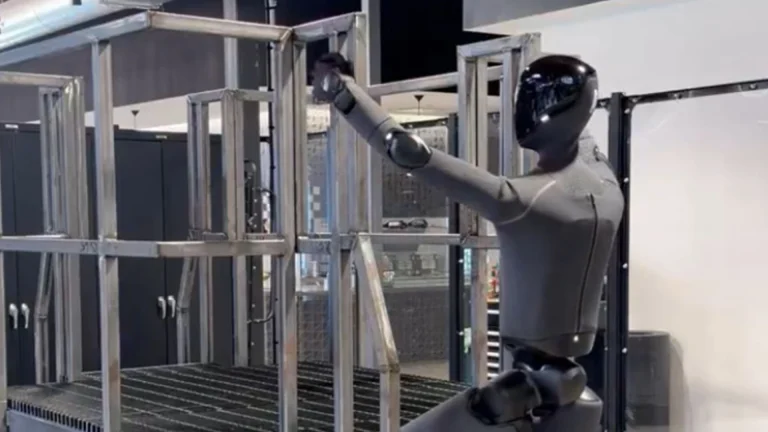
Forbes saw the robot use two hands together to bundle wires and wrap them with electrical tape. That is a demanding manipulation task because tape is sticky, flexible and difficult to present in a consistent pose. The robot reportedly fumbled and recovered during the demo rather than simply executing a clean scripted motion.
A second demo focused on lab automation. Eno transferred liquid between two arms, capped a tube and threaded it into a centrifuge with millimeter level precision, according to Forbes. The team said the lab equipment had not been modified for the robot, telling Forbes, “We didn’t hack anything.”
Genesis says the system is driven by GENE, its robotics native foundation model. The company claims the model learns largely from human data and is not tied to a single robot body. Those claims will need validation outside curated demonstrations, especially if Genesis wants Eno to compete for industrial work against better known humanoid developers.
For now, the disclosed performance envelope remains provisional. Forbes reports roughly 3 to 5 kg of payload per arm and around 4 to 6 hours of working battery life, with those specifications still being optimized. Zhou also said a legged version is coming later, but the article gives no schedule.
The competitive field is already crowded. The Forbes piece cites Tesla, Figure, Agility and 1X in the U.S., along with Unitree, AgiBot and UBTech in China. Eno’s wager is narrower and more specific than many of those efforts: a humanoid robot may not need a human silhouette if its manipulation, safety and interface choices are strong enough for real work.
Source: forbes.com