Tokyo Humanoids Summit showcases dexterity, delivery robots
The Tokyo Humanoids Summit put manual dexterity and labor-focused deployment on the same stage. At the event in Tokyo, developers showed robot hands claimed to be precise enough to thread a needle, childlike humanoids that danced, and adult-sized machines presented as future delivery workers, according to AP News.
Tokyo Humanoids Summit centers on dexterity
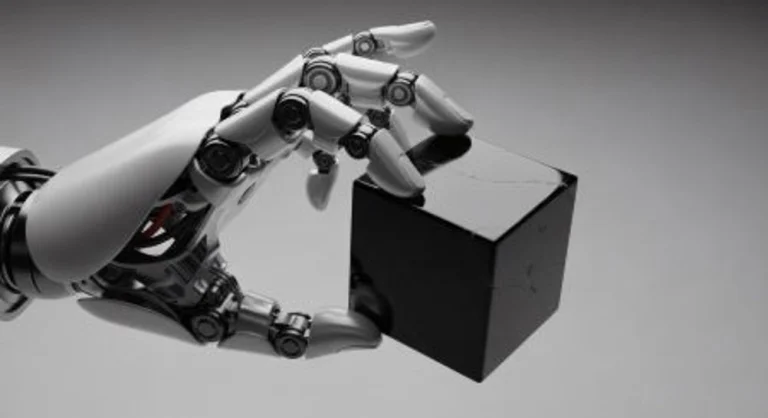
The clearest technical message from the showcase was that manipulation is moving closer to center stage. A mechanical hand said to be capable of threading a needle is a familiar kind of summit claim in robotics, but it also points to a real bottleneck: humanoids are only as useful as their hands when tasks require fine contact, orientation control, and repeatability.
That matters because humanoid robotics has often been judged by locomotion and balance first. The Tokyo display suggested a broader benchmark, one that combines body control with hand capability. Even in a short event summary, the emphasis on manual skill stood out alongside more visible demonstrations such as dancing, which are easier for a general audience to recognize but less directly tied to work.
The range of machines on display also reflected the sector’s current spread. AP described childlike dancing robots and adult-sized systems aimed at deliveries, showing that exhibitors are still testing several roles for humanoid platforms at once, from expressive public interaction to practical material movement.
That mix is important because it shows the category is not converging on a single product profile yet. Some developers are still using movement and behavior demos to show control quality and stability, while others are pushing closer to labor use cases where the value proposition depends less on spectacle and more on reliability.
Workforce framing shapes the Tokyo Humanoids Summit
AP’s description framed the robots as a future part of the workforce, not just as research prototypes or entertainment devices. That distinction matters for operators and technical buyers because it shifts attention from isolated demo moments to questions the source does not yet answer: task cycle time, uptime, supervision burden, and whether these machines can perform useful work consistently in human environments.
Delivery assistance is a telling example. It is a relatively concrete story for humanoids because buildings, doors, carts, shelves, and corridors are already arranged around human scale and human reach. A full-sized humanoid positioned for deliveries is therefore being presented not merely as a moving machine, but as a system intended to fit into existing workflows without requiring a facility to be rebuilt around it.
At the same time, the source stops short of offering the details that would define commercial readiness. No specifications, payload figures, deployment numbers, customers, or rollout dates were provided in the AP report, which leaves the summit positioned more as a directional signal than as evidence of scaled adoption.
That does not diminish the importance of the showcase. In humanoid robotics, public demonstrations often reveal where developers believe the next competitive threshold lies. In Tokyo, that threshold appeared to be the combination of useful embodiment and more precise hand function.
Chinese exhibitors drew the spotlight
Among the dozens of companies taking part, AP said the big stars were clearly Chinese. That is notable because the event also included well-known players such as Boston Dynamics and Toyota Motor Corp., names that carry long-established weight in robotics and industrial technology.
The fact that Chinese exhibitors stood out in that field says less about one isolated demo and more about visibility in the current market cycle. Attention at major humanoid events increasingly follows whichever developers can show the most convincing mix of physical performance, manufacturing momentum, and workforce relevance, even when formal specifications are not disclosed.
For Japan’s robotics sector, and for international observers tracking the humanoid market, the Tokyo event highlighted a competitive landscape that is widening rather than narrowing. Established robotics brands remain present, but the center of attention can shift quickly when newer entrants present stronger live demonstrations or clearer labor narratives.
What remains unknown is how much of the Tokyo showcase will translate into regular operation outside an event floor. The AP report identifies the themes clearly, dexterity, human-scale mobility, and delivery work, but not the commercial milestones behind them. That makes the summit useful as a snapshot of industry priorities, and a reminder that the next meaningful comparisons in humanoids will likely be made not just on how they move, but on what they can manipulate and deliver in real settings.
Source: apnews.com