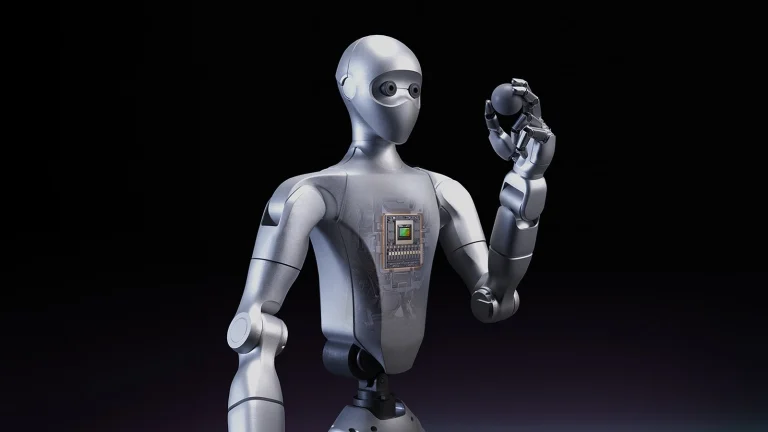
Unitree R1 Humanoid Listed on AliExpress Below $5000
Unitree’s R1 humanoid robot is moving closer to mainstream availability through a reported listing on AliExpress, marking a notable shift in how bipedal robotics platforms are distributed globally. With a price starting around $4,900 for the R1 AIR variant, the platform enters a range historically reserved for high end consumer electronics rather than advanced robotics systems.
The development reflects a broader transition in humanoid robotics from tightly controlled enterprise procurement toward standardized online purchasing. By placing a humanoid robot within a familiar e commerce checkout flow, Unitree lowers barriers for smaller laboratories, educational institutions, and early stage startups seeking access to physical embodied AI systems.
A lower price floor for humanoid platforms
The R1’s pricing positions it as one of the most accessible humanoid development platforms currently available. Earlier generations of humanoid systems often required significant capital investment and direct vendor relationships. In contrast, a sub $5,000 entry point allows a wider range of organizations to experiment with bipedal locomotion, perception, and control in real world conditions.
This price compression aligns with a broader trend in robotics manufacturing, where improvements in supply chains and component integration are reducing system costs. The result is a growing category of compact humanoid platforms designed for experimentation rather than turnkey deployment.
Hardware profile and development focus
The Unitree R1 stands approximately 123 cm tall and weighs between 27 and 29 kg. Depending on configuration, it offers between 20 and 26 degrees of freedom, enabling articulated movement suitable for gait research and basic interaction tasks. Typical runtime is about one hour, which constrains usage to focused testing cycles rather than continuous operation.
These specifications position the R1 as a development chassis rather than a finished product. Its value lies in providing access to joint level control, sensor integration, and reproducible hardware for software experimentation. Developers can use the platform to test control algorithms, balance strategies, and perception pipelines under real physical constraints such as friction, inertia, and battery limits.
From simulation to physical testing
The availability of lower cost humanoid hardware addresses a persistent gap in robotics workflows. Many teams rely heavily on simulation environments, but transferring policies to physical systems introduces instability, timing issues, and hardware wear. A compact platform like the R1 allows teams to iterate more quickly between simulation and deployment.
Unitree supports this workflow through ROS based tooling and developer resources, enabling integration with existing robotics software stacks. This makes the R1 particularly relevant for research groups working on embodied AI, where coordination between sensing, control, and motion must occur in real time.
Logistics and support considerations
While the AliExpress listing simplifies procurement, it introduces new operational questions. Cross border shipping, warranty enforcement, and access to spare parts remain critical factors for buyers. A 27 kg humanoid robot presents nontrivial challenges for returns and maintenance, especially outside established service regions.
Marketplace features such as authentication programs and standardized shipping options may reduce purchasing friction, but they do not replace technical support infrastructure. For most users, long term usability will depend on the availability of replacement components, documentation updates, and responsive repair channels.
Use cases and practical limits
Early applications for the R1 are concentrated in education, research, and prototyping. Typical use cases include gait stability experiments, human robot interaction studies, and validation of perception and control loops. The platform also supports curriculum development in robotics programs that require hands on hardware.
However, the system is not positioned as a general purpose service robot or industrial worker. Reliable deployment in production environments requires extended uptime, robust manipulation capabilities, and integrated safety systems, all of which remain outside the scope of this class of device.
Market implications
The appearance of a humanoid robot on a global marketplace signals a shift in how the industry scales. Distribution channels are becoming as গুরুত্বপূর্ণ as hardware capability in determining adoption. By aligning humanoid robots with standard logistics and purchasing models, vendors can expand their reach beyond specialized buyers.
This development also reflects a broader push within China’s robotics sector to standardize platforms, reduce costs, and accelerate iteration cycles. As more organizations gain access to physical humanoid systems, the competitive focus is likely to shift toward software performance, data collection, and system integration.
The Unitree R1 does not resolve the core challenges of humanoid robotics, but it changes who can participate in solving them. Lower cost access to bipedal hardware enables more teams to test ideas in the physical world, which remains a critical bottleneck for embodied AI progress.
Source: intelligentliving.co