Tea harvesting humanoid robots begin tea field trials in China
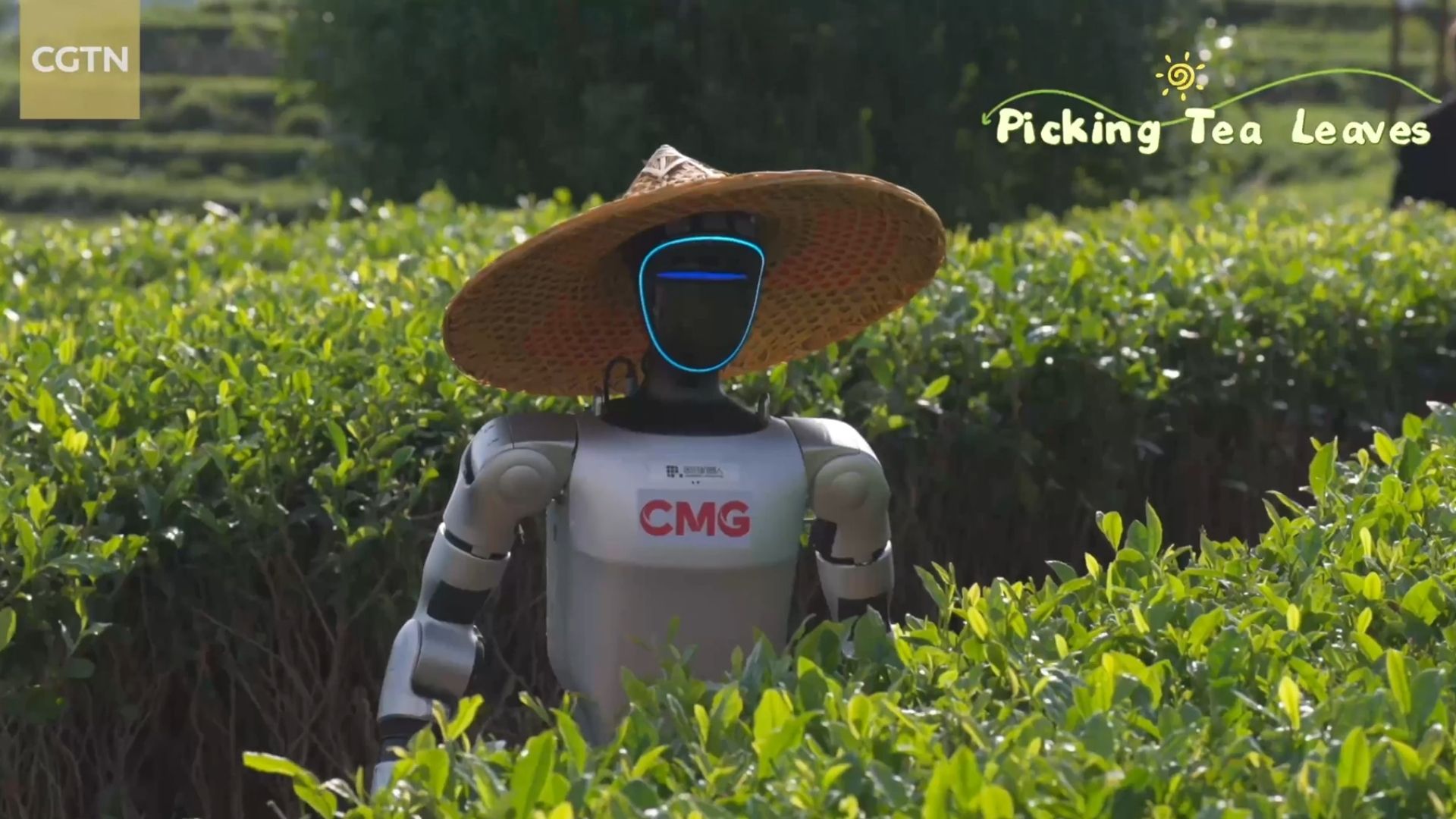
Tea harvesting humanoid robots are being tested in Fujian Province, where teams preparing for the 2026 World Humanoid Robot Games have begun field trials in tea plantations and processing sites. The exercise moves humanoid evaluation beyond lab demos and track events into an agricultural setting that requires locomotion, perception, and fine manipulation at the same time.
Tea harvesting humanoid robots move into the field
According to Interesting Engineering, the first leg of the Energy Transfer relay for the 2026 World Humanoid Robot Games officially started on May 10 in Fuding, Fujian, one of China’s key white tea producing areas. Instead of working in a controlled test hall, robot teams were sent directly into plantations and tea processing facilities, where they operated alongside local tea masters during the white tea production cycle.
New! 2026 Humanoid
Robot Market Report
198 pages of exclusive insight from global robotics experts — uncover funding trends, technology challenges, leading manufacturers, supply chain shifts, and surveys and forecasts on future humanoid applications.

now Google DeepMind
That setting matters because it changes the benchmark. A tea field is not a flat warehouse aisle or a staged exhibition floor. It combines natural terrain, shifting outdoor light, variable plant geometry, and task transitions that are difficult to standardize, making it a more demanding environment for humanoid systems that aim to generalize across human workspaces.
What the field trials are actually testing
The challenge required humanoids to identify and pluck tea leaves, carry loads across uneven mountain terrain, spread leaves for sun drying, and join later processing steps including roasting and pressing tea cakes. According to CGTN, as cited in the report, the exercise was designed to gather data for general purpose artificial intelligence and embodied AI systems.
Each of those tasks stresses a different part of the humanoid stack. Steep hillsides and rough ground test balance and lower body control. Variations in leaf shape and maturity challenge machine vision, while harvesting itself pushes the dexterity limits of robotic hands because the robot has to distinguish what to pick and then handle it without damaging the crop.
Tea plantations also introduce the kind of variability that industrial automation usually tries to remove. Leaves differ in size, position, and ripeness, and the work sequence shifts from picking to transport to processing. For developers, that makes the site useful as a data collection environment, but it also means performance in the field is likely to reveal failure modes that are easy to miss in more structured robotics tests.
How the World Humanoid Robot Games are expanding
The tea challenge is one of the scenario based activities tied to the 2026 World Humanoid Robot Games. Interesting Engineering reports that the event follows the inaugural edition held in 2025 and forms part of a broader effort in China to evaluate humanoid robots beyond tightly managed demonstration environments. The first Games drew 280 teams and more than 500 humanoid robots from 16 countries.
Organizers have said the second edition will include 32 events divided into two categories, competitive contests and scenario based contests. The competitive side includes 26 events across nine disciplines such as athletics, football, gymnastics, weightlifting, martial arts, dance, tug of war, and pitch pot. The scenario category covers six settings, homes, hotels, factories, emergency response, hospitals, and retail.
The direction of travel is notable. Organizers have said these challenges are shifting from simulated venues to real operational settings, which suggests the emphasis is moving from spectacle and athletic control toward practical deployment testing. What remains unclear is how much autonomy the participating systems used in Fujian and what performance criteria will decide success, but the tea field trials show where humanoid benchmarking is heading next, toward messy environments where mobility and manipulation have to work together.
Source: interestingengineering.com