
Steve Xie and the $100M Quarter
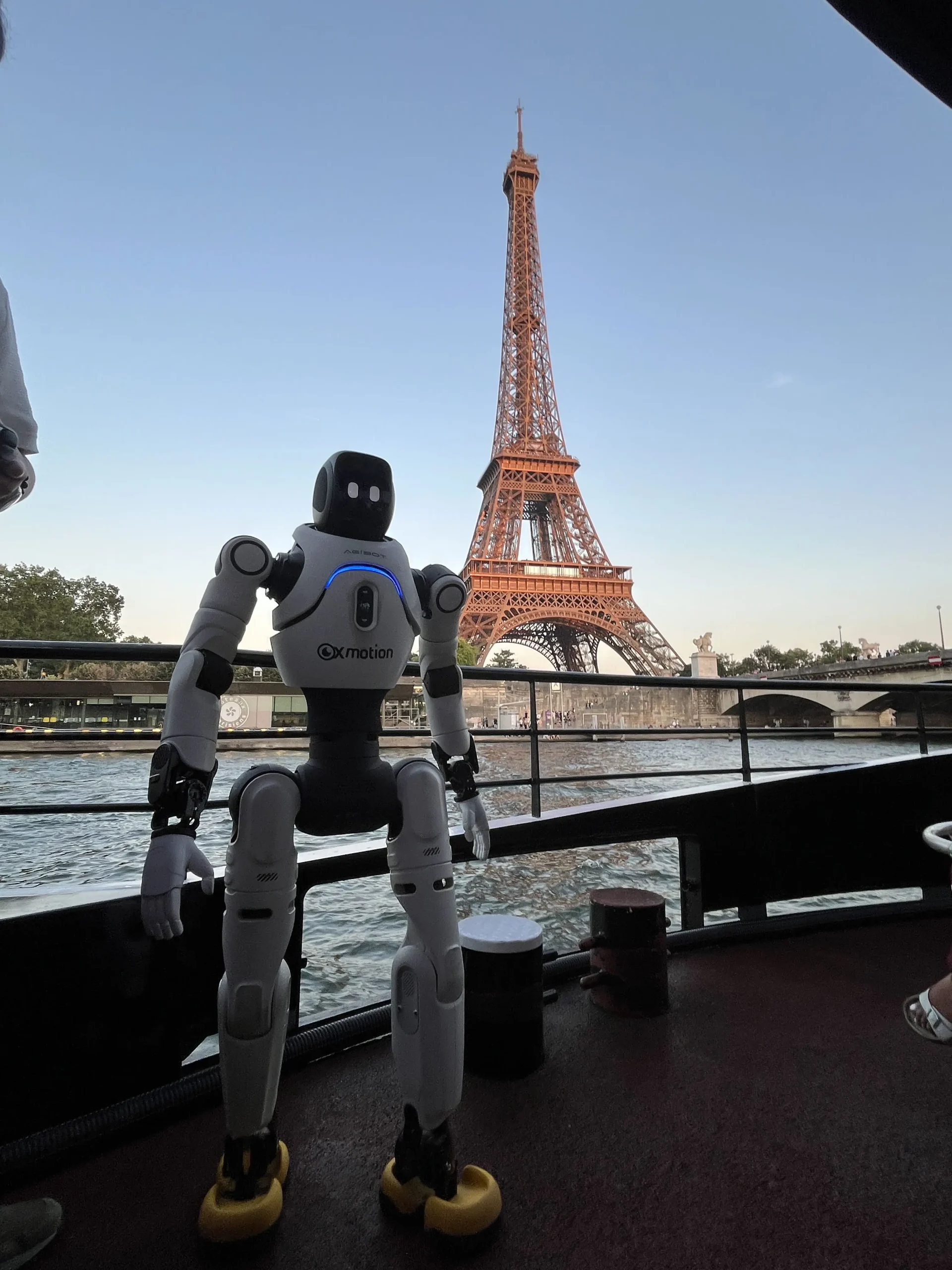
We met Steve Xie on a boat in Paris during Machina 2026 week. His company Lightwheel had just booked roughly $100 million in orders in a single quarter – selling not robots, but the data that teaches robots to work.
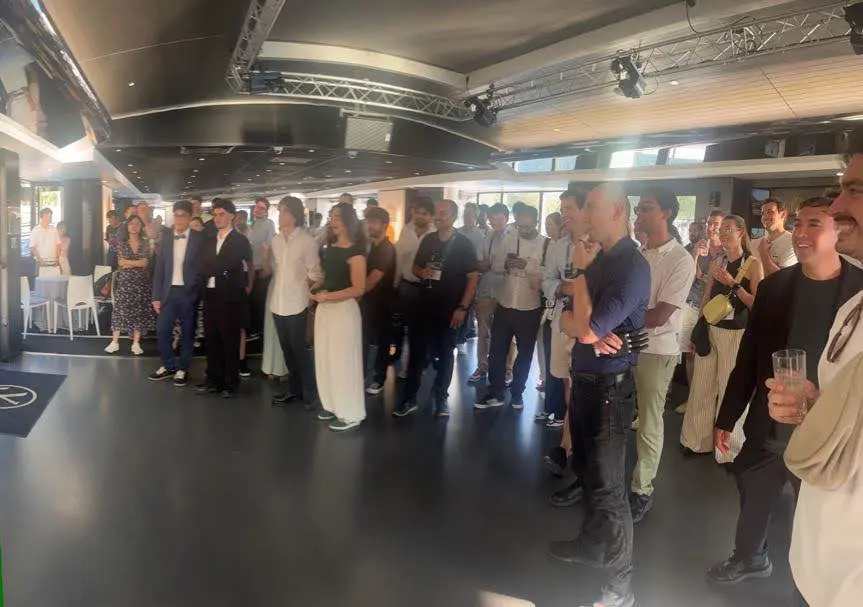
Machina 2026 filled Station F, but one of the week's most interesting conversations happened on the water. At a side event on the Seine, we found ourselves across the table from a soft-spoken physicist turned quant turned simulation engineer – the man whose company supplies training data to most of the teams that had just been on stage.
The Boat · Steve Xie and Lightwheel
Every gold rush has its picks-and-shovels business, and physical AI has found one in Lightwheel – "the data engine powering physical AI and world models", as the company puts it. On the boat, Steve Xie described the position Lightwheel now occupies with an almost unsettling calm: while humanoid makers fight for the spotlight, his customers include NVIDIA, Google DeepMind, Toyota and Bosch – by the company's own count, over 80% of the world's top embodied-AI teams.
Xie – Xie Chen (谢晨) to Chinese media – runs the company from Santa Clara, California, with roots in Beijing. And in May the receipts arrived: Lightwheel announced approximately $100 million in orders for the first quarter of 2026 across its simulation, data and evaluation products. One precision worth keeping: those are orders booked, not recognized revenue – but by the company's own figures revenue grew 10× in 2025, and Q1 2026 revenue alone is projected to exceed all of last year.


Why Robotics AI Is Hitting a Data Wall · Steve Xie interviewed on The Ravit Show
The Résumé · Simulation, Three Times Over
The backstory reads like a straight line, but only in hindsight. Physics at Peking University. A PhD in quantitative finance at Columbia. Then a decade inside the autonomous-driving boom, running simulation where it mattered most: at Cruise during its expansion years, at NVIDIA on autonomous-vehicle products – with an insider's view of the Omniverse and Isaac ecosystem he would later build on – and as senior director of simulation at EV maker NIO.
Three tours of duty, one recurring lesson: the models were never the bottleneck. The data was. Physics-accurate 3D assets, high-quality demonstrations, honest benchmarks – self-driving spent a decade and billions of dollars learning to manufacture them. In 2023, Steve Xie founded Lightwheel on the bet that robotics would hit exactly the same wall, and would pay to have it removed.
Lightwheel is not Xie's first startup. As a Columbia student he co-founded Wagtail, a community app for dog lovers that grew to 30,000 users but never became a business – and taught him, he says, to build a viable business model from day one instead of chasing technically interesting problems.
The Company · A Data Engine in Three Layers
What Lightwheel actually sells is a stack – three layers that map neatly onto how a robot learns.
-
World · SimReady assetsPhysically accurate, visually realistic assets and scenes for training in simulation. Lightwheel reconstructs real production environments – workstation geometry, conveyor layouts, part weight, surface friction – so the simulated factory behaves like the real one.
-
Behavior · EgoSuiteFirst-person human demonstrations, captured at global scale and converted into structured training data. It is exactly the kind of egocentric data engine Jim Fan called "the new FSD" from the Machina stage the very same week.
-
Evaluation · RoboFinalsAn industrial-grade simulation gauntlet that runs robot policies through thousands of scenarios to find failure modes before deployment. The company's thesis: as pretraining data scales, evaluation becomes the bottleneck.
The stack is already on factory floors. Working with NVIDIA, Lightwheel fine-tuned the GR00T N1.5 foundation model on its own synthetic and real data – about 100 simulated trajectories for every real one – and deployed it on Unitree H1 humanoids moving parts in a Geely automotive plant. The customer list runs from Figure and AgiBot to ByteDance, BYD and Google DeepMind – names Xie drops with the shrug of a supplier who no longer needs to name-drop.
In March 2026, Lightwheel closed a combined RMB 1 billion (~$140M) funding round – making it, as EqualOcean, TMTPost and Pandaily all reported, the world's first unicorn in embodied data.
New! 2026 Humanoid
Robot Market Report
198 pages of exclusive insight from global robotics experts — uncover funding trends, technology challenges, leading manufacturers, supply chain shifts, and surveys and forecasts on future humanoid applications.

now Google DeepMind
The Quarter · What $100M Actually Means
The May announcement was less about the number than about what the number implies: customers have stopped asking whether robots can work, and started buying the infrastructure to deploy them. In Lightwheel's telling, simulation has become the first deployment environment – the place where a robot workforce is built, stress-tested and certified before a single machine touches the factory floor.
The order book points the same way. A strategic partnership with PeritasAI aims to put up to 200 humanoid robots into perioperative healthcare across 2026–2027. Lightwheel sits as a core advisor on Newton, the open-source physics engine, alongside NVIDIA, Google DeepMind, Disney Research and Toyota Research Institute. Its LeIsaac framework has been adopted in Hugging Face documentation for embodied AI. Layer by layer, the company is wiring itself into the foundation-model era of robotics.
"This makes simulation the first deployment environment for industrial robotics: a place to prove feasibility, reduce risk, and compress iteration cycles before robots enter the real world."
The robot boom has a picks-and-shovels business – and it just had its first $100M quarter.
We met the man selling the shovels on a boat in Paris. Read our full Machina 2026 field report from Station F – and Jim Fan in Three Minutes on why the data engines matter.
New! 2026 Humanoid
Robot Market Report
198 pages of exclusive insight from global robotics experts — uncover funding trends, technology challenges, leading manufacturers, supply chain shifts, and surveys and forecasts on future humanoid applications.
now Google DeepMind