DIGITIMES highlights tendon-driven dexterous hands in humanoids
DIGITIMES Research has identified tendon-driven dexterous hands as a key development factor for humanoid robots moving toward the home market. In a report published on Apr. 27, DIGITIMES said initial humanoid deployment is still expected in structured environments, even as it pointed to larger potential in home and commercial settings. The report also noted that humanoid robot applications remain a topic of debate.
Tendon-driven dexterous hands move to the center
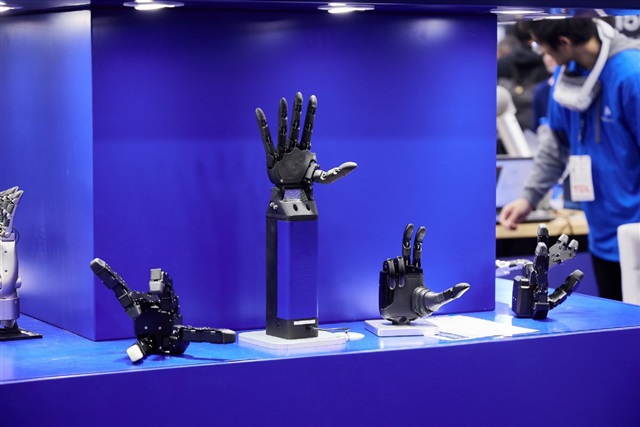
The headline finding places hand design near the center of the next phase of humanoid development. Rather than framing progress only around full-body mobility or general system design, the DIGITIMES Research summary points to dexterous manipulation as a decisive factor as vendors look beyond early pilots.
That matters because it shifts attention from whether a humanoid can merely operate in a space to whether it can perform a broader range of physical tasks once it gets there. By singling out tendon-driven dexterous hands, the report suggests that the quality of grasping, handling, and object interaction may become a practical bottleneck for companies targeting less controlled environments.
Humanoid robots still start in structured environments
According to DIGITIMES, the first deployments are expected to remain in structured environments. That point is consistent with the report’s cautious framing: humanoid applications are still under debate, and early rollout is likely to happen where tasks, surroundings, and operating conditions can be defined more tightly.
The summary does not name specific robot makers, end users, or deployment programs. Even so, the sequencing is clear. The near term remains tied to environments where performance can be evaluated under more predictable conditions, while broader consumer or commercial expansion appears to depend on advances in core subsystems such as the hand.
This is an important distinction for operators and buyers following the sector. A humanoid roadmap can show ambition for homes or mixed-use spaces, but the practical entry point may still be controlled settings that reduce variability while developers improve manipulation performance.
Tendon-driven dexterous hands and the home market question
DIGITIMES also pointed to large potential in the home and or commercial market. In that framing, the path into those settings appears to run through tendon-driven dexterous hands, not just through improvements in locomotion, appearance, or high-level software.
The available summary is brief, and it does not provide timelines, product names, technical benchmarks, or market sizing. That leaves open several questions, including what level of hand performance would be sufficient for home use, how developers intend to balance complexity with manufacturability, and whether the same hand architectures can serve both commercial and domestic tasks.
Even with those gaps, the report adds a useful signal to the broader humanoid discussion. It narrows the focus to a concrete engineering issue as the industry looks past initial structured deployments. If more market research starts treating manipulation hardware as the limiting factor, attention is likely to move further toward hand architecture, supply chains, and the trade-offs required to make humanoids viable outside tightly managed environments.
Source: digitimes.com