China humanoid robots gain ground as BYD and Unitree advance
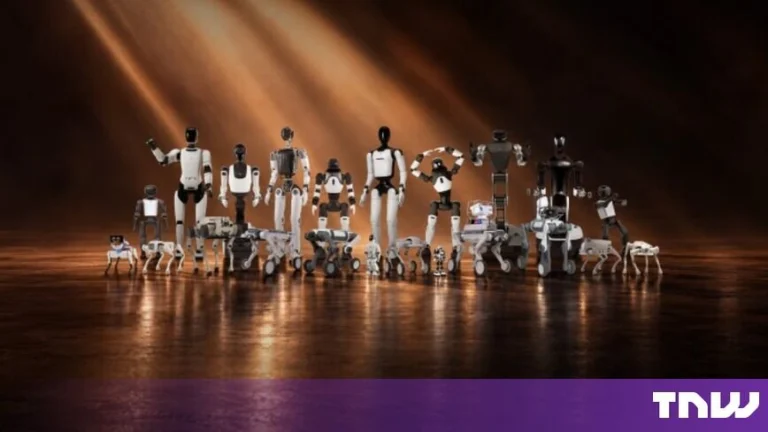
China humanoid robots moved deeper into mainstream industrial planning this week after BYD confirmed it is developing humanoid robots and Unitree Robotics cleared a key review for a Shanghai STAR Market listing. The updates, reported by Gasgoo in its weekly roundup, suggest the market is shifting from prototype announcements toward manufacturing capacity, financing, and early commercial channels.
China humanoid robots draw in major manufacturers
BYD executive vice president Stella Li said the company is prioritizing industrial robots because it can use its own operations as the first deployment environment, while humanoid robots are also under development. According to Gasgoo, BYD’s embodied intelligence team had already been recruiting algorithm, structural, and simulation engineers in late 2024, with job descriptions focused on custom robot bodies, system design, perception, and decision-making for industrial use.
XPENG Robotics also appears to be moving from R&D into production planning, even as product planning head Shi Xiaoxin reportedly resigned in early June. Gasgoo said XPENG has set a mass production target for the end of 2026, plans to place robots in its retail stores as shopping guides in the first quarter of 2027, and has begun building a full-chain humanoid manufacturing base in Guangzhou.
Unitree IPO review adds capital market momentum
Unitree’s application for a STAR Market IPO was approved by the Shanghai Stock Exchange listing committee on June 1, only 73 days after acceptance, according to the source. The company plans to issue at least 40.44 million shares to raise 4.20 billion yuan (about $580 million), implying a valuation of roughly 42 billion yuan (about $5.8 billion) based on a minimum 10 percent public float. The prospectus says the proceeds will fund model R&D, robot body R&D, new product development, and manufacturing base construction.
The same roundup pointed to a wider financing cycle around humanoid platforms. Spirit AI disclosed a 1.50 billion yuan (about $207 million) A+ round for foundation models, real world data infrastructure, and commercial deployment, while Astribot closed a Series B round of more than 1 billion yuan (about $138 million), lifting its valuation above 10 billion yuan. Parsi, a tactile sensing and humanoid robotics company backed by BYD and JD.com, was also reported to be considering a Hong Kong IPO.
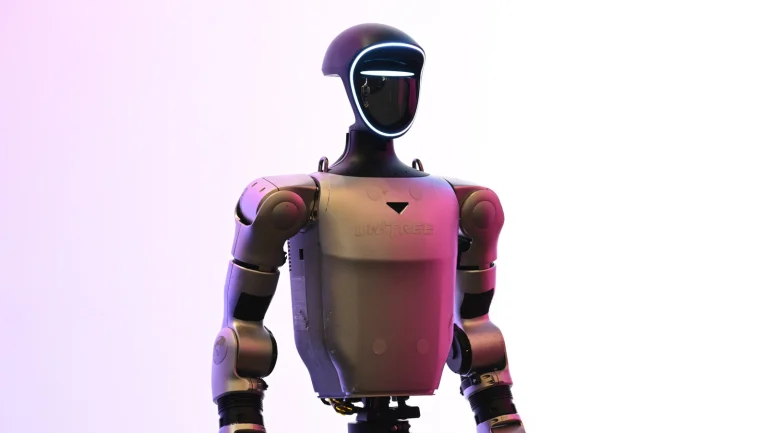
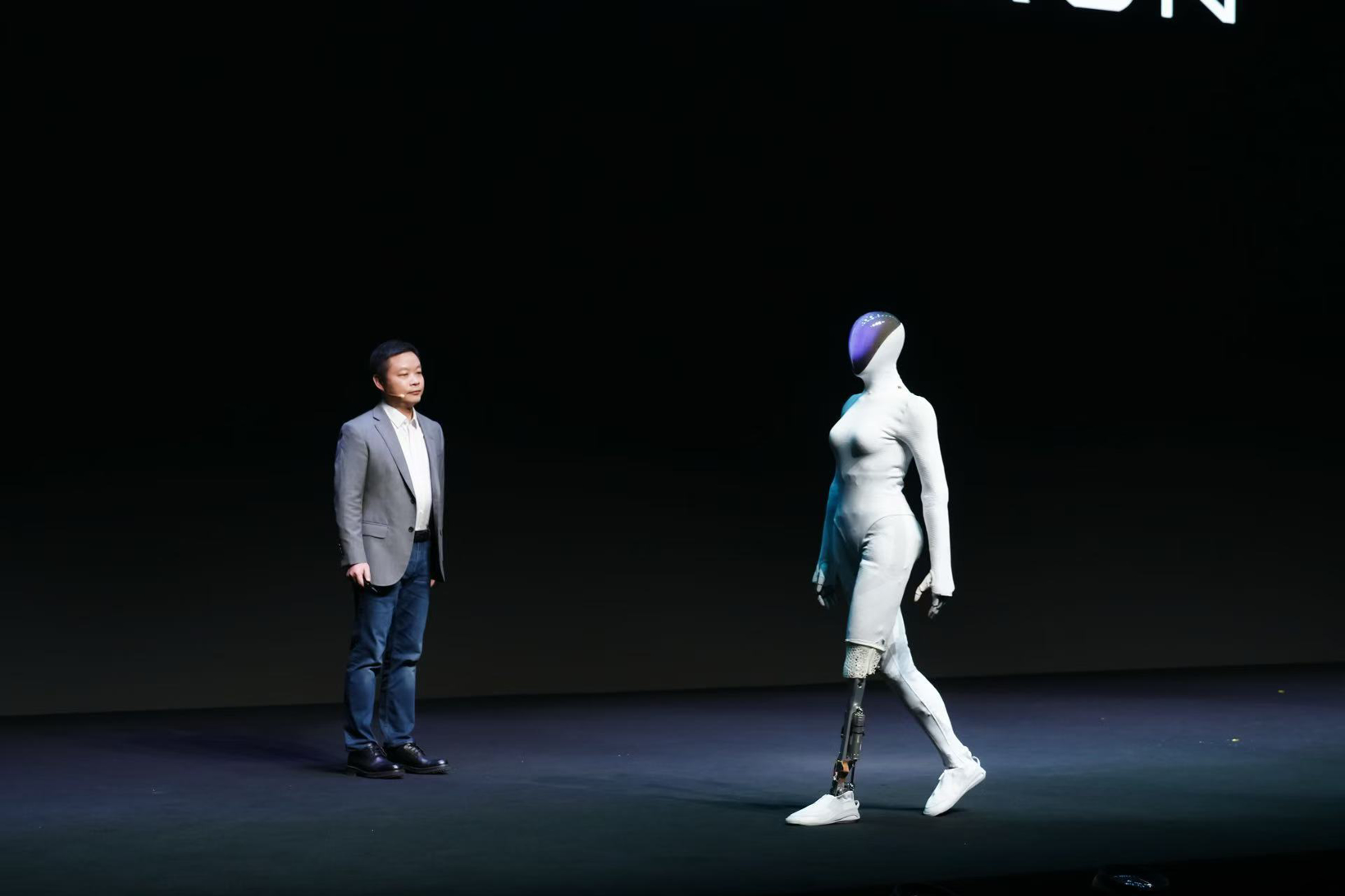
Unitree also featured in a new reference design announced with NVIDIA. Gasgoo said the H2+ humanoid platform combines Unitree’s 1.8 meter H2 body with NVIDIA’s AI computing platform, foundation models, and simulation support, with a five-finger hand supplied by Singapore-based Sharpa. The announcement positions Unitree not just as a listing candidate, but as a hardware supplier for broader humanoid development efforts.
Commercial humanoid robot products widen
UBTech’s consumer brand UWORLD opened presales on JD.com for what it described as a full-size ultra-bionic humanoid robot, with an official release set for June 30. The presale listing showed a 183 cm male model at 42 kg and a 168 cm female model at 35.2 kg, both with 88 degrees of freedom, Wi-Fi connectivity, and 2 to 4 hours of battery life. The page also states the robots do not support secondary development.
UBTech said revenue from its full-size embodied intelligence robots and solutions reached 821 million yuan (about $113 million) in 2025, up more than 22 times year on year, and that deliveries for the year totaled 1,079 units. That matters because it offers one of the clearer data points in the roundup on actual shipped humanoid systems rather than announced prototypes.
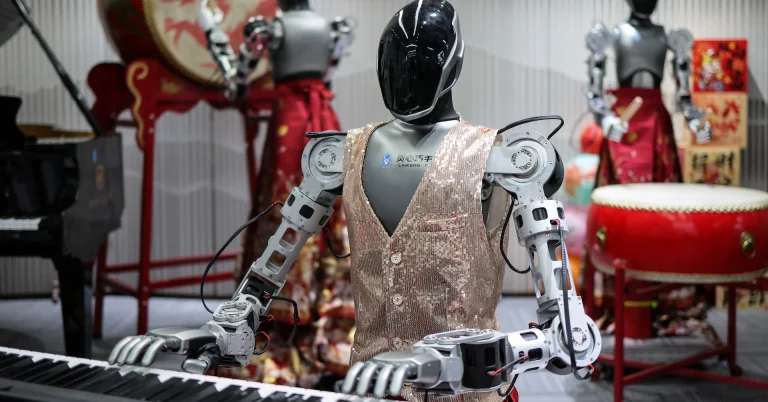
Other builders are still earlier in the cycle. Xinghaitu unveiled its first self-developed bipedal humanoid robot, Kengo, and said the platform is designed around standardized joint modules for easier mass production. Schaeffler, meanwhile, said it had validated a box-folding task on a real production line using a Spirit AI humanoid body, an example of the factory tasks that may determine which humanoid systems move beyond demonstrations.
Taken together, the week’s announcements show China humanoid robots are being framed less as isolated lab projects and more as assets that need factories, balance sheets, and repeatable use cases. The next markers will be whether companies such as BYD, XPENG, Unitree, and UBTech can convert hiring, fundraising, and presales into sustained deployments, especially in industrial settings where operators can measure uptime, task success, and cost.
Source: autonews.gasgoo.com