Agility pilots frame humanoid workforce debate at summit
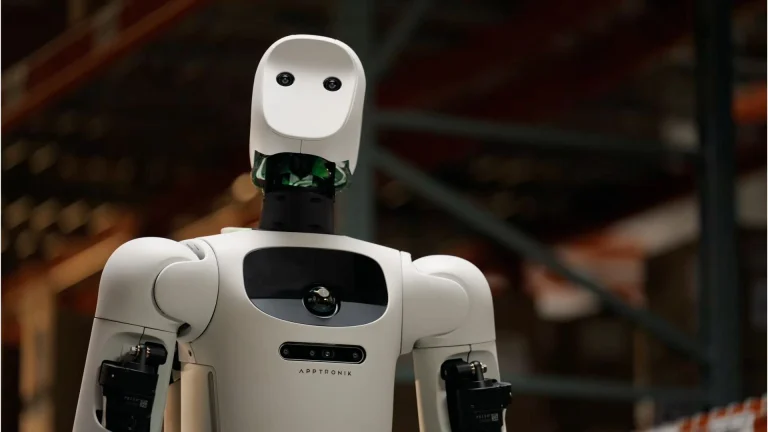
At the Boston Robotics Summit, Agility Robotics CTO Pras Velagapudi argued that Digit is already reaching the point of useful facility work, according to the Christian Science Monitor. His comments sat inside a broader industry debate: humanoid robots are drawing capital and customer interest, but the field still has to prove reliability, safety and economics at industrial scale.
Velagapudi told attendees that “humanoid robots can be deployed, play a role, and work at the level of reliability that they’re doing useful work.” Agility’s Digit has been tested in commercial facilities at various companies, including Amazon, which is an investor in Agility. The company is now trying to widen that activity beyond trials.
Two named deployments give the humanoid workforce discussion a firmer base than the usual demo reel. In December, Agility signed an agreement with Mercado Libre to use Digit at a fulfillment center in San Antonio. In February, Toyota Canada signed on to pilot Digit in assembly operations, with plans to deploy it if the pilot succeeds.
Why humanoids are still being pitched for factories
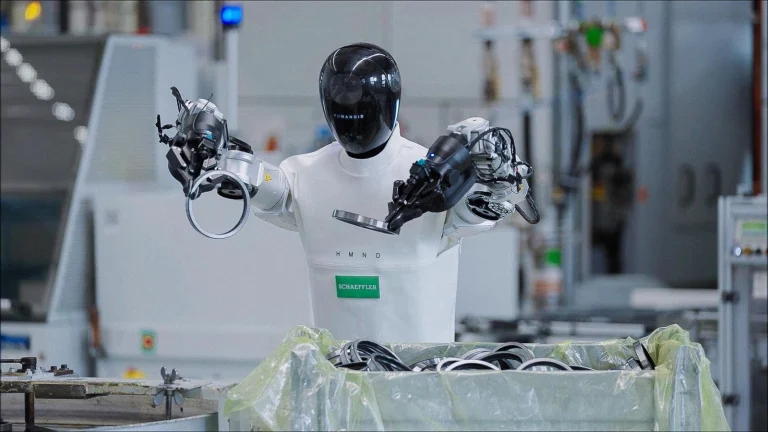
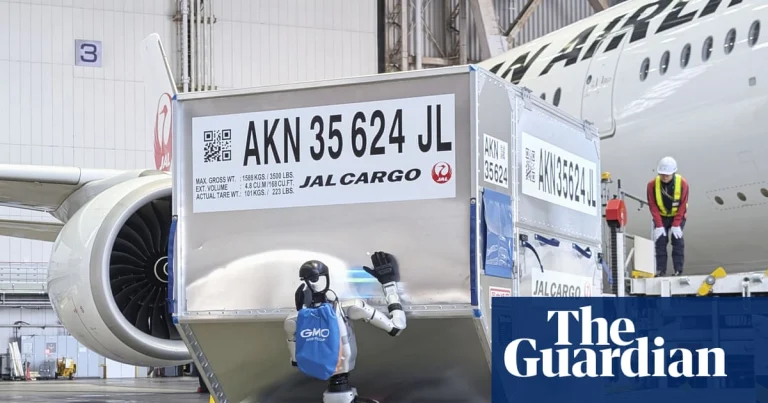
The central case for humanoids remains their fit with existing human designed workplaces. Unlike fixed industrial automation or more limited mobile platforms, a legged, human scale robot could move through a facility and take on varied jobs without rebuilding the site around the machine.
Alberto Rodriguez, director of robot behavior for Boston Dynamics’ new Atlas humanoid, framed the problem around variability rather than a single killer application. “Except on the very few applications that have very large and stable scale, the norm is that almost all jobs are one of a kind,” he said. “What’s driving our road map is building the technology that is necessary to solve that general purpose case.”
The market forecasts being cited around the sector are large, although still highly speculative at the long end. The Monitor reports that Morgan Stanley forecast last year that humanoids could become a $5 trillion market by 2050, with nearly 1 billion robots in operation. Barclays Investment Bank calculates that humanoids currently represent about $2 billion to $3 billion of the global industrial robotics market, with a possible rise to $200 billion or more over a 10 year period that it describes as hard to predict.
The unresolved engineering constraints
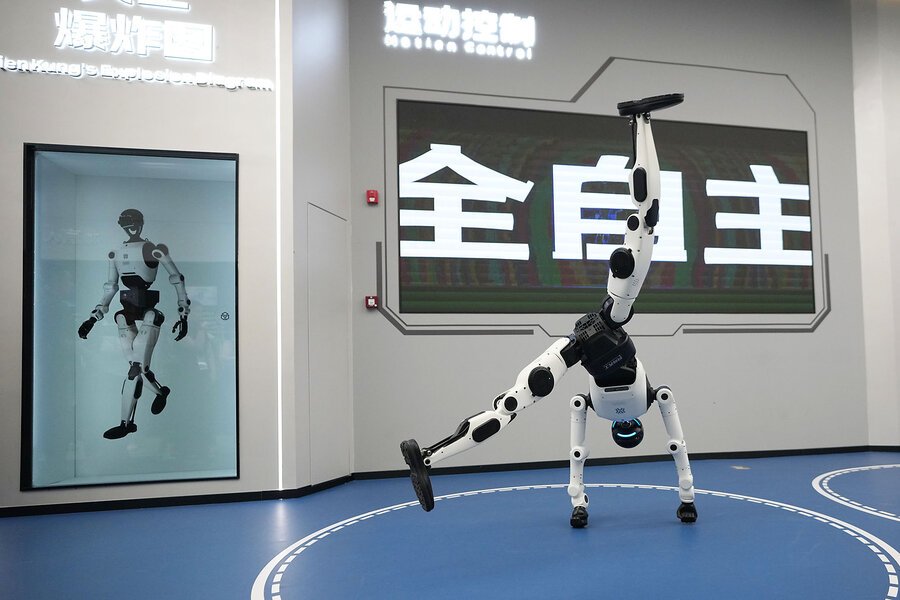
The same report lays out why many factory operators remain cautious. Walking robots need dense sensing because cameras alone may miss a tripping hazard. They also need powerful onboard computing to operate in unstructured environments, while electric power demands make long operating periods difficult.
Safety remains the harder test for legged machines. A humanoid has to work near people without injuring them or falling into them, and the Monitor notes that robotics experts do not yet consider that proven. Cost is the other constraint. If a traditional robot solves a defined task for much less money, the business case for a humanoid becomes narrow.
The timing debate is unusually wide. Elon Musk said in January that Tesla expected to start selling humanoid robots by the end of next year. Rodney Brooks, by contrast, predicted that robot dexterity would remain “pathetic compared to human hands beyond 2036,” and argued that successful humanoids will be more limited than current hype suggests.
For now, traditional industrial robots still dominate the spending picture. Mordor Intelligence forecasts that the $54 billion global industrial robotics market will double over the next five years. David Galati, chief technology officer of Titan Robotics, put the near term customer logic plainly at the summit: “There are some markets for humanoids that make a lot of sense. But we are in a place where custom built, purpose built robots make more sense.”
Source: csmonitor.com