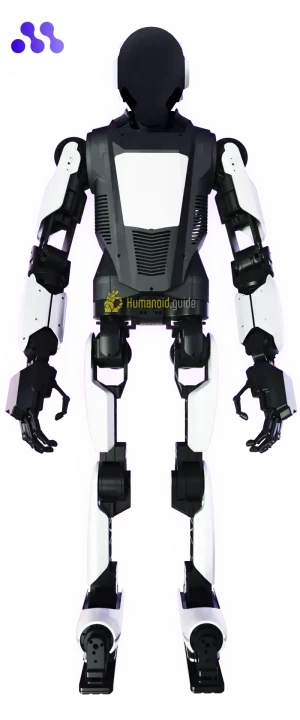

Kaleido 9
200 000 USD

Kawasaki Robotics
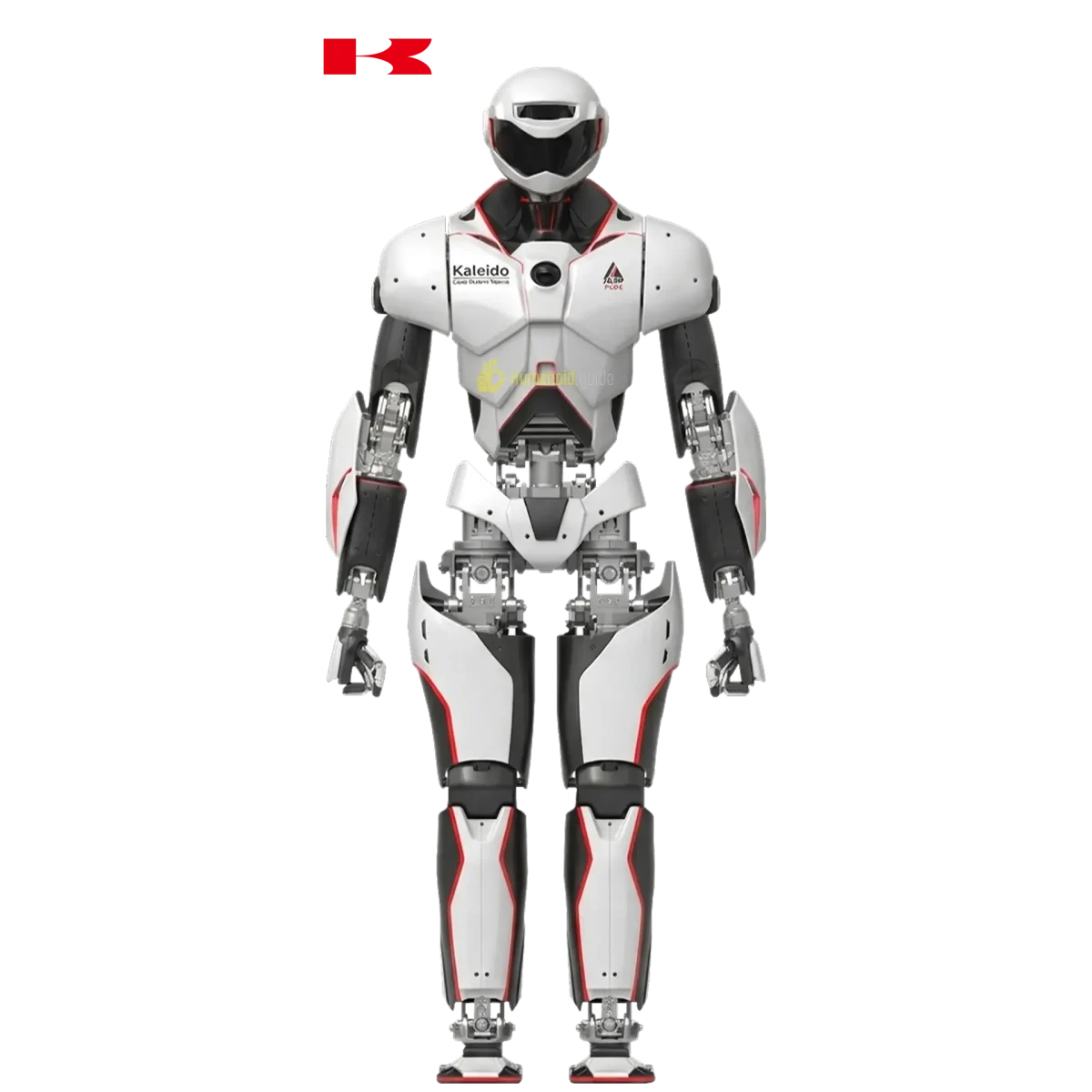
A 190 cm Japanese disaster-response humanoid from Kawasaki Heavy Industries, unveiled at iREX 2025, built for autonomous navigation and VR-teleoperated rescue and heavy-industry work.
Skill Score
 3
3

Specifications and details:
| Availability | Prototype |
|---|---|
| Nationality | Japan |
| Website | https://kawasakirobotics.com/ |
| Degrees of freedom, overall | N/A |
| Degrees of freedom, hands | N/A |
| Height [cm] | 190 |
| Max speed (km/h) | 5 |
| Strength [kg] | 30 |
| Weight [kg] | 99 |
| Runtime pr charge (hours) | 3 |
| Safe with humans | Yes |
| CPU/GPU | N/A |
| Ingress protection | N/A |
| Camera resolution | Enhanced stereo cameras + LiDAR for 3D mapping |
| Connectivity | Ethernet, VR headset teleoperation, WiFi |
| Operating system | N/A |
| LLM integration | N/A |
| Latency glass to action | N/A |
| Motor tech | Fully electric actuation (no hydraulics) |
| Gear tech | N/A |
| Main structural material | Magnesium alloy skeleton with 3D-printed resin exterior panels |
| Number of fingers | 5 per hand |
| Main market | Disaster response, heavy industry, integration with Kawasaki's existing industrial robot and mobile-robot ecosystem |
| Color | White |
| Manufacturer | Kawasaki Robotics |
Description
Kawasaki Heavy Industries unveiled Kaleido 9 at the 2025 International Robot Exhibition in Tokyo. This ninth-generation humanoid caps nearly a decade of development that began back in 2015. Kawasaki built Japan’s first domestically produced industrial robot in 1969, so humanoid work extends a much longer legacy. Since the company has explored humanoid platforms for over two decades, Kaleido 9 draws on serious institutional experience.
At 190 centimeters tall, Kaleido 9 stands noticeably taller than earlier Kaleido generations. Engineers reinforced its waist and leg joints, so the robot recovers balance faster when it stumbles. This upgrade matters because real-world floors are rarely flat or predictable. As a result, Kaleido 9 can step out quickly and regain stability instead of toppling over.
New! 2026 Humanoid
Robot Market Report
198 pages of exclusive insight from global robotics experts — uncover funding trends, technology challenges, leading manufacturers, supply chain shifts, and surveys and forecasts on future humanoid applications.

now Google DeepMind
Kaleido 9 relies on LiDAR sensors and enhanced stereo cameras to build a live 3D map of its surroundings. Using this data, the robot recognizes stairways, adjusts its stride, and steers around people and obstacles on its own. Operators can also switch to full remote control through a VR headset when needed. At its unveiling, Kaleido 9 swept yard debris, hauled out trash, and simulated firefighting with a hose.
I’m Olivia, Humanoid Analyst at Humanoid.Guide
My mission, together with the team, is to help your organization understand the landscape, compare solutions, and move toward successful robot deployments.
Kawasaki designed Kaleido 9 with disaster response and heavy industry in mind, not flashy acrobatics. During testing, the robot cleared a fallen shelf, rescued a mock trapped cat, and moved through a simulated disaster scene. Because Kawasaki wants Kaleido 9 to work alongside its existing industrial robots and mobile machines, the platform still needs further development. The company targets 2035 for a practical, commercially deployable version.
Download the Humanoid Robot Market Report here
Website: kawasakirobotics.com