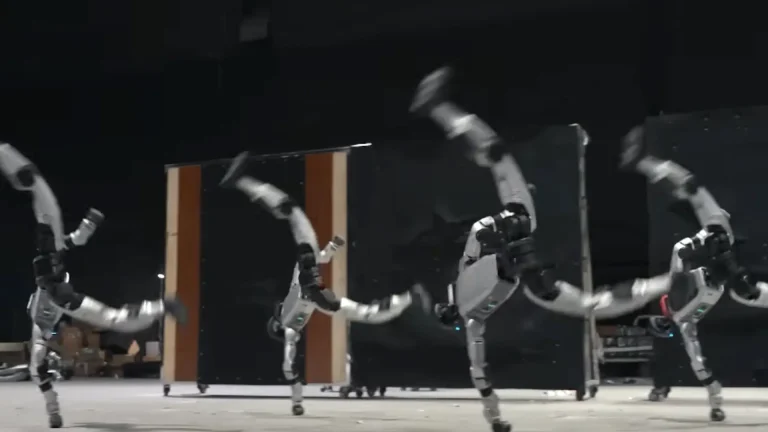
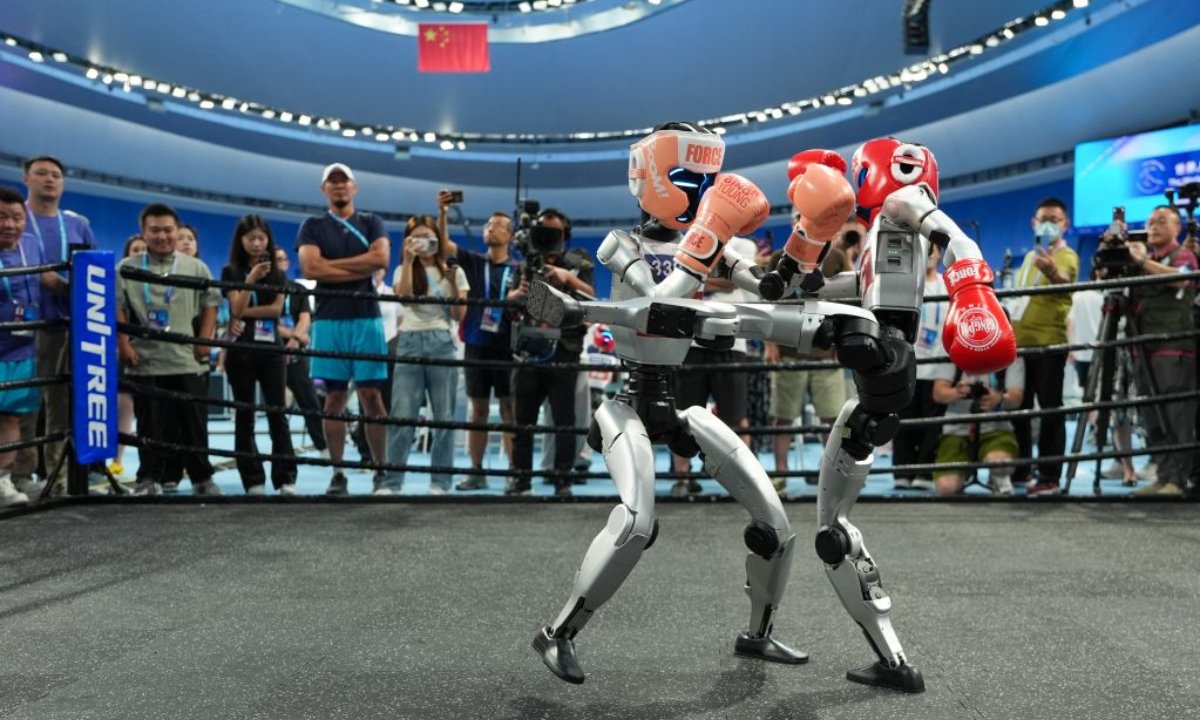
World Humanoid Robot Games adds Robot Home in Beijing
The World Humanoid Robot Games is adding a dedicated Robot Home in Beijing as the second edition prepares to open Saturday and run until August 26, according to Global Times.
Organizers say the event will draw 666 teams and 2,056 robots from 16 countries and regions across six continents. The team count is up 138 percent from the inaugural event, according to the report, giving the competition more scale than a typical humanoid showcase.
The Robot Home is the operational piece to watch. CCTV Finance reported that the facility can house more than 1,500 robots, charge at least 1,200 batteries and process digital check in and retrieval for a single robot in 30 seconds. For team events such as football, the organizing committee often provides robot bodies, with a nearby recharging station using precharged batteries in power cabinets.
Event infrastructure is becoming part of the test
The organizer has also built a 5G+Wi-Fi communications environment described as interference resistant and highly reliable. CCTV Finance further said the event has what it described as the world’s only competition command system designed specifically for robot events, plus an embodied intelligent robot management platform for robots across different brands and models. That claim has not been independently detailed in the source, but the direction is clear: robot logistics, safety monitoring, dispatch and maintenance are being treated as competition infrastructure, not backstage chores.
Robot Street will run alongside the competitions with intelligent retail, virtual reality viewing and robot operated cafes. Those are public facing additions, but the more technically relevant development is the scale of coordinated robot handling required to keep hundreds of machines powered, assigned and available for events.
Scenario events put humanoids through longer tasks
Some scenario based preliminaries began Sunday. At a real firehouse in Beijing, humanoid robots took part in a simulated firefighting mission that tested hazard detection, equipment operation and emergency response. Other teams were preparing for home service, industrial manufacturing and emergency rescue scenarios.
Inside the National Speed Skating Oval, robots were preparing for office scenario events at an industrial ecosystem training and evaluation base. In one challenge, robots must autonomously load printers, arrange meeting supplies and operate a paper shredder within 20 minutes. Venue staff told Global Times that mistakes or delays affect the final score.
The full event program includes 51 events: 30 competitive events, including ball games and confrontation contests, and 21 scenario based events covering industrial assembly, home services and emergency rescue. Xinhua reported that scenario contests will use environments modeled on factories, hotels, homes and logistics facilities, with tasks such as assembly, housekeeping, rescue operations and book sorting.
For the first time, the Games will also include a dedicated dexterous hand competition. It consists of eight high precision events drawn from industrial production and everyday life scenarios, according to the report. AGILINK, identified as the officially certified dexterous hand equipment provider, told Global Times that winning the competition would certify product capability and clear a demonstration grade threshold for real world use. The source does not describe the measurement criteria in detail, so that should be read as a provider claim rather than a published standard.
Wang Peng, an associate research fellow at the Beijing Academy of Social Sciences, told Global Times: “Last year it was about whether they could run to the finish line. This year it’s about whether they can get the job done.” The stronger test will be how consistently humanoids complete those longer scenario tasks when the competition opens at full scale.
Source: globaltimes.cn