TradingKey names Tesla, Nvidia as humanoid robot stocks to watch
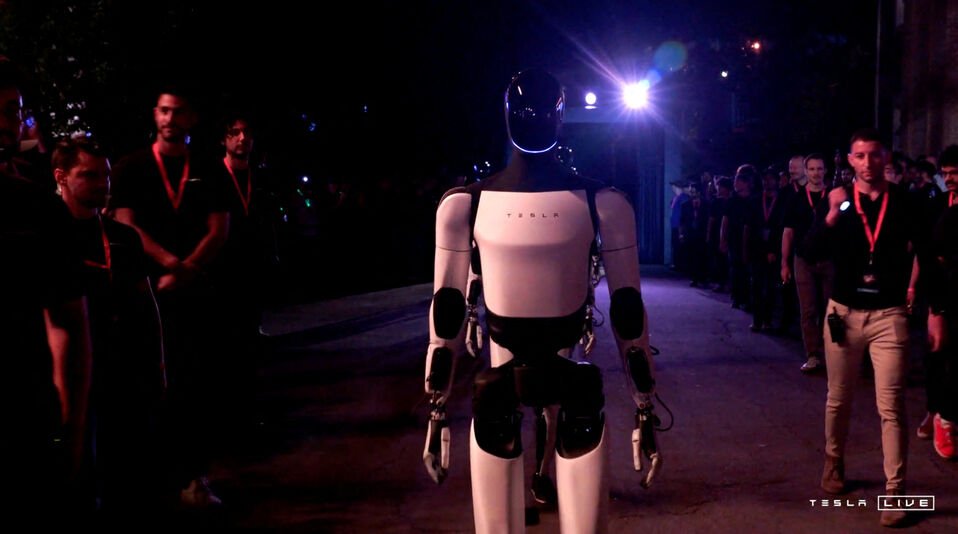
TradingKey has put Tesla and Nvidia at the center of its second half 2026 robotics stock watch, with the main humanoid robotics claims tied to Tesla Optimus V3 production plans and Nvidia’s work with Unitree Robotics.
The June 21 analysis argues that humanoid robots are entering a more serious commercialization phase in 2026. Several of its largest claims, including Tesla production timing and capacity, are presented inside an investment note that also says TradingKey cannot guarantee the accuracy of the content. They are useful claims to track, not confirmed operating results.
Key humanoid claims in the TradingKey note
- Tesla Optimus V3: expected to enter mass production in the second half of 2026, with production scheduled between late July and August.
- Optimus line: the former Model S/X production line at Fremont has been converted into a dedicated Optimus line, targeting initial annual capacity of 1 million units.
- Optimus cost: initial per unit cost still exceeds $60,000, according to the article.
- Nvidia and Unitree: the release is described as an open humanoid robot reference design using Nvidia Isaac GR00T, Jetson Thor and Unitree’s H2 Plus body.
Tesla claims carry the biggest production test
TradingKey cites Counterpoint Research for the view that Tesla is applying electric vehicle manufacturing experience to Optimus. The article says Optimus V3 is expected to enter mass production in the second half of 2026, using a converted Fremont line that previously served Model S/X production.
That is an aggressive production framing for a humanoid robot program. The article says the line is targeting initial annual capacity of 1 million units, while also noting that early Optimus V3 unit cost remains above $60,000. It names the dexterous hand as a constraint, specifically the unresolved balance among performance, cost and reliability.
Piper Sandler is also cited as saying Tesla’s existing business can support a stock price of about $400 per share, with Optimus not yet reflected in valuation. For robotics operators, the more concrete test is not the valuation call. It is whether Tesla can prove repeatable assembly, reliability and hand performance at the scale described.
Nvidia is framed as humanoid infrastructure
TradingKey positions Nvidia as a robotics infrastructure company rather than a humanoid manufacturer. The article says Jensen Huang reached an agreement with LG Group on humanoid robot development cooperation during a June 2026 visit to South Korea, and expanded work with Doosan Group in physical AI and AI factory infrastructure.
The Unitree partnership is the more directly humanoid piece. According to TradingKey, Nvidia and Unitree released Nvidia Isaac GR00T with Nvidia supplying the Jetson Thor computing platform and Unitree providing the H2 Plus robot body. The article describes the result as the world’s first open humanoid robot reference design.
Private humanoid firms dominate the sharper data points
The listed company table in TradingKey’s article is broad. It includes Symbotic, Teradyne, Rockwell Automation, Intuitive Surgical and UiPath, but most of those are automation, surgical robotics or software names rather than direct humanoid robot makers. The humanoid robot stocks angle is therefore concentrated mainly in Tesla, Nvidia and the supply chain read through from private companies.
On private firms, the note gives several concrete benchmarks. NEURA Robotics is described as Europe’s largest humanoid robotics company by funding scale, with a June 2026 Series C of up to $1.4 billion led by Tether and participation from Amazon, Nvidia, Qualcomm, Bosch and Schaeffler. TradingKey says NEURA has about 1 billion euros in backlog orders (about $1.08 billion), a post round valuation near $7 billion and a 4NE-1 humanoid priced around 98,000 euros (about $106,000), with mass shipments expected by the end of 2026.
Figure AI is described as valued at $39 billion after a September 2025 Series C of more than $1 billion, with investors including Nvidia, Intel Capital and Qualcomm Ventures. The article says Figure ended its OpenAI partnership in 2025 and is developing its own end to end AI model, Helix, with Figure 03 released in May 2025.
TradingKey also lists Boston Dynamics, Agility Robotics and Physical Intelligence. It says the mass production version of Atlas has 56 degrees of freedom and a 50 kg lifting capacity, with 2026 capacity allocated to Hyundai Motor and Google DeepMind. Agility’s Digit is described as a logistics and warehousing humanoid with Ford Motor among its customers, while Physical Intelligence is presented as a research oriented company focused on general purpose robot control models.
The next concrete check is whether the Optimus line starts in the late July to August window described by TradingKey, and whether output reaches anything close to the stated 1 million unit annual capacity target.
Source: tradingkey.com