Foundation Robotics tests Phantom for military humanoid roles
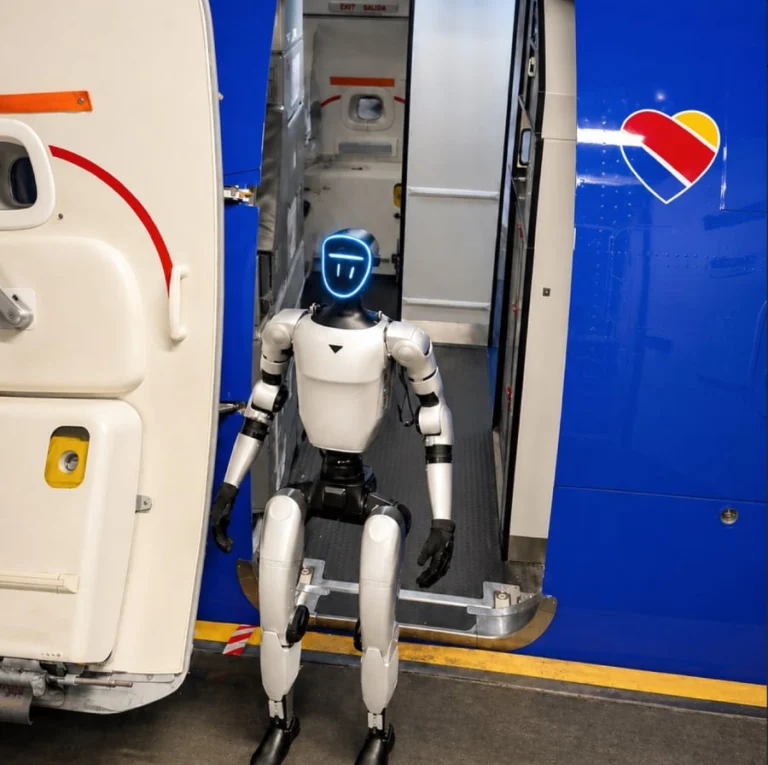
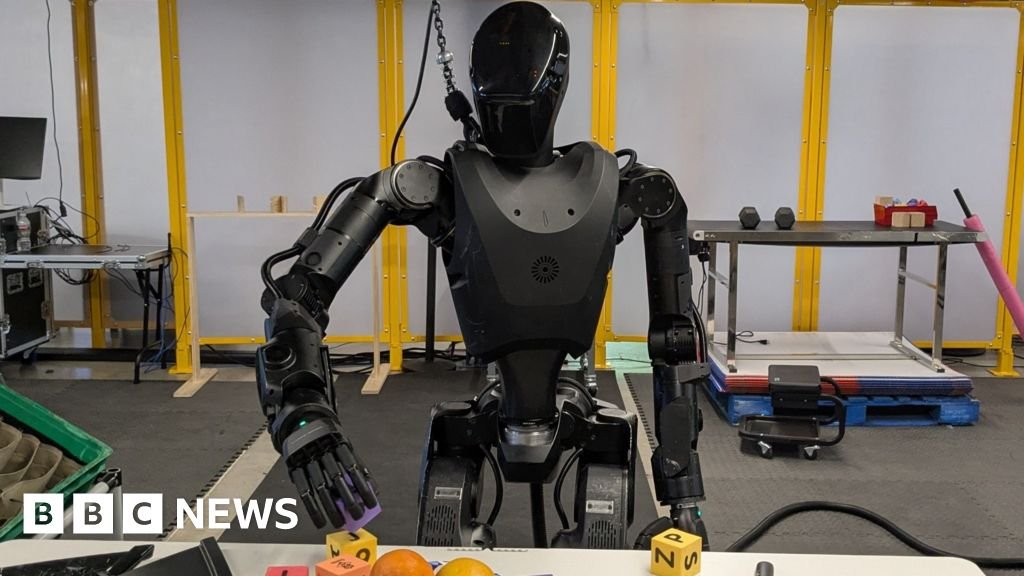
Foundation Robotics is developing Phantom, an 80 kg humanoid robot, for military and civilian use, including support tasks and possible future weaponized roles, according to the BBC. The San Francisco startup showed the BBC its Phantom MK-1 manipulating children’s blocks, walking, and resisting pushes, but the current machine remains far from field ready.
The near term evidence is modest. Phantom MK-1 does not have a battery, is not dustproof or waterproof, cannot recover after a fall, and its hands still lack the strength and dexterity needed for demanding manipulation. Foundation says a Phantom MK-2 is in development with element proofing, a large battery targeting about six hours of runtime, fall recovery, better force tolerance, and more capable hands with wrists intended to help the robot fire weapons.
Key facts
- Robot: Foundation Robotics Phantom MK-1
- Weight: 80 kg
- Military contracts: $24 million in US military research contracts, according to the BBC
- Ukraine testing: Two units are being tested by the Ukrainian military, according to Foundation
- Production target: At least 40,000 units a year by the end of 2027, according to the company
- Long term cost goal: Less than $20,000 per unit, according to the company
Support roles first, weapon use later
Foundation frames Phantom as a general purpose military humanoid for supply pickup, reconnaissance, equipment or casualty recovery, and hazard inspection. More controversially, CEO Sankaet Pathak also described a future role in “frontline weaponisation,” with robots engaging and neutralizing threats.
Pathak argues that humanoids could reduce risk to soldiers, especially in buildings and other chokepoint heavy environments. He also argues that land based autonomy can be more precise than autonomous air strikes. Those claims remain largely prospective. The US military pilot is limited to handling weapons rather than firing them, according to Pathak, while weaponization is part of testing in Ukraine.
Foundation’s argument for the humanoid form is the familiar one: human environments and tools already exist. A robot shaped broadly like a person can, in principle, use existing doors, vehicles, tools, and weapons without a complete redesign of the battlefield around machines. In practice, hands, balance, power, perception, and autonomy still limit what humanoids can do outside structured demonstrations.
Autonomy is the hard part
Phantom is controlled by an AI system called Cortex, with a new version also in development. The company says the robot can be given a goal, such as moving supplies or mapping a building, after training on task demonstrations using videos, images, and text.
The robot uses cameras in its helmet for 360 degree vision. Foundation says Cortex combines a reasoning model trained on task specific examples with a broader world model trained on internet videos and data collected from the robot’s physical interactions, including the block manipulation shown to the BBC.
Outside experts quoted by the BBC were cautious. Dean Fankhauser of Robozaps said military interest is clear, pointing to a US Army contest for humanoids that could eventually support soldiers across a range of tasks. But he also said today’s commercial humanoids can barely handle warehouse packing, much less reliably open doors or fight in complex terrain.
“You get an impression of human-level capability by seeing the human form… but [these autonomous systems] don’t know how to handle open-ended uncertainty yet,”Robert Griffin, Florida Institute for Human and Machine Cognition
Robert Griffin, who works on humanoids at the Florida Institute for Human and Machine Cognition, pointed to basic battlefield uncertainty as a major obstacle. A robot may need to jump through an unknown window, land on uneven ground, and immediately operate inside an unfamiliar building. Human soldiers can also defeat AI systems by doing unusual things, he said.
Runtime is another constraint across the humanoid sector. Griffin described six hours as “very impressive” if Foundation can deliver it. Whether the company can build hands capable of manipulating a weapon designed for humans also remains open.
Ethics and procurement pressure
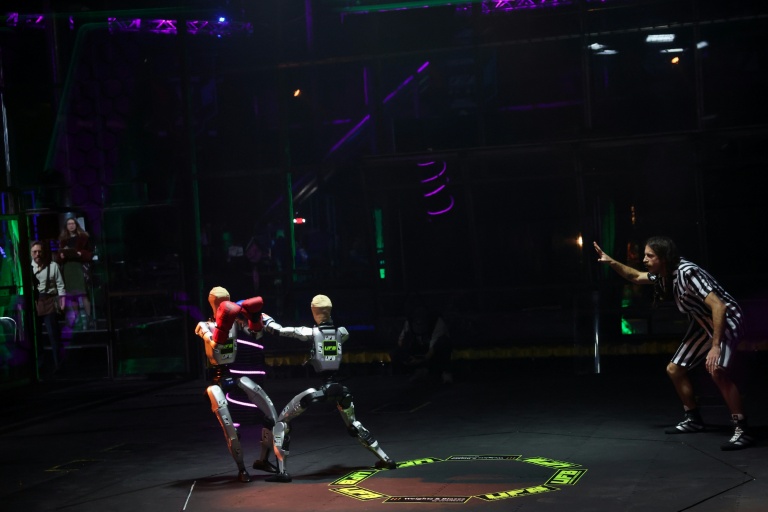
The BBC report places Foundation inside a wider military interest in legged robots, including drones, ground robots, and quadrupeds carrying payloads. Some legged robot companies have publicly opposed weaponization, citing ethical and safety risks. Pathak disagrees and argues that Western companies should not leave the field to China.
Nicole van Rooijen, executive director of Stop Killer Robots, told the BBC that lethal autonomous weapons lower the barrier to war, dehumanize conflict, and blur accountability. She also described the humanoid form as especially concerning because familiar humanlike machines could make civilians misread danger as civilian use grows.
For humanoid robotics practitioners, Phantom is less a battlefield robot than an early test case for how quickly general purpose humanoid hardware can be hardened, powered, and controlled in unstructured environments. Foundation has contracts, prototypes, and a provocative defense thesis. It has not yet shown a humanoid that can survive the practical conditions implied by that thesis.
Source: bbc.com