ICRA 2026 Vienna
with humanoid.guide on the floor
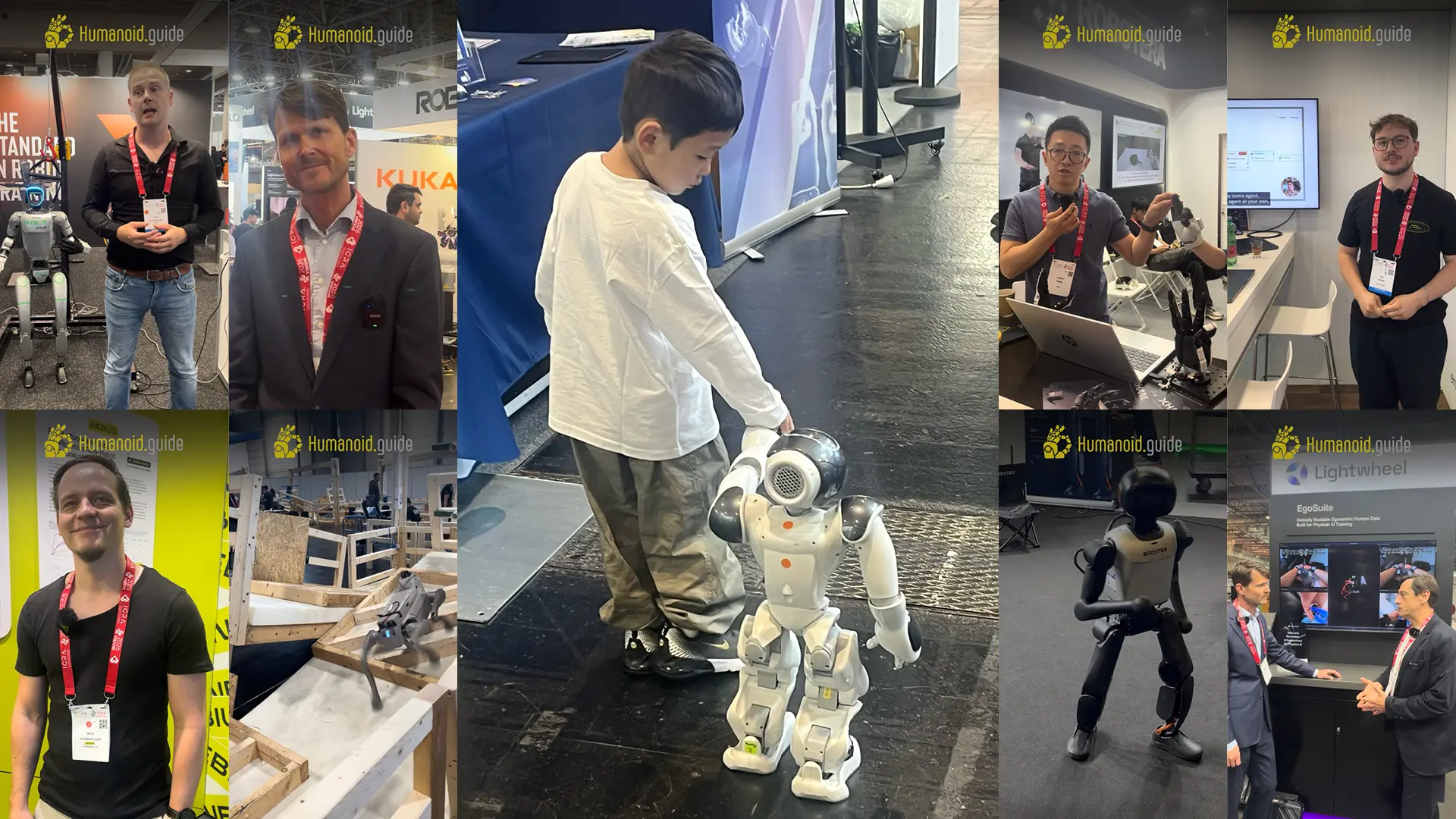
The 43rd IEEE International Conference on Robotics and Automation brought more than 8,000 roboticists to Vienna under the banner "Robots for all" – and we walked the floor with a camera and a microphone, interviewing the people building the future.
The 43rd edition of ICRA – the IEEE International Conference on Robotics and Automation – took over the VIECON / Messe Wien in Vienna from June 1–5, 2026. Five days of papers, demos, competitions and a packed exhibition hall, with humanoids everywhere you looked. Instead of writing it all down, we did what we do best: walked the aisles and put a microphone in front of the people who build, train and sell the robots. These are our shorts from Vienna.
Where better to start than with our own man in the hall? Lars Fredrik opens the report from the show floor – followed by a proper welcome to ICRA 2026, straight from Vienna.
Lars Fredrik · humanoid.guide opens the report from the floor
Welcome to ICRA 2026 · first steps into the VIECON, Vienna
The very first ICRA was held in Atlanta in 1984, with roughly 200 attendees and about 75 papers. Forty-two years later, the 43rd edition filled Vienna with more than 8,000 roboticists.
Three booths we kept coming back to. Robotera – the company behind the Star1 and L7 humanoids and the XHAND1 hand, whose torso robots already sort packages in logistics centers – showed why China's humanoid OEMs are setting the pace. Booster Robotics is putting its compact humanoids – the T1 and the K1 – into classrooms and research labs around the world, and Galbot pairs wheeled humanoids like the Galbot S1 with embodied AI that is already on the job in real stores. If you only watch three interviews, make it these.
★ Floor favourite
Robotera · humanoid OEM – torso robots already deployed in logistics
In our guide: Star1 · L7 · XHAND1
★ Floor favourite
Booster Robotics · Chaoyi Li, Head of Globalisation – compact humanoids for education & research
In our guide: T1 · K1
★ Floor favourite
Galbot · wheeled humanoids & embodied AI in real-world retail
In our guide: Galbot S1
On Wednesday evening the whole conference decamped to Imperial Night – billed as the social event of ICRA 2026. Vienna's imperial ballroom tradition meets 8,000 robot builders.
New! 2026 Humanoid
Robot Market Report
198 pages of exclusive insight from global robotics experts — uncover funding trends, technology challenges, leading manufacturers, supply chain shifts, and surveys and forecasts on future humanoid applications.

now Google DeepMind
The Humanoid Actuation Report
Fundamentals, Architectures, Vendors and the Ten-Year Outlook

No humanoid stands up without data. Xsens captures human motion to feed imitation learning and validate whole-body control. Nebius brings the AI-cloud muscle for training robot foundation models, Encord curates and annotates the data that goes into them, and Lightwheel builds the simulation worlds where robots get to practice before they meet reality.
Xsens · Dennis Kloppenburg, Growth & Business Development – motion capture for imitation learning
In our guide: Xsens Link
Nebius · AI cloud for training robot brains
Encord · Max Nolan, ML Solutions Engineer – data annotation & curation for robotics AI
Lightwheel · simulation & synthetic data for sim-to-real
ICRA 2026 wasn't only papers and pitches – the program also featured robot competitions and its own "Arts in Robotics" track, true to this year's theme: Robots for all.
ICRA is more than keynotes and exhibition stands. Robots paraded down the aisles and games broke out between sessions. Here is the week's atmosphere – a look around, a parade and some games – in three shorts.
ICRA 2026 · impressions from the hall
Robot parade · the robots take a walk
Games at ICRA · play, with robots
Five days, 8,000 roboticists and twelve shorts – Vienna showed that "Robots for all" is no longer just a slogan.
Every interview from the floor lives on our YouTube channel. Subscribe to humanoid.guide so you don't miss the next stop.
New! 2026 Humanoid
Robot Market Report
198 pages of exclusive insight from global robotics experts — uncover funding trends, technology challenges, leading manufacturers, supply chain shifts, and surveys and forecasts on future humanoid applications.
now Google DeepMind
The Humanoid Actuation Report
Fundamentals, Architectures, Vendors and the Ten-Year Outlook