Solomon adds Nvidia NemoClaw for humanoid robot autonomy at COMPUTEX
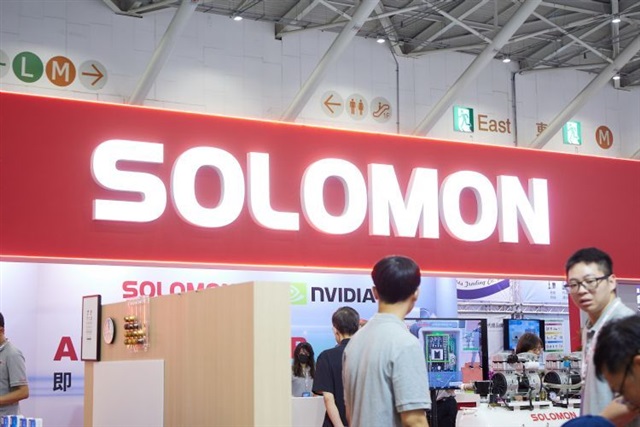
Solomon said at COMPUTEX 2026 that it has integrated Nvidia’s NemoClaw architecture to advance humanoid robot autonomy, coordinating multiple AI agents across inference, perception, sensor fusion, mobility, and manipulation. According to Digitimes, the announcement is aimed at bringing several functions that are often handled separately into a more unified approach for humanoid robots.
What Solomon announced at COMPUTEX
The publicly visible portion of Digitimes’ report identifies Solomon as an AI 3D vision company and says the NemoClaw integration was introduced during COMPUTEX 2026. The available text does not identify a specific humanoid model, customer program, or deployment site tied to the announcement.
Even with those limits, the wording is notable. Rather than describing a single vision module or a stand-alone manipulation demo, Solomon framed the work around coordination of multiple AI agents for full humanoid operation, spanning perception, movement, and task execution.
Why humanoid robot autonomy needs coordination
For humanoids, autonomy is not only a question of better vision or better motion planning in isolation. A useful system has to interpret a scene, combine data from sensors, select an action, move through space, and manipulate objects without those steps drifting out of sync.
That is why a multi-agent architecture matters. If NemoClaw is being used as described by Digitimes, Solomon is targeting the orchestration layer that connects sensing, decision-making, and actuation, which is one of the harder integration problems in humanoid robotics.
The source specifically highlights inference, perception, sensor fusion, mobility, and manipulation. Taken together, those elements cover much of what determines whether a humanoid can move beyond scripted behavior and operate with less manual intervention in changing environments.
What the move suggests about Solomon’s strategy
Digitimes describes Solomon as an AI 3D vision company, and this announcement suggests an effort to extend beyond vision alone into a broader humanoid software role. That distinction matters because many humanoid programs rely on outside specialists for perception, control integration, and task-level coordination rather than building every layer internally.
In practical terms, that places Solomon closer to a systems integration position inside the humanoid stack. A company that can connect perception and manipulation software to a robot’s motion system may gain more influence over real deployment readiness than a vendor offering only one sensing component.
The announcement also reflects a wider shift in how humanoid progress is being measured. Locomotion videos and hand demonstrations still draw attention, but operators and technical buyers increasingly need evidence that perception, mobility, and manipulation can be coordinated as one working system.
What remains unclear after the announcement
The available report leaves several questions unanswered. It does not provide benchmark data, reliability figures, task completion results, or details on which humanoid hardware platform is using the integrated architecture.
Those missing details will determine how commercially meaningful the news becomes. For Solomon, the next important step will be a named robot program, a deployment partner, or technical results showing whether the NemoClaw integration improves performance in real tasks rather than only in a conference demonstration.
Even with limited public detail, the COMPUTEX announcement points to where much of the current humanoid competition is moving, toward software coordination rather than isolated component gains. As vendors push toward practical deployment, the companies that can connect perception, mobility, and manipulation into dependable humanoid behavior are likely to matter as much as the robot makers themselves.
Source: digitimes.com