Welcome, HW1!
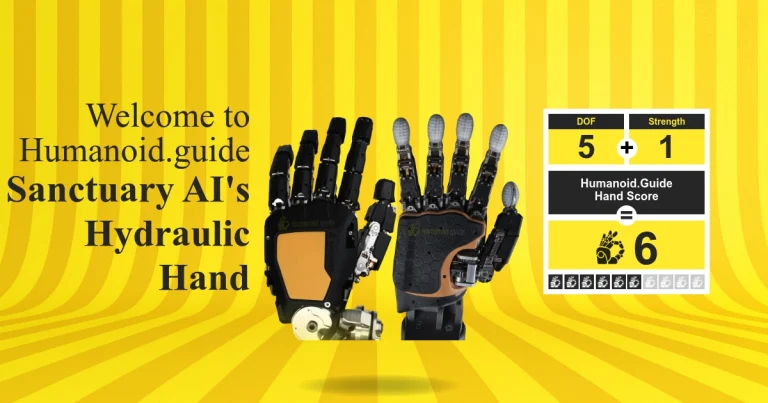
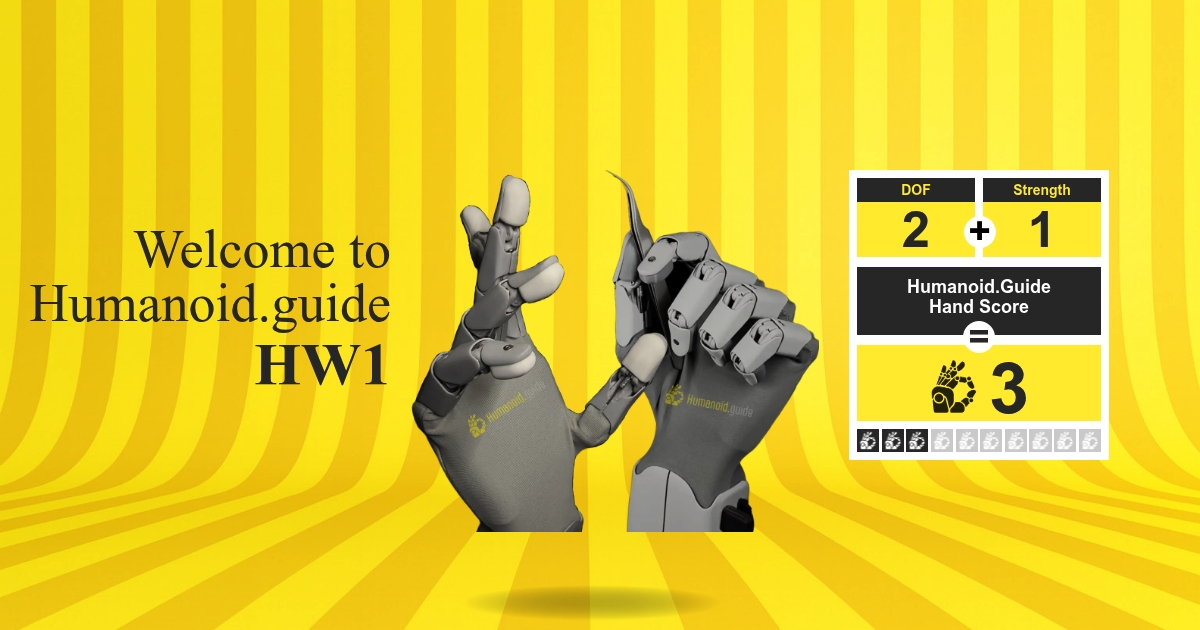
The HW1 is a compact robotic hand and wrist platform aimed at research, automation, teleoperation, and creative robotics work. Based on the page description, it emphasizes human like proportions, expressive movement, and a design philosophy centered on accessibility rather than industrial complexity. The hand is lightweight at 0.475 kilograms, uses five fingers, includes tactile or force sensing, and combines direct drive with tendon driven actuation. Its structure mixes 3D printed composite parts with metal hardware, which supports repairability and customization. Humanoid.guide gives the HW1 a total hand score of 3, placing it in a developing stage overall. Within that score, it receives a lower tier rating for strength and a modest rating for degrees of freedom, so it should be viewed as an in progress dexterous platform rather than a top tier powerhouse. Even so, the overall package appears thoughtfully built for developers and makers who want a hand that is compact, approachable, and designed for iterative experimentation.
From a technical perspective, the most notable aspects are its modular construction and simplified software workflow. The page says the hand offers automatic calibration and plug and play connectivity, which could reduce setup friction for labs and independent builders. That makes the HW1 especially relevant for prototyping control pipelines, testing sensor driven interaction, or integrating a hand into a broader robotic or animatronics system without excessive overhead. Tactile or force sensors also suggest a focus on contact aware experimentation, while the repairable hardware approach can lower the cost of iteration when parts wear out or designs evolve. For teams exploring expressive robotics, teleoperation interfaces, or educational platforms, the HW1 stands out less for raw scoring performance and more for the practical combination of manageable size, adaptable hardware, and accessible deployment.
In market terms, the HW1 is listed as a prototype from Gesture Platforms in Canada and is currently marked as unavailable for purchase, so interested users should treat it as an emerging platform rather than an off the shelf commercial product. That status fits the broader significance of the hand: it reflects a growing push toward smaller, more repairable, more user friendly robotic components that can serve researchers, creators, and enthusiasts outside large industrial programs. If Gesture Platforms continues development, the HW1 could become a useful reference point for accessible dexterous manipulation hardware, especially for teams that value customization and maintainability. At this stage, its importance lies in showing how compact robotic hands can balance human centered design, approachable integration, and iterative development priorities within the wider humanoid and embodied robotics ecosystem.