Astribot T1
13 500 USD

Astribot
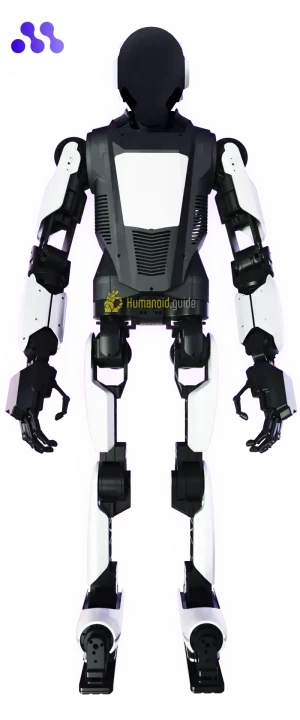
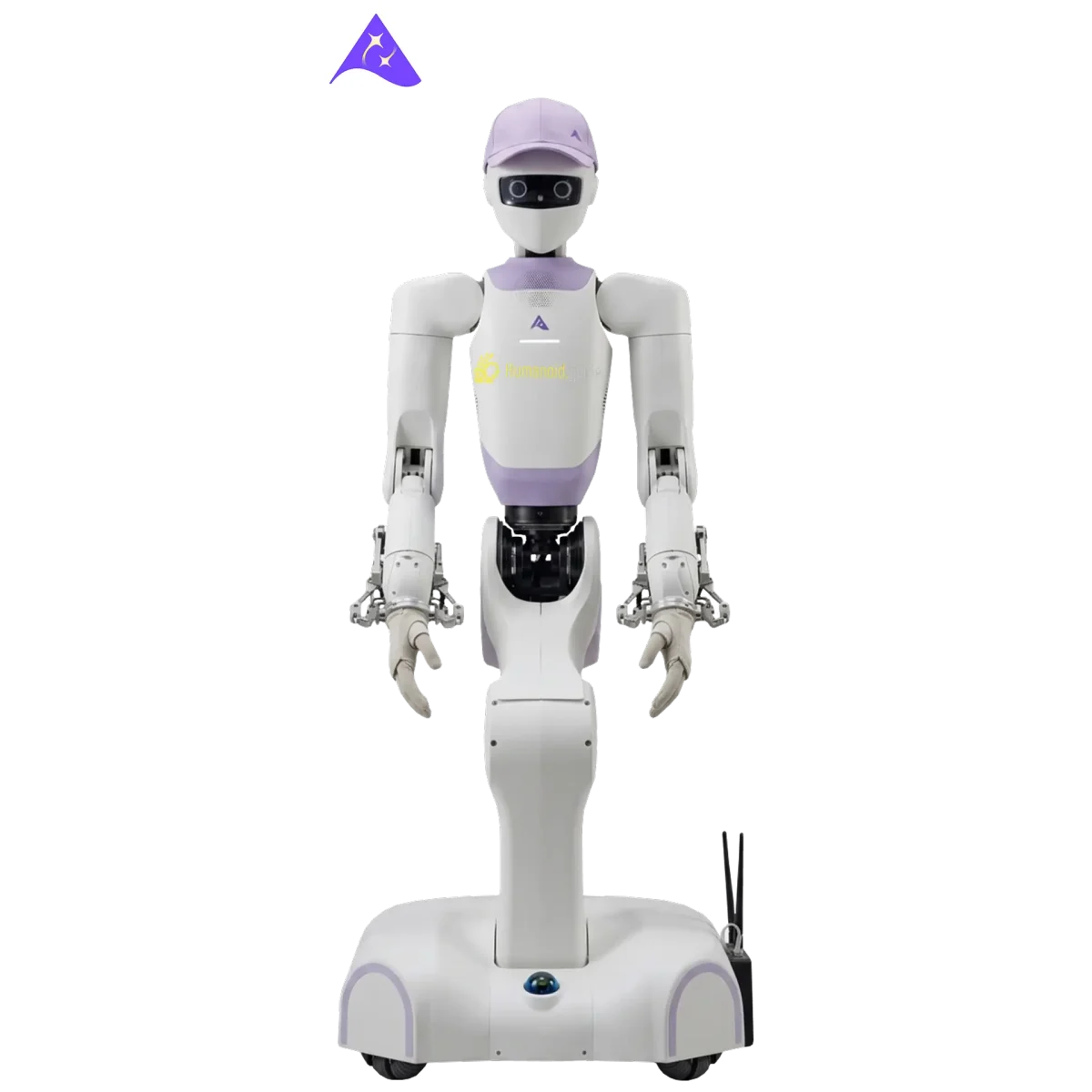
A humanoid robot designed for real-world environments, combining dexterous dual-arm manipulation, advanced perception, and human-like interaction for service and industrial tasks.
Skill Score
 4
4
Specifications and details:
| Availability | In production |
|---|---|
| Nationality | China |
| Website | https://www.astribot.com/en/product |
| Degrees of freedom, overall | 23 |
| Degrees of freedom, hands | 16 |
| Height [cm] | 155 |
| Max speed (km/h) | 5 |
| Strength [kg] | 10 |
| Weight [kg] | 66 |
| Runtime pr charge (hours) | 4-6 |
| Safe with humans | Yes |
| CPU/GPU | N/A |
| Ingress protection | indoor use, low IP rating |
| Camera resolution | N/A |
| Connectivity | Ethernet, Wi‑Fi |
| Operating system | N/A |
| LLM integration | N/A |
| Latency glass to action | N/A |
| Motor tech | Cable-driven architecture |
| Gear tech | N/A |
| Main structural material | Aluminum alloy frame with polymer covers |
| Number of fingers | 5 per hand |
| Main market | Commercial Service, Education & research, Home service, Industrial |
| Verified | Not verified |
| Shipping Size | N/A |
| Color | White |
| Manufacturer | Astribot |
Description
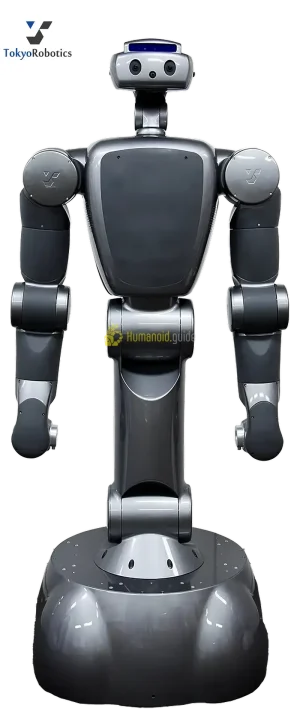
Astribot launched the T1 in May 2026 as the compact, more affordable sibling of its flagship S1 humanoid. The Shenzhen startup sells T1 from roughly $13,000, a fraction of the S1’s $100,000 price tag. Unlike full bipedal humanoids, T1 rides on a wheeled base rather than walking on legs. As a result, the design avoids most balance risks while keeping a full pair of human-scale arms up top. The robot stands 1.55 meters tall and weighs about 66 kilograms.
T1 inherits its cable-driven motion architecture directly from the S1 platform. Cables and tendons run from compact actuators to the joints, producing smoother and more natural motion than gear-stack designs. The robot offers 23 degrees of freedom across the body, excluding the end effectors. Furthermore, each arm carries up to 5 kilograms of payload — plenty for kitchen, lab, or industrial tasks. The hands themselves swap between simple grippers and full five-fingered dexterous hands. Therefore, the same robot can pour a drink today and sort small auto parts tomorrow.
New! 2026 Humanoid
Robot Market Report
198 pages of exclusive insight from global robotics experts — uncover funding trends, technology challenges, leading manufacturers, supply chain shifts, and surveys and forecasts on future humanoid applications.

now Google DeepMind
The intelligence side runs on a different model from most humanoid programs. Instead of relying on synthetic data or pure simulation, Astribot trains T1 mostly on human demonstration data. Operators show the robot how to do a task, and the AI generalizes from there. Importantly, this approach matches the everyday-task profile that T1 actually targets. Astribot’s published use cases include cooking, lab assistance, laundry folding, sorting auto parts, and EV charging. Meanwhile, the company markets the robot as a platform for practical testing rather than a fixed-purpose appliance.
I’m Olivia, Humanoid Analyst at Humanoid.Guide
My mission, together with the team, is to help your organization understand the landscape, compare solutions, and move toward successful robot deployments.
Lai Jie founded Astribot in Shenzhen in December 2022 after stints at Tencent’s Robotics X lab and Baidu. The startup has raised more than $100 million since 2024, with Ant Group and Matrix Partners China among the backers. For clarity, Stardust Intelligence is the company’s formal name; “Astribot” is the product brand. The T1 represents the company’s bet on a more accessible humanoid market beyond research labs and flagship pilots. By design, the T1 fits into homes, commercial spaces, research labs, and industrial sites from the same hardware. Today, Astribot already accepts orders for the robot.
Download the Humanoid Robot Market Report here