
Humanoid Robots Demonstrate Running Gains at Beijing Event
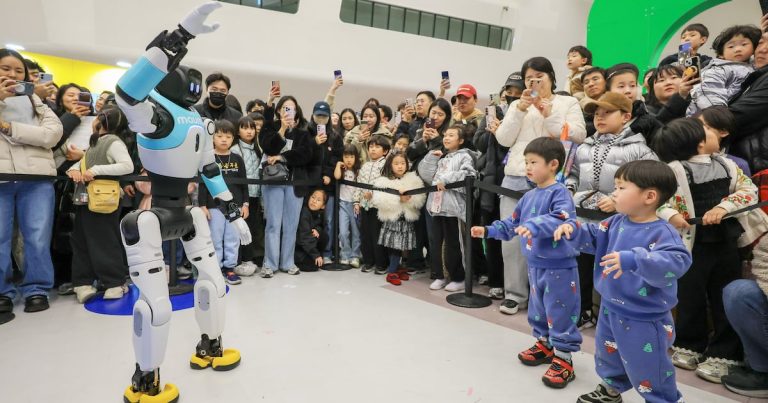
Dozens of humanoid robots developed in China took part in a Beijing half marathon, demonstrating notable advances in dynamic locomotion and physical coordination. According to reports, the robots ran alongside human participants and in some cases outpaced them, highlighting the rapid progress being made in humanoid mobility.
2026 Humanoid Robot Market Report
160 pages of exclusive insight from global robotics experts – uncover funding trends, technology challenges, leading manufacturers, supply chain shifts, and surveys and forecasts on future humanoid applications.

Featuring insights from
Aaron Saunders, Former CTO of
Boston Dynamics,
now Google DeepMind

2026 Humanoid Robot Market Report
160 pages of exclusive insight from global robotics experts – uncover funding trends, technology challenges, leading manufacturers, supply chain shifts, and surveys and forecasts on future humanoid applications.
The event showcased improvements in balance, gait stability, and sustained motion over distance. Running remains a complex challenge for humanoid systems due to the need for precise control of center of mass, joint coordination, and real time adaptation to changing terrain and pace. Public demonstrations in real world environments provide a visible benchmark for these capabilities.
While detailed technical specifications of the participating robots were not disclosed, the ability to complete or actively participate in a half marathon setting suggests progress beyond controlled laboratory demonstrations. Endurance, energy efficiency, and robustness are key constraints in humanoid design, and events of this type offer insight into how systems perform under extended physical load.
The presence of multiple robots in a shared event also points to increasing maturity across different development teams. China has been actively investing in humanoid robotics, and public showcases such as this serve both as validation of engineering progress and as a signal of competitive momentum in the field.
For industry observers, the demonstration underscores a broader trend toward improving whole body control in humanoid platforms. As locomotion capabilities continue to advance, the gap between experimental prototypes and deployable systems in logistics, inspection, and service roles may narrow. However, translating short term performance in controlled events into reliable, repeatable operation in industrial settings remains an ongoing challenge.
Source: theguardian.com