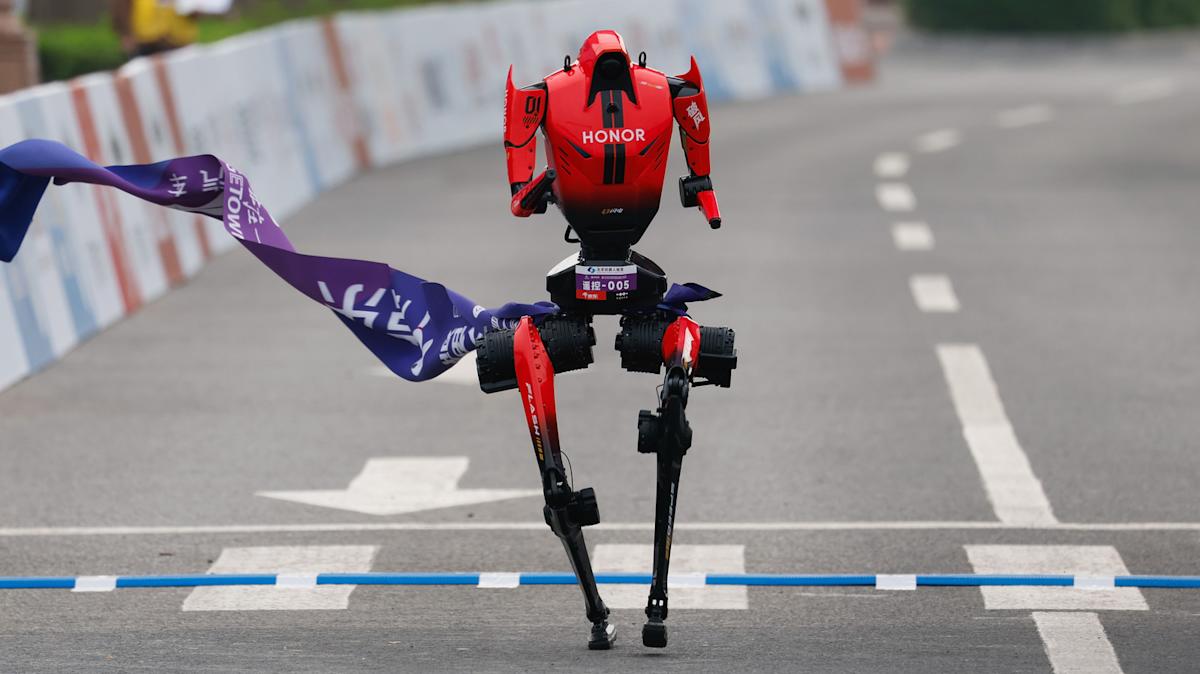
Honor’s Lightning wins Beijing half marathon robot race in China
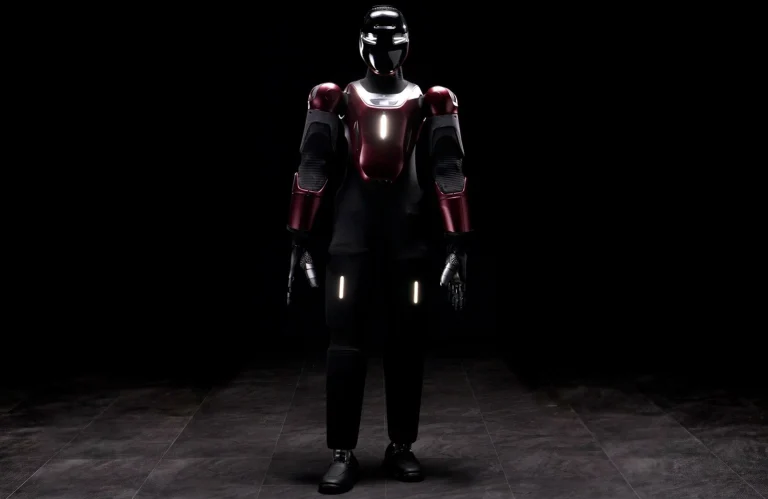
Honor’s Lightning won the Beijing half marathon robot race at the 2026 Beijing E-Town Half-Marathon in China, according to the SlashGear article republished by AOL. The autonomous humanoid robot completed the 13-mile course in 50 minutes and 26 seconds, finishing ahead of other robots and, by the source’s comparison, faster than the current human half-marathon world record. The result matters less as a direct contest with human runners than as a public test of long-distance locomotion, stability, and system reliability for humanoid robots.
As reported in the source article, the event placed robots and humans in parallel lanes rather than in a single mixed field. Lightning was the first robot finisher, and two other Honor robots also made up the top three among robot entrants. That combination of speed and completion rate is what turned the race into a notable benchmark for humanoid performance.
What the Beijing half marathon robot race showed
The clearest technical takeaway from the event was that several humanoids stayed upright and completed the course more cleanly than in the prior year’s race. The source says Lightning and most of the other robots held up much better than in 2025, with most successfully navigating the route without crashing or running into onlookers. For humanoid developers, that points to progress in bipedal control and race-day reliability, even if the course conditions were structured.
SlashGear’s account frames the engineering as the main reason the performance drew attention. A half-marathon run is a visible way to demonstrate whether a humanoid can sustain movement over time without a breakdown in balance or coordination. In that sense, the race offered a stress test of mechanical durability and control software, not just a headline-friendly time result.
The reported finishing time also drew attention because the source compared it with Jacob Kiplimo’s 57 minutes and 20 seconds world record at the 2026 EDP Lisbon Half Marathon. That comparison is striking, but it also invites caution. The source itself notes that the robot race was conducted under different conditions, with robots and humans separated into parallel lanes, which limits any simple one-to-one reading of the result.
Performance versus autonomy
The same article also gives substantial space to skepticism about what Lightning’s run actually proved. Rodney Brooks, the iRobot co-founder and a Massachusetts Institute of Technology professor, told Scientific American that the achievement was being overstated because the robot was not dealing with the course the way a human would. He said there was “no ability to interact with the world because it’s all pre-mapped,” and questioned how much outside support accompanied the robots.
That criticism goes to a central issue in humanoid evaluation. A fast time on a known route can demonstrate locomotion quality, but it does not automatically establish broad, humanlike autonomy. If the environment is pre-mapped and the support structure is substantial, the benchmark shifts from open-world intelligence to well-prepared execution inside controlled constraints.
Even so, Brooks’ critique does not erase the underlying technical result. The source notes that Lightning performed well on a technological level, even if it lacked the kind of adaptive competence associated with human athletic performance. For robotics practitioners, that distinction is important because it separates a meaningful systems milestone from claims the event did not actually validate.
What the result means for humanoid robotics
The broader significance of the race lies in what it says about the current phase of humanoid development, especially in China, where the source says companies are pushing further into the technology. A public event like the Beijing half marathon robot race compresses multiple engineering questions into a single outcome: can the machine stay stable, keep moving, and finish without incident over a long distance? On that narrower measure, the reported results suggest improvement.
At the same time, the source leaves several practical questions unanswered. It does not detail the full support setup, how much perception and planning happened onboard during the run, or how repeatable the performance would be outside a pre-mapped event. Those details matter because commercial usefulness depends less on a single race result than on repeatable operation in environments that are not scripted so tightly.
That is likely where attention will turn next. Future humanoid benchmarks will need to show not only speed and endurance, but also clearer evidence of decision-making under less controlled conditions and more transparent reporting on support requirements. Events like the Beijing half marathon robot race can still be valuable, but their industrial meaning will depend on how closely they map to real operating autonomy rather than to carefully staged demonstration conditions.
Source: aol.com