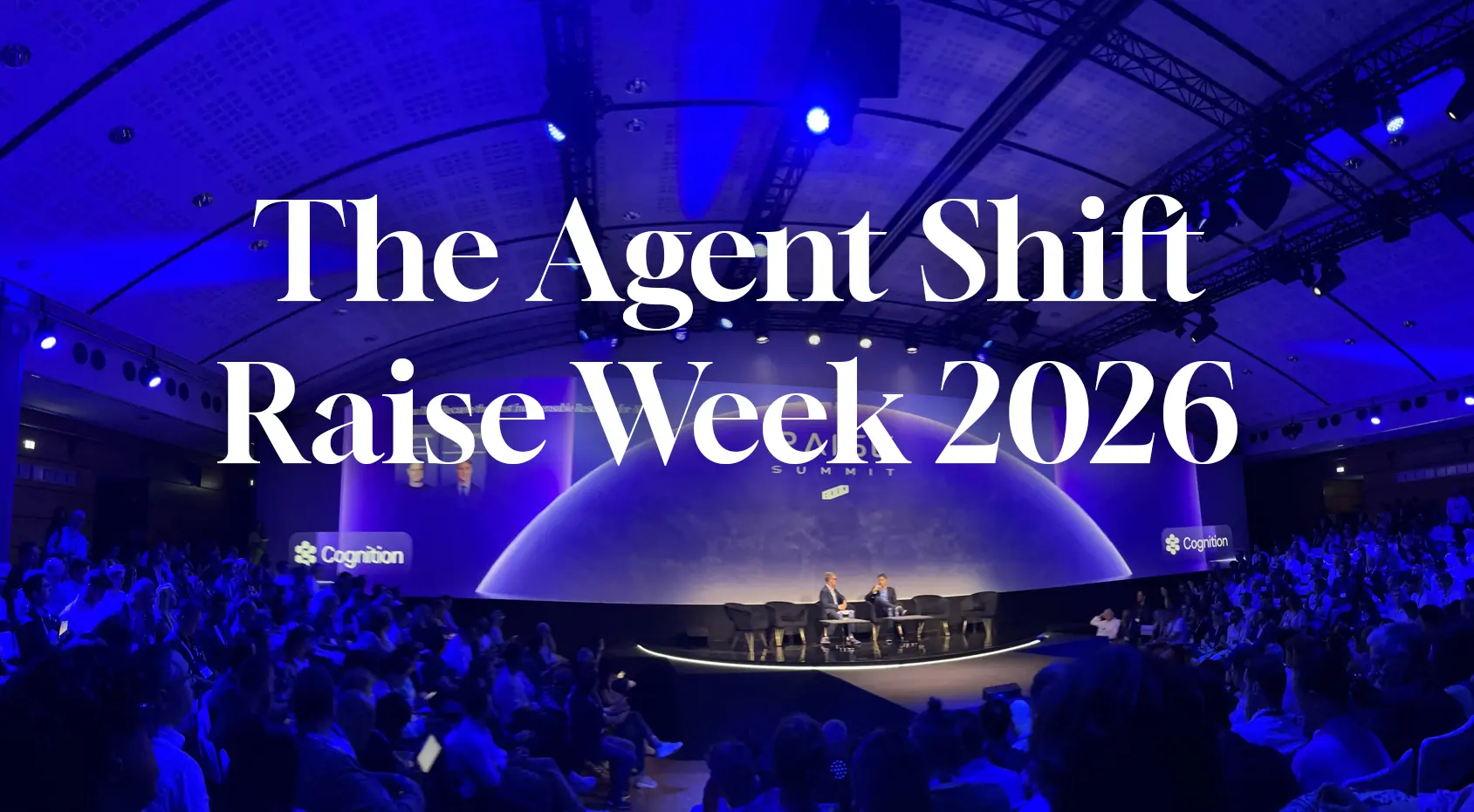
The Agent Shift
Cursor engineers run five agents at once, Devin starts Devin – and inside OpenAI, Codex became the default way to work. Field notes on the AI agent shift, from the Raise Week 2026 main stage.
Every era of computing has a moment when the demo becomes the workflow. At Raise Week 2026 in Paris, the AI agent shift felt exactly like that – told first by the companies selling it, then, more convincingly, by the numbers from inside OpenAI. Part two of our Raise Week field notes.
The AI Agent Shift · Cursor, Nokia, Cognition
The main-stage conversation we took the most robotics notes from was ostensibly about the ROI of AI: Jordan Topoleski, COO of Cursor, and Pallav Mahajan, CTO of Nokia, in conversation with Bloomberg's Peter Elstrom. Cursor's engineers now run five to six agents at the same time, and the company has invented a new role – deployed ROI specialists who roam the organisation (and its customers) telling the story of what the AI shift is worth. Topoleski's map of how it got here:
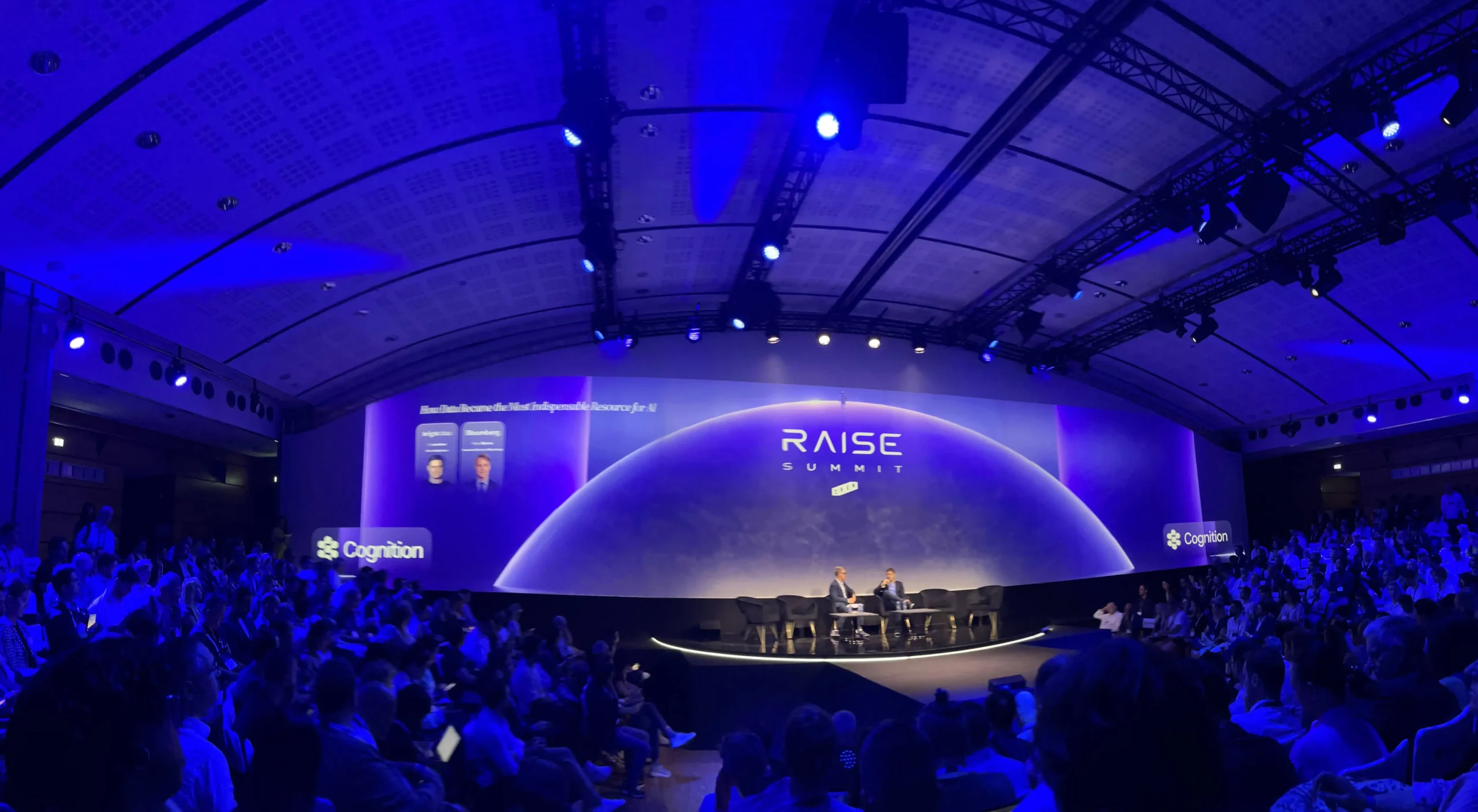
Raise Week 2026 · scenes from Paris
-
2024 · AutocompleteCursor Tab and code completion – the assistant finishes your line. Adoption scales linearly with developers.
-
2025 · Agents as colleaguesEngineers hand whole tasks to an AI colleague. People write 50% more code with AI. Still scales linearly.
-
2026 · Multi-agent systemsSystem focus: multi-agent flows as the models get far more capable. From phase two to three you cannot scale linearly anymore – the question becomes how agents attach to the system, and what business value they create.
Nokia's counterpoint was organisational: networks must become AI-native for the coming super cycle, and AI is not a tooling change but a new muscle. Mahajan's rules – do not wait for perfection, empower the engineer (soft token quotas: exceed them and you get an email, but you judge your own tasks), and reinvent management as job titles collapse. "You are a port builder."
Then Scott Wu, CEO of Cognition – the company behind Devin, the AI software engineer used by Mercedes and Goldman Sachs – put numbers on where this goes. Model coding ability doubles every seven months. Agents now run 16 hours of work unattended and close the loop themselves. Shipped software at Cognition is up 10x in six months, and – the line that stuck – Devin starts Devin: agent-initiated work has outstripped human-initiated work inside the company. Token counts and lines of code no longer matter as metrics; business impact does.
"What would you do with an infinite army of software engineers? The question is really – what do you want to build?"
Why we care as robot-watchers: robot training increasingly looks like a software pipeline – data curation, simulation, evaluation, retraining. If that holds, the multi-agent flows Cursor and Cognition described are its blueprint – and much of tomorrow's robot training may be done by agents.
New! 2026 Humanoid
Robot Market Report
198 pages of exclusive insight from global robotics experts — uncover funding trends, technology challenges, leading manufacturers, supply chain shifts, and surveys and forecasts on future humanoid applications.

now Google DeepMind
The OpenAI Keynote · From Agents to Compute
If Cursor and Cognition gave the outside view, OpenAI brought the inside one. Sachin Katti, OpenAI's Head of Industrial Compute, walked the Raise stage through what the AI agent shift looks like from within the company building them – a deck that reads as one argument in four acts: the trajectory arrived on schedule, agents took over the work, the flywheel sped up, and compute has to answer for it. Watch the moments we caught from the floor – then flip through the deck below.
From the OpenAI keynote · RAISE Summit 2026
From the OpenAI keynote · RAISE Summit 2026
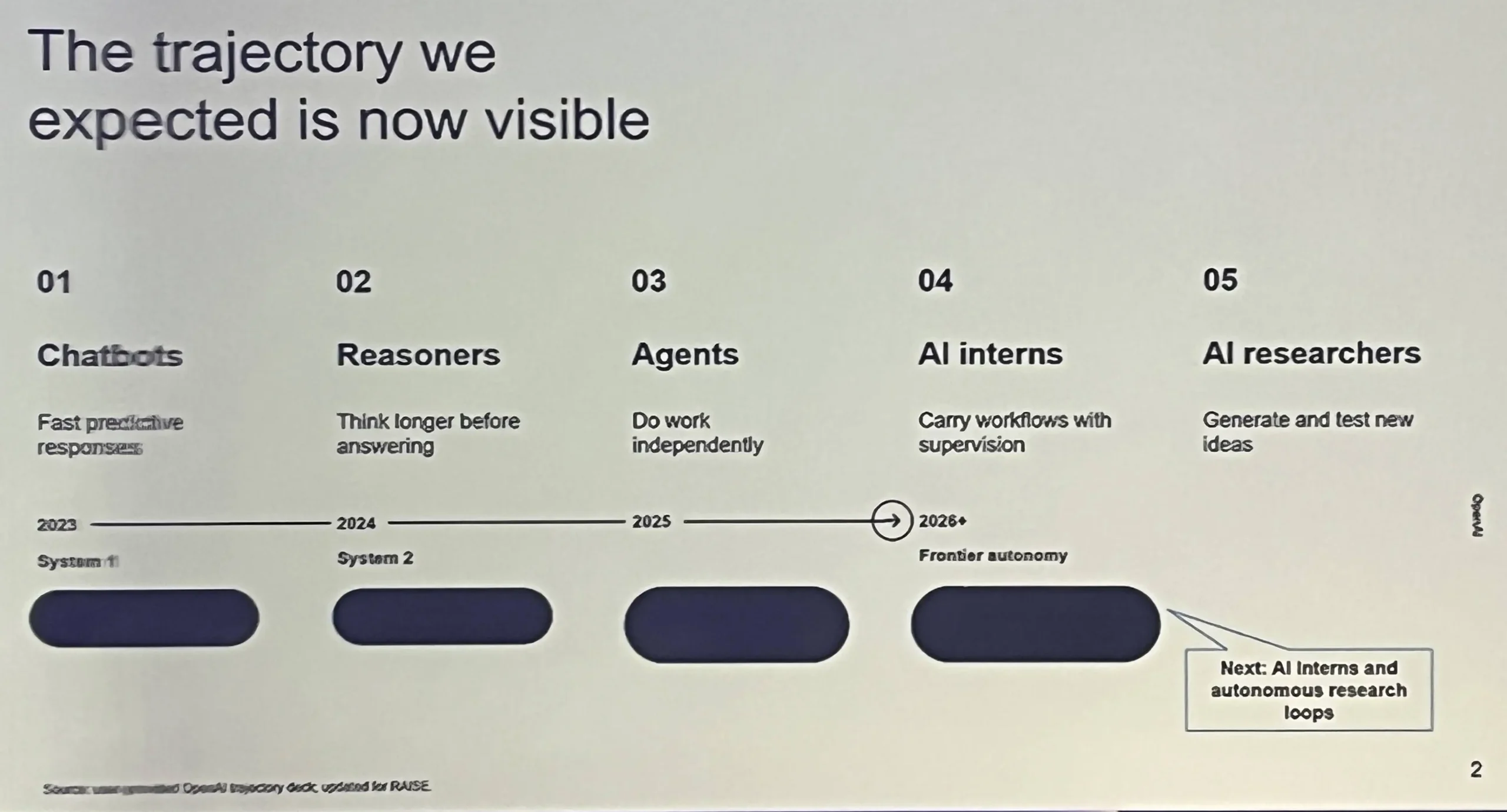
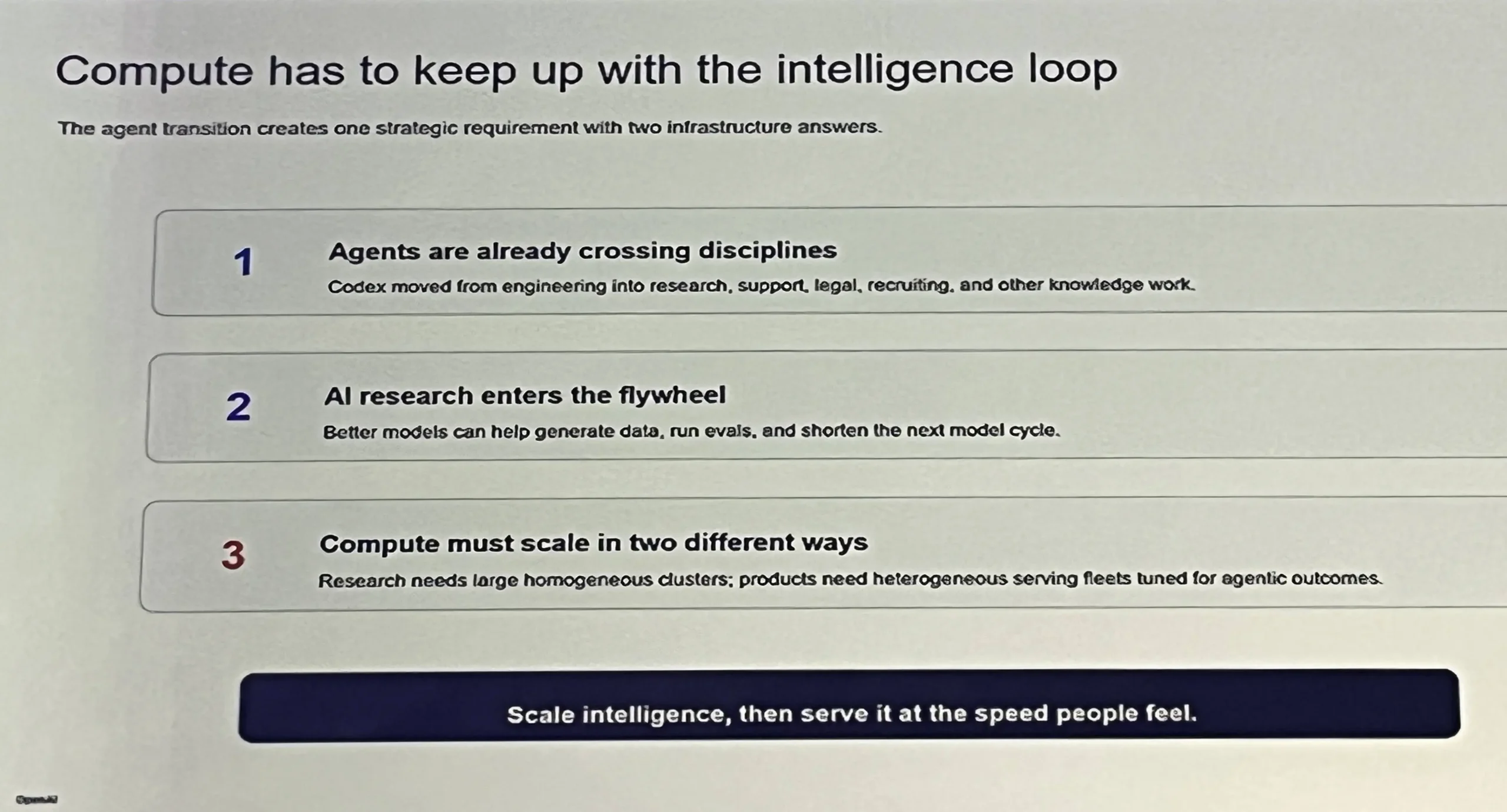
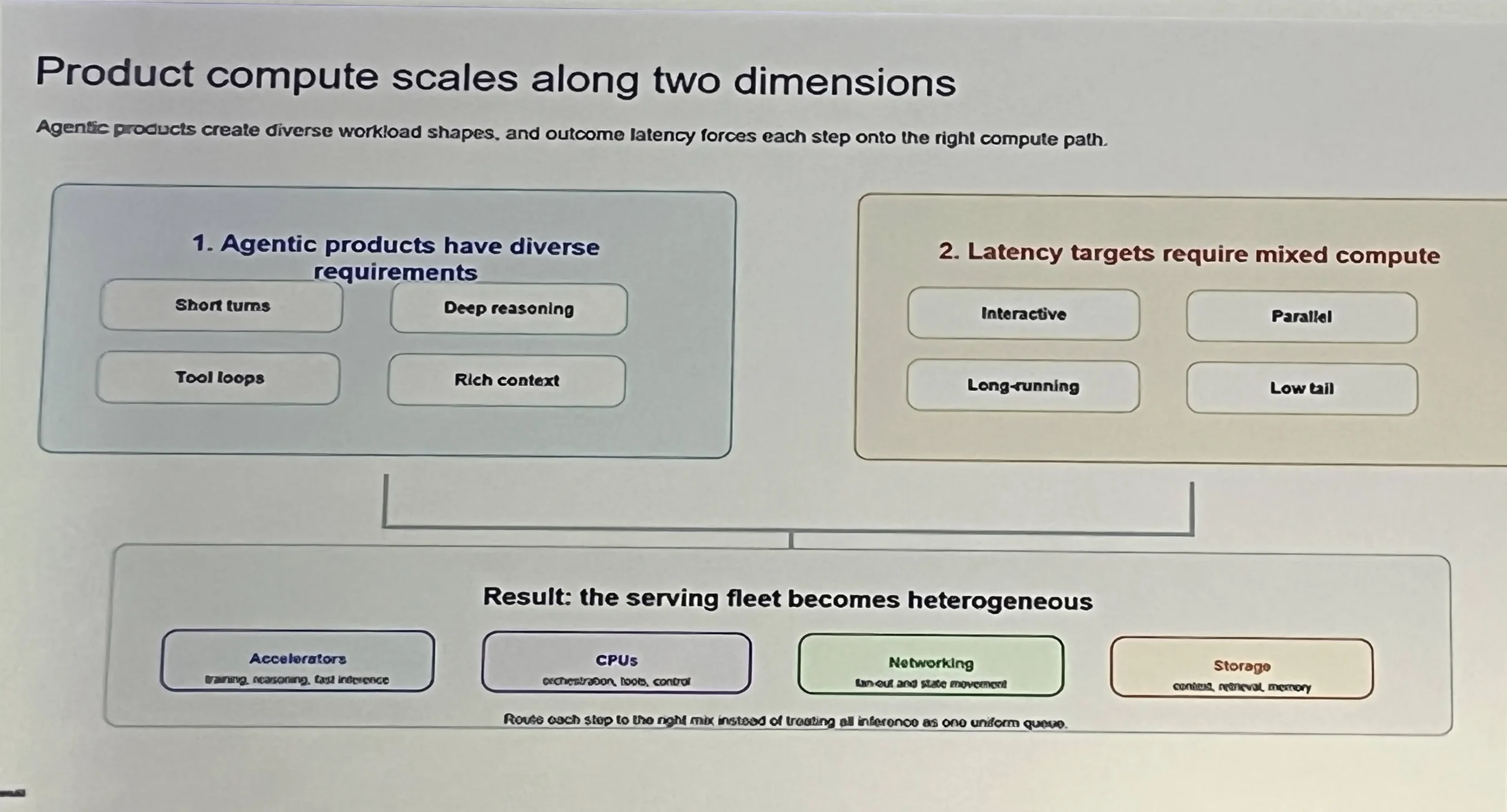
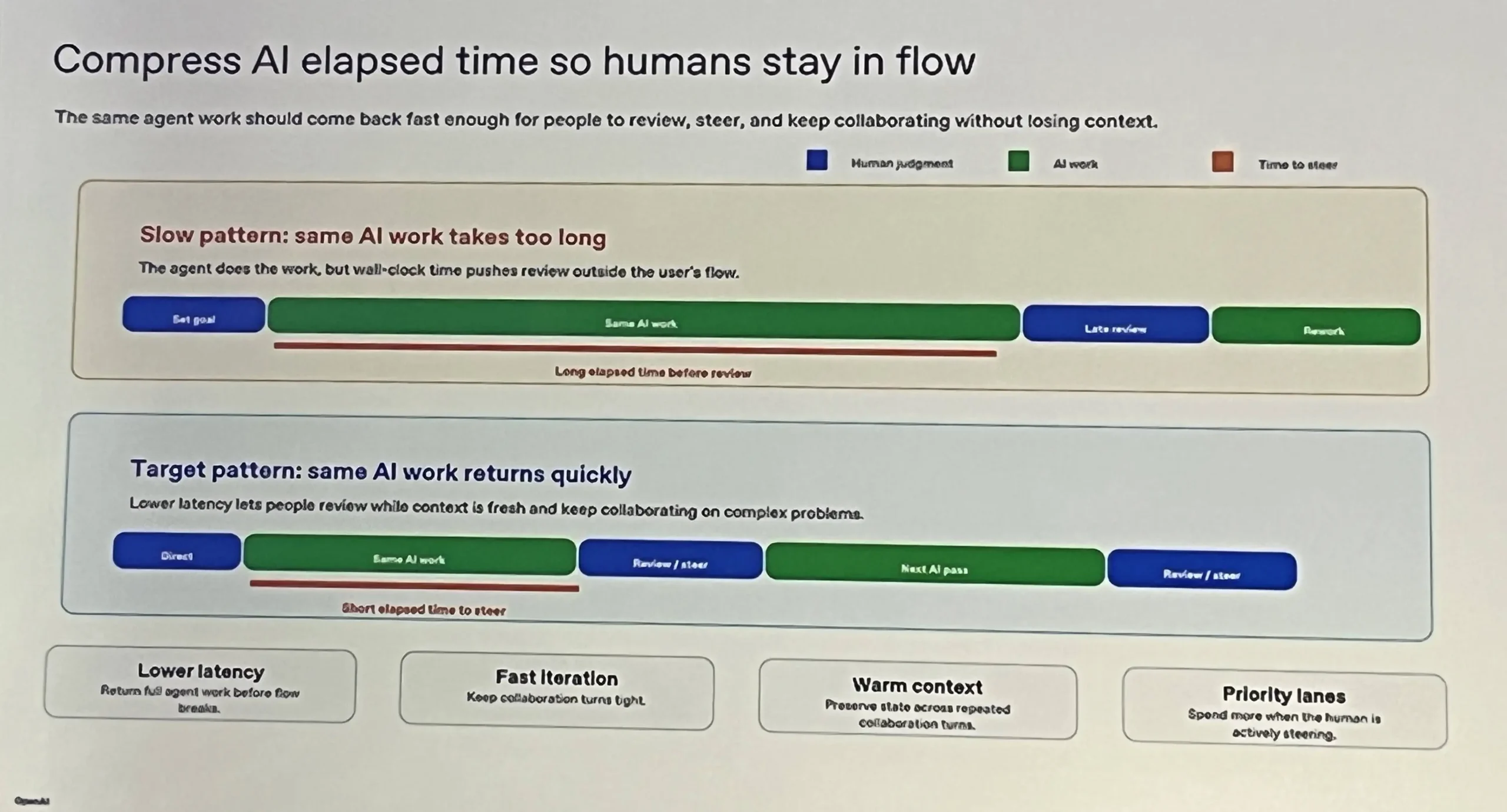
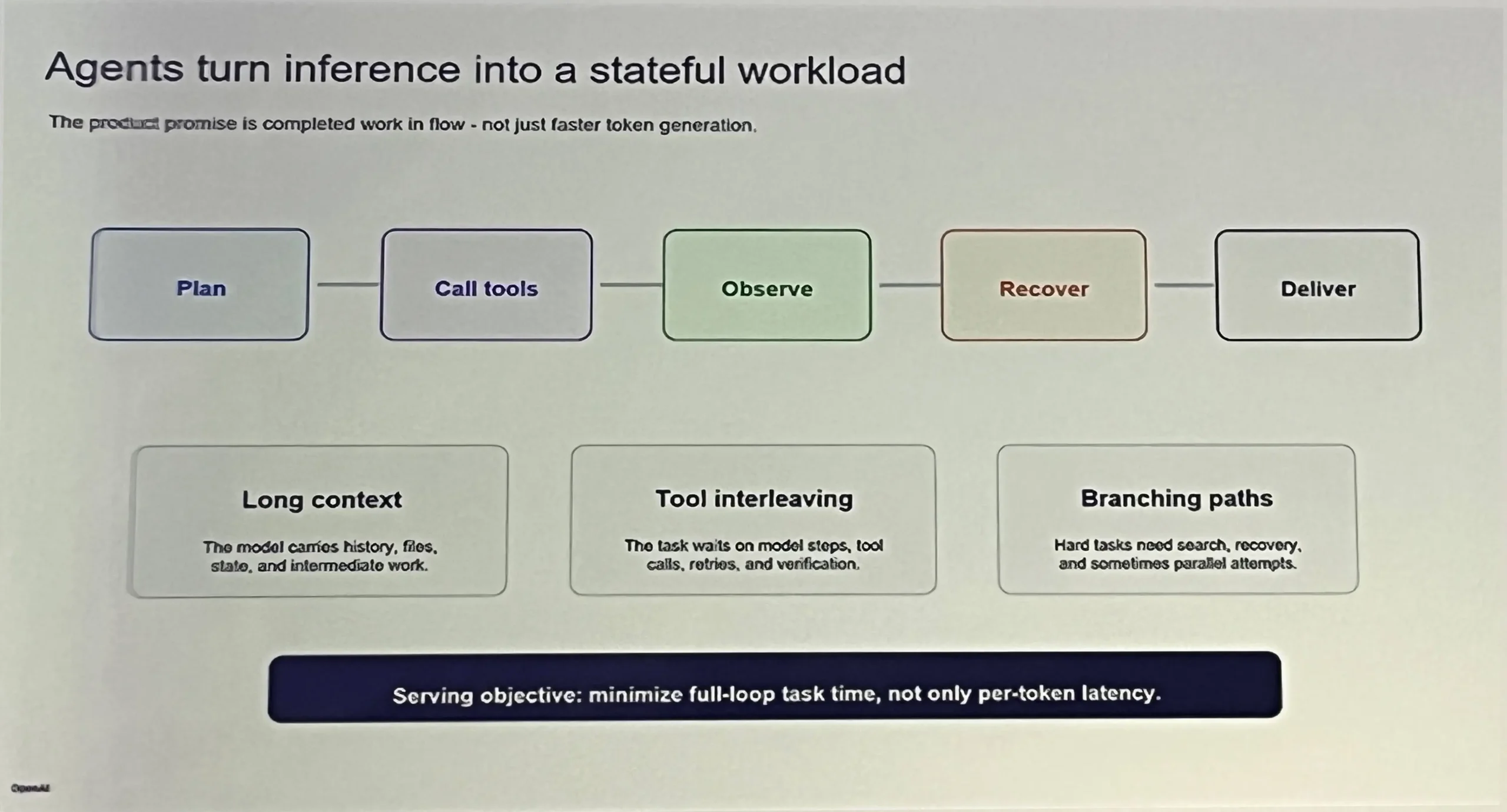
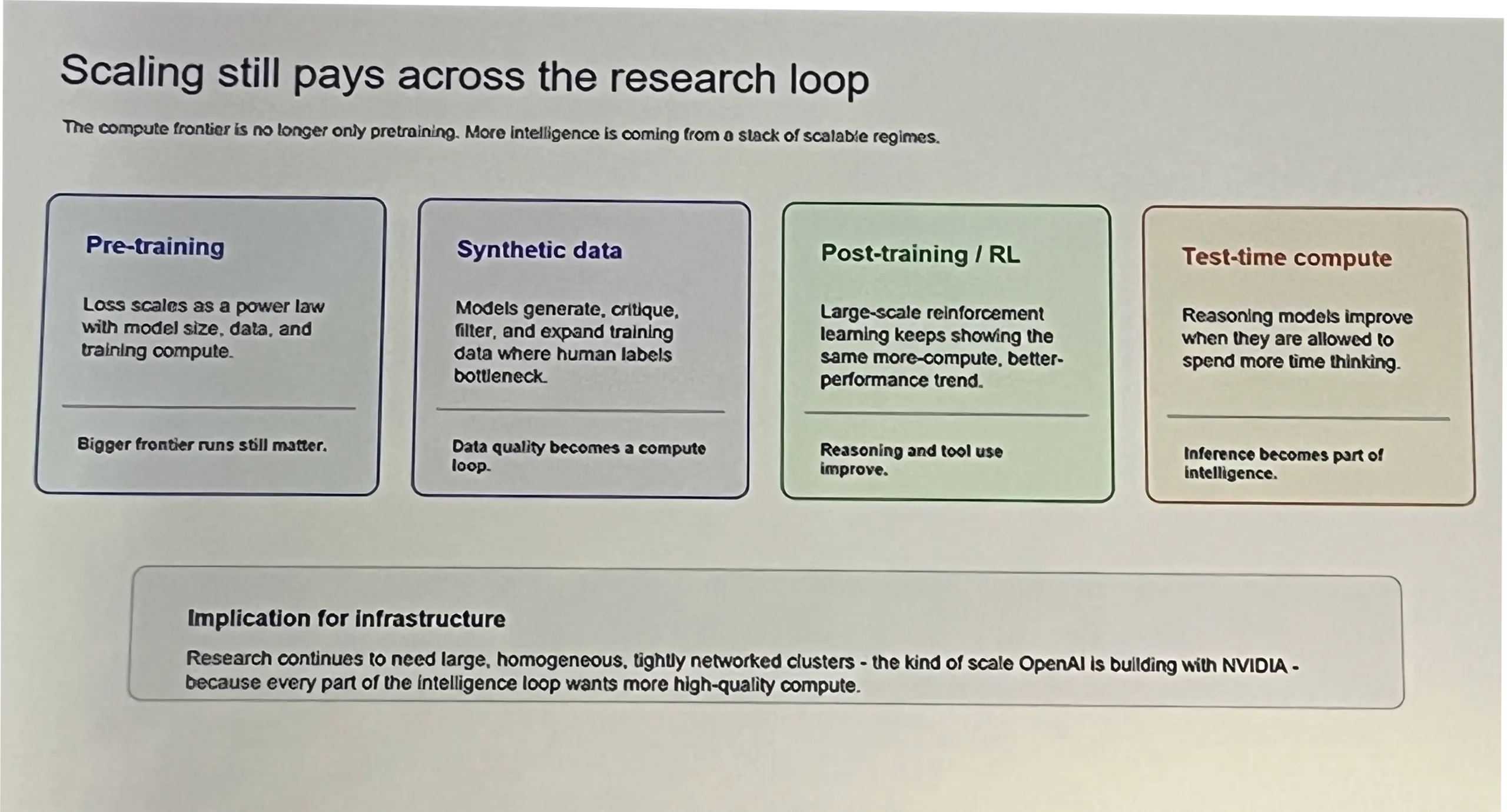
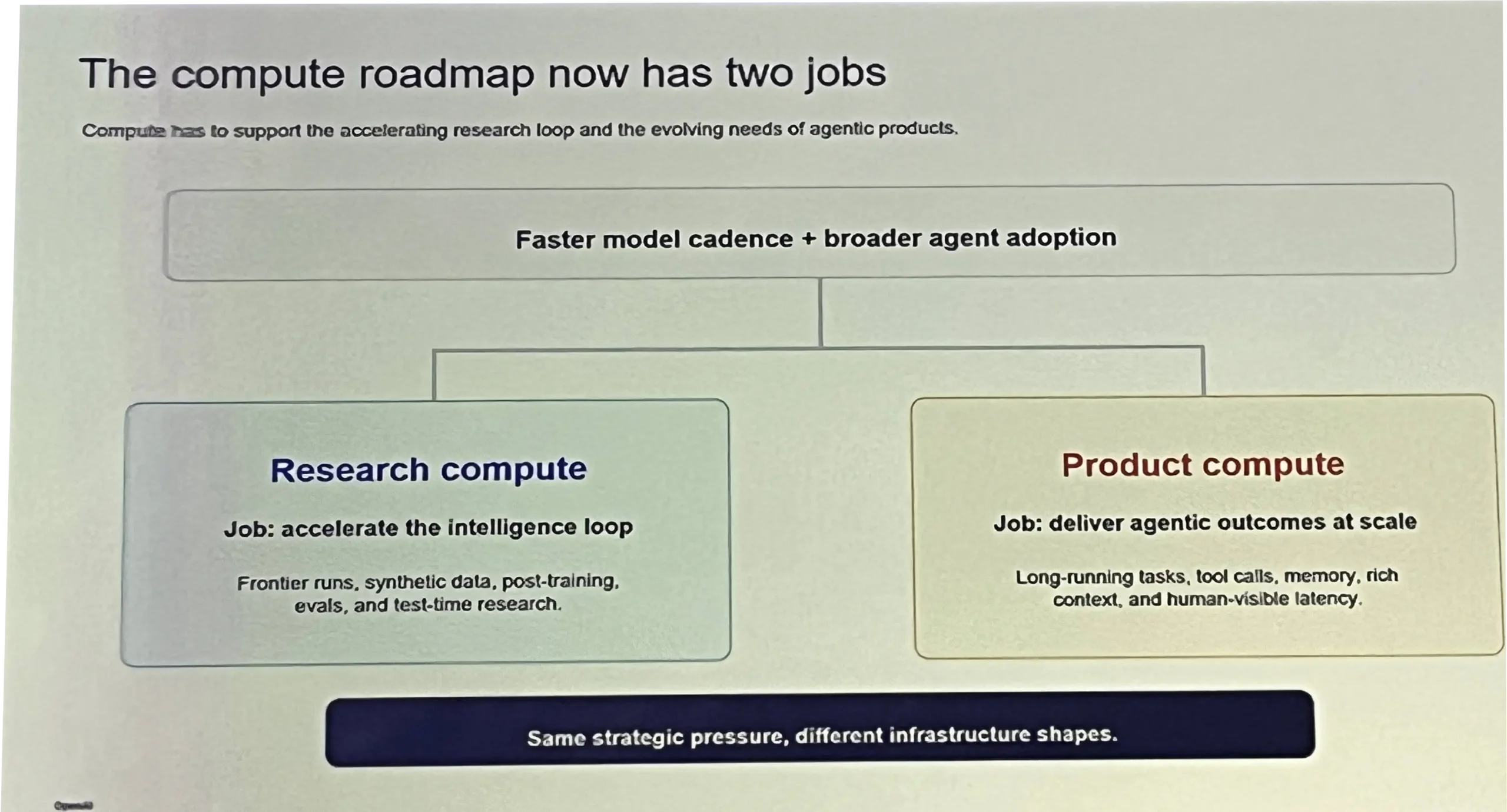
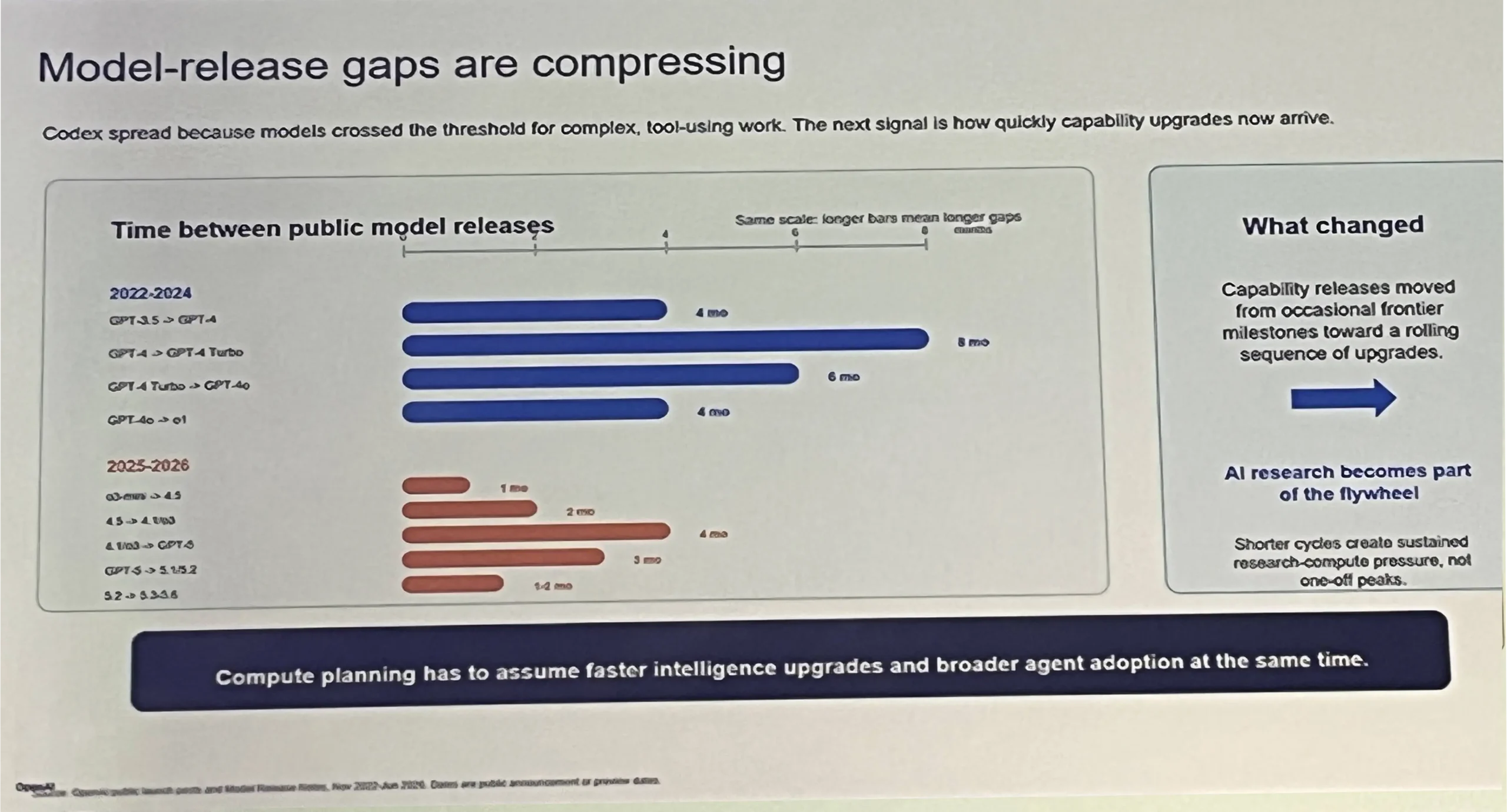
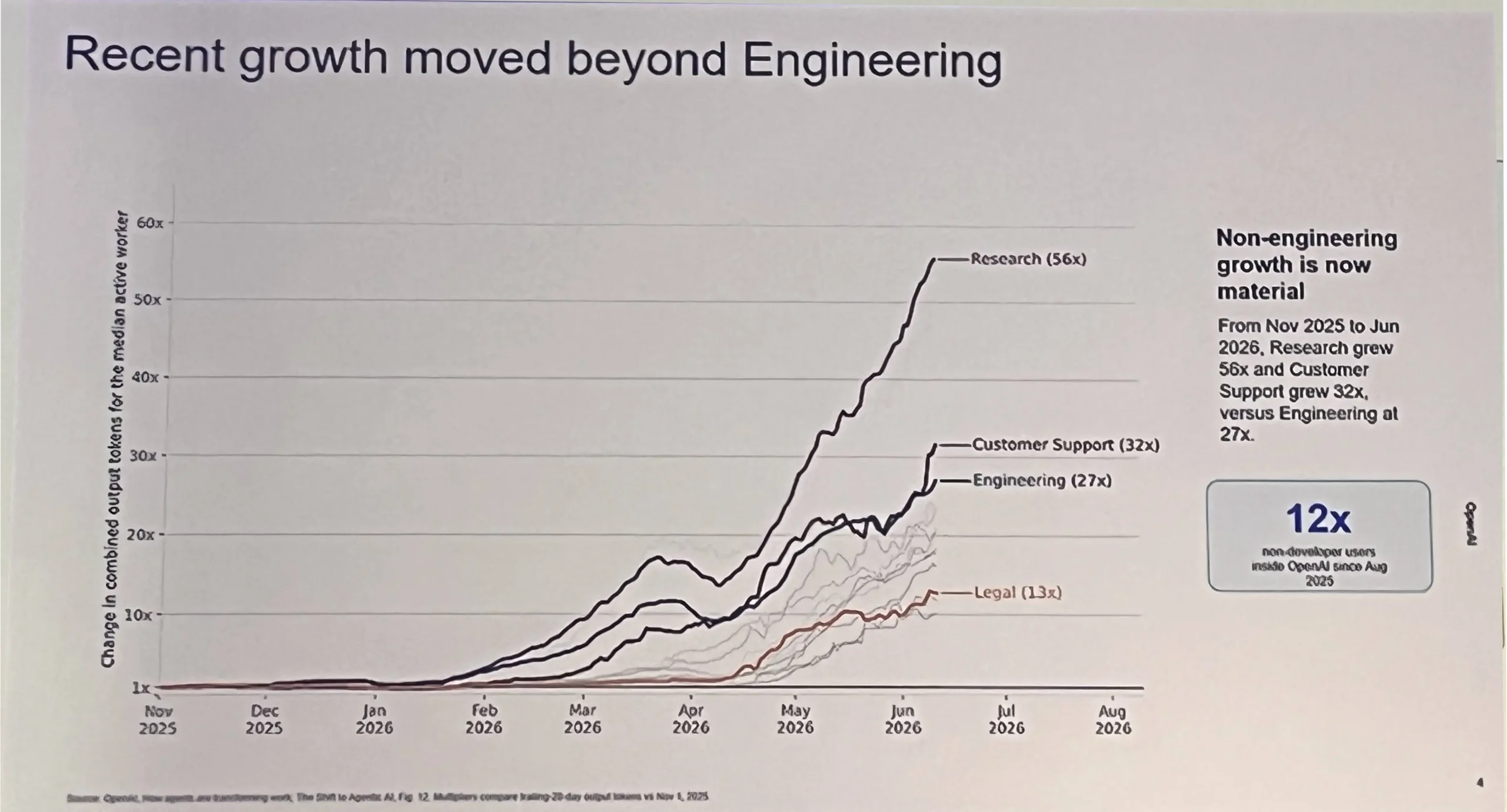
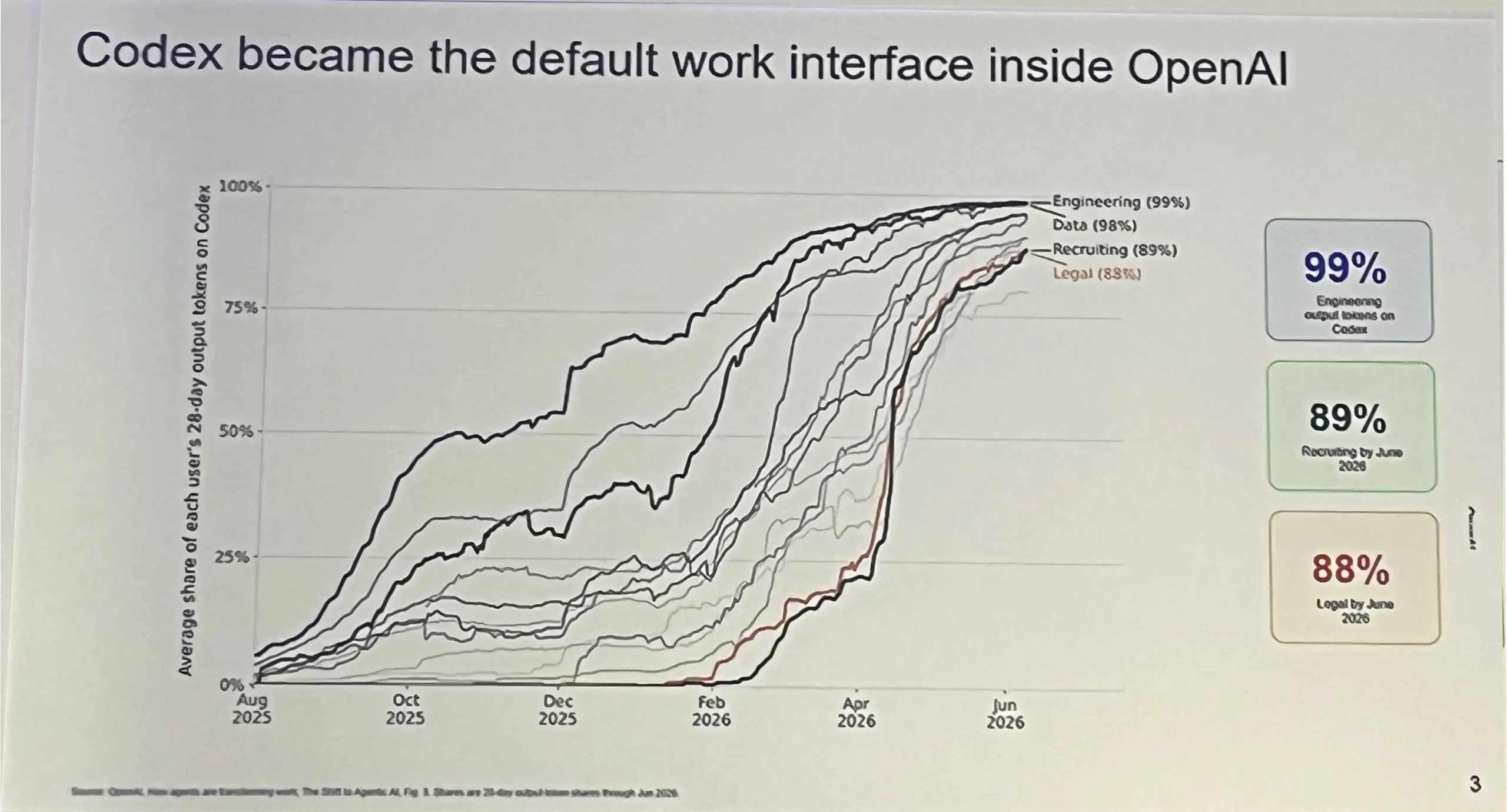
The OpenAI deck as shown on the RAISE stage · slides © OpenAI
From here the natural question is what all that compute should learn – which is exactly where the frontier-lab panel picked up.
Agents took over the work – and the work is starting to reshape the compute.
This is part two of our Raise Week 2026 field notes. Start with The Nordic Night, continue to Physical AI Compute – and see Jim Fan in Three Minutes on what it means for robots.
New! 2026 Humanoid
Robot Market Report
198 pages of exclusive insight from global robotics experts — uncover funding trends, technology challenges, leading manufacturers, supply chain shifts, and surveys and forecasts on future humanoid applications.
now Google DeepMind