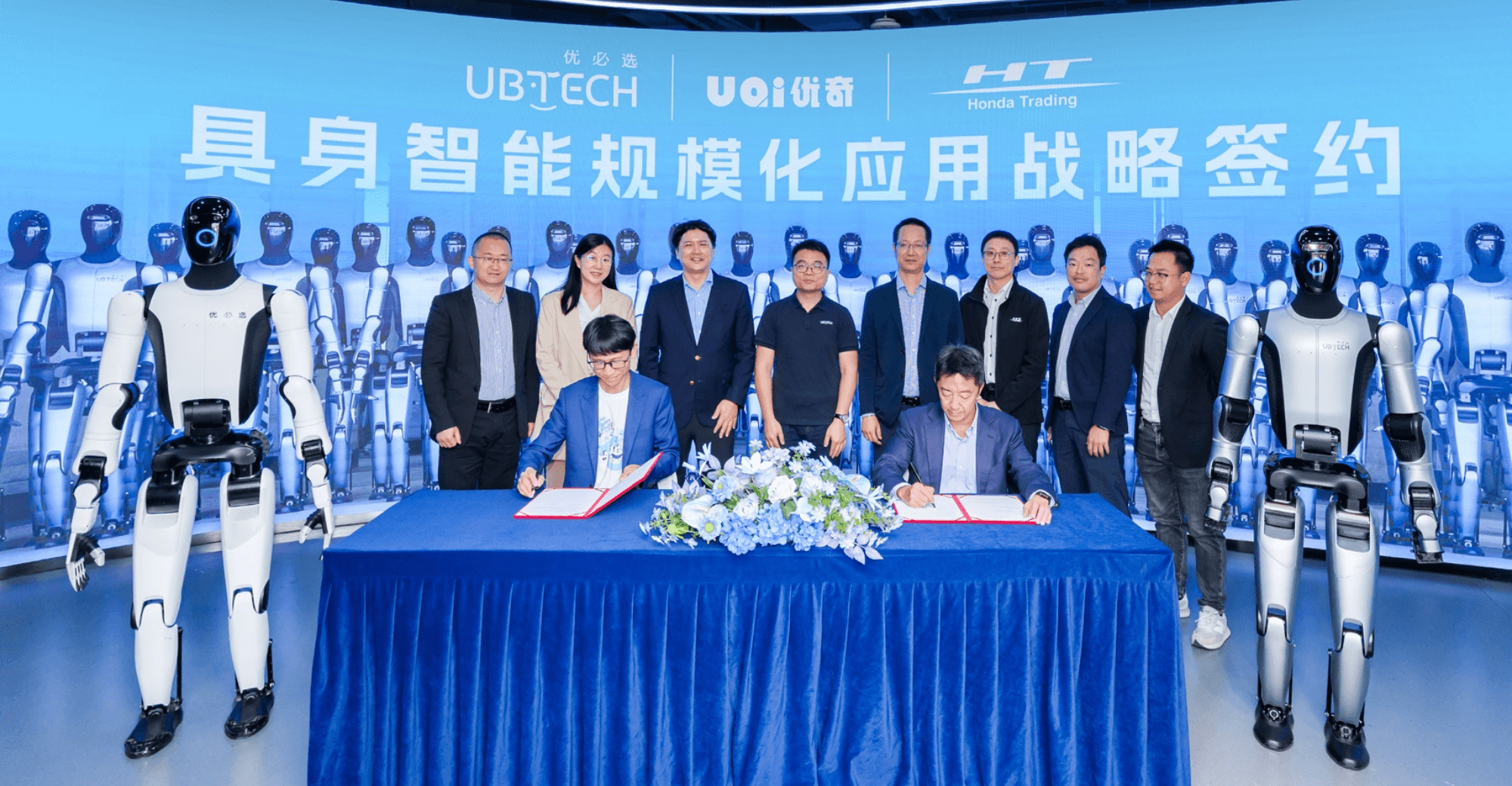
UBTECH and Honda Trading Target Humanoid Robot Scale
UBTECH Robotics has entered a strategic partnership with Honda Trading China to accelerate the commercialization of humanoid robots in industrial environments. The agreement, signed through UBTECH’s smart logistics subsidiary UQI, focuses on deploying embodied AI humanoid systems alongside autonomous logistics vehicles across manufacturing and warehousing operations.
The collaboration is structured around practical deployment. Both companies plan to explore application scenarios, validate use cases, and develop business models tailored to industrial supply chains. Pilot projects are expected within Honda Trading’s operations, with the intent to scale successful implementations across broader networks once feasibility and performance targets are met.
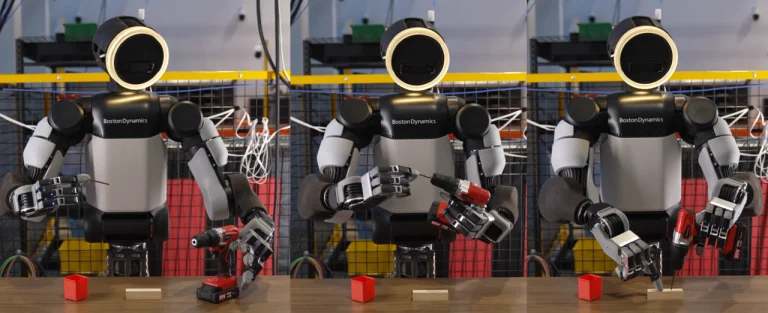
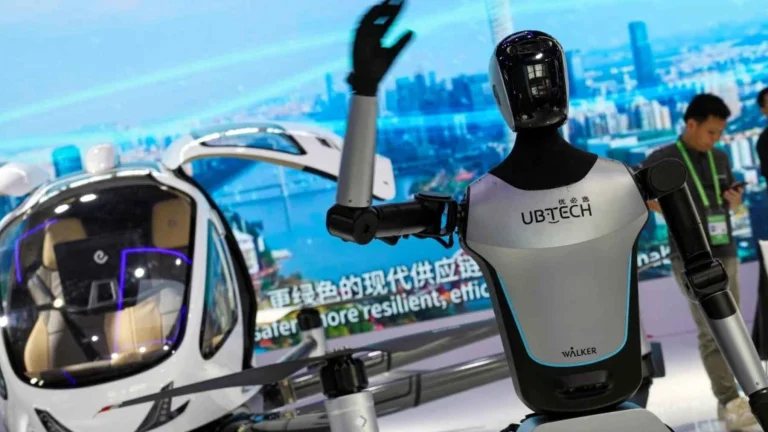
A central component of the partnership is the introduction of UBTECH’s Walker series humanoid robots into real world industrial workflows. These systems are positioned for tasks in automotive manufacturing, electronics production, and other structured environments where humanlike mobility and manipulation may offer advantages over fixed automation.
Honda Trading brings established expertise in global supply chain coordination and industrial resource integration. The company operates 56 branches across 19 countries and is closely tied to automotive production ecosystems. This infrastructure is expected to provide a testbed for humanoid deployment at scale, particularly in logistics and factory settings where integration challenges remain significant.
UBTECH’s recent commercial performance underscores its push toward industrial adoption. The company reported more than RMB 2 billion in revenue in 2025, with over 1,000 full size humanoid robots delivered. A majority of these deployments were concentrated in industrial scenarios, including automotive, semiconductor, aerospace, and logistics operations. Revenue from humanoid systems exceeded RMB 820 million, reflecting growing demand for non remote controlled, full size platforms.
The partnership also extends beyond deployment to joint technology development and regional distribution strategies. Both companies aim to refine system level efficiency by integrating humanoid robots with existing industrial processes, while exploring broader intelligent manufacturing frameworks.
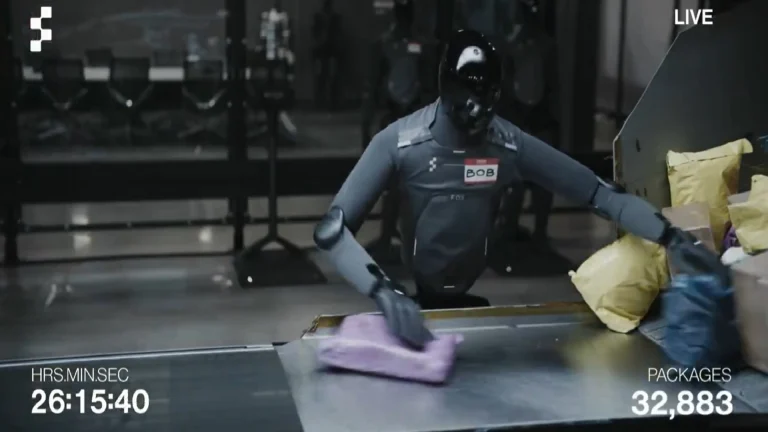
UQI, UBTECH’s logistics unit, is tasked with developing end to end unmanned logistics systems that combine humanoid robots with autonomous vehicles. The company reports having established replicable deployment models, suggesting a focus on repeatable, scalable solutions rather than one off demonstrations.
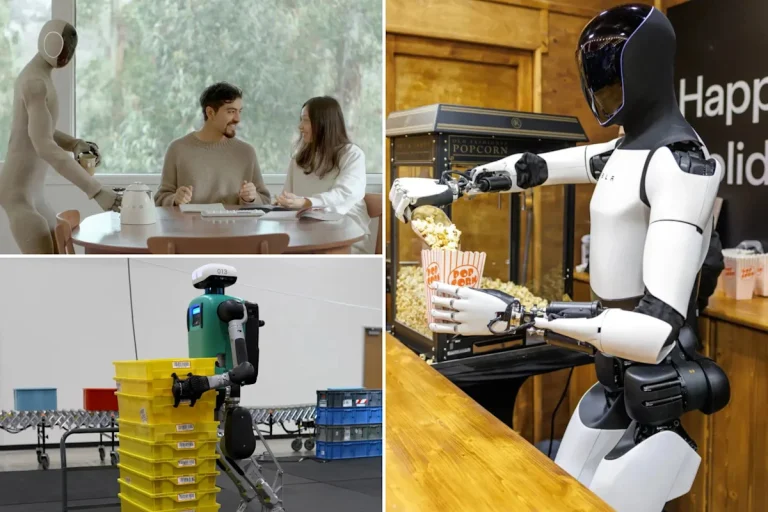
The agreement highlights a broader trend in the humanoid robotics sector, where commercialization efforts are shifting toward supply chain integration and measurable operational value. By anchoring development in industrial use cases, partnerships such as this may play a critical role in determining whether humanoid systems can transition from pilot deployments to sustained, large scale adoption.
Source: pandaily.com