Human video data emerges as key to training humanoid robots
A growing ecosystem of data collection firms is emerging to address a central constraint in humanoid robotics: the lack of large scale, high quality training data for real world tasks. Companies are now recruiting thousands of workers globally to record first person videos of everyday activities, creating datasets intended to teach humanoid robots how to operate in human environments.
These efforts focus on so called egocentric data, captured from a human perspective using head mounted cameras or smartphones. Workers are assigned tasks such as cooking, cleaning, gardening, and pet care, generating hours of annotated footage each week. The resulting datasets are used to train models that map visual input to physical actions, a core requirement for general purpose humanoid systems.
Micro1, a Palo Alto based company, has built a distributed workforce of about 4,000 contributors across 71 countries, producing more than 160,000 hours of video per month. Even at that scale, company executives estimate that billions of hours may ultimately be required to achieve robust performance across diverse environments. The variability of household layouts, objects, and human behavior presents a significant challenge for model generalization.
Other data annotation firms are entering the market with similar approaches. Objectways, which previously worked on datasets for autonomous vehicles and virtual assistants, has shifted focus to robotics. The company reports that only about half of submitted footage meets quality requirements, underscoring the difficulty of collecting usable physical interaction data at scale.
The demand for geographically diverse data is also shaping labor strategies. Differences in tools, layouts, and routines across regions influence how robots must perform tasks. As a result, some customers prioritize data from specific markets, particularly the United States, where early adoption of humanoid robots is expected.
Training methodologies remain in flux. Traditional approaches relied on teleoperation or scripted programming, both of which are costly and limited in scope. Simulation has gained traction as a lower cost alternative, particularly in the United States and Europe, supported by platforms from companies such as Nvidia. However, simulation struggles to capture the nuances of physical interaction, especially for tasks involving deformable objects or fine motor control.
Recent research suggests that combining real world human data with simulation can significantly improve outcomes. Nvidia reported that integrating more than 20,000 hours of first person video increased task success rates by over 50 percent in activities such as folding garments and manipulating small objects.
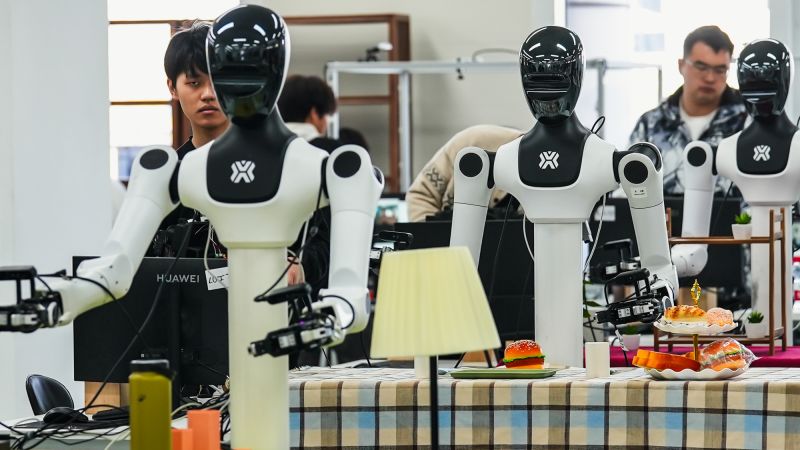
China is investing heavily in physical training infrastructure, with plans for at least 60 robot training centers. Many domestically produced humanoid robots are currently deployed in controlled settings for data generation and research rather than commercial use. Analysts expect a hybrid approach to dominate, blending human recorded data, simulation, and robot collected experience.
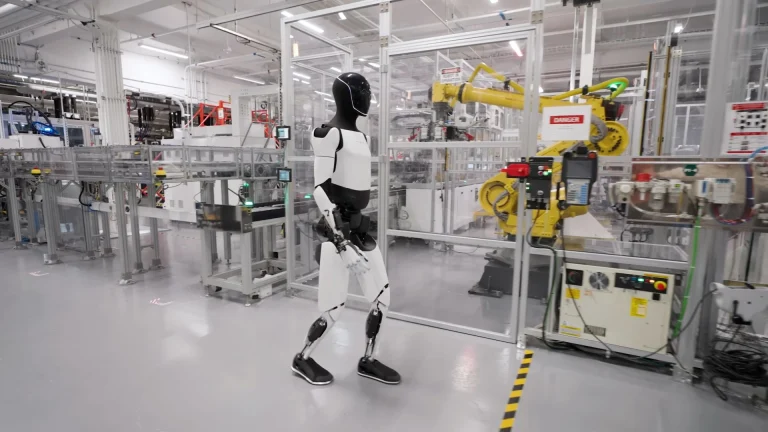
Despite rapid progress, reliability remains below industrial thresholds for many tasks. While humanoid robots can achieve near perfect performance in structured factory environments, success rates for common household activities often fall between 70 and 80 percent. This gap highlights the complexity of unstructured settings and the need for richer training data.
Safety considerations further reinforce the importance of accurate perception and action. Distinguishing between similar objects and responding appropriately to dynamic environments are unresolved challenges that depend heavily on the quality and diversity of training inputs.
The expansion of human data pipelines signals a broader shift in humanoid robotics toward data centric development. As companies compete to build general purpose systems, the ability to acquire, curate, and leverage large scale real world datasets is becoming a defining factor in performance and commercialization timelines.
Source: edition.cnn.com