When Robots Learn to Peel Apples
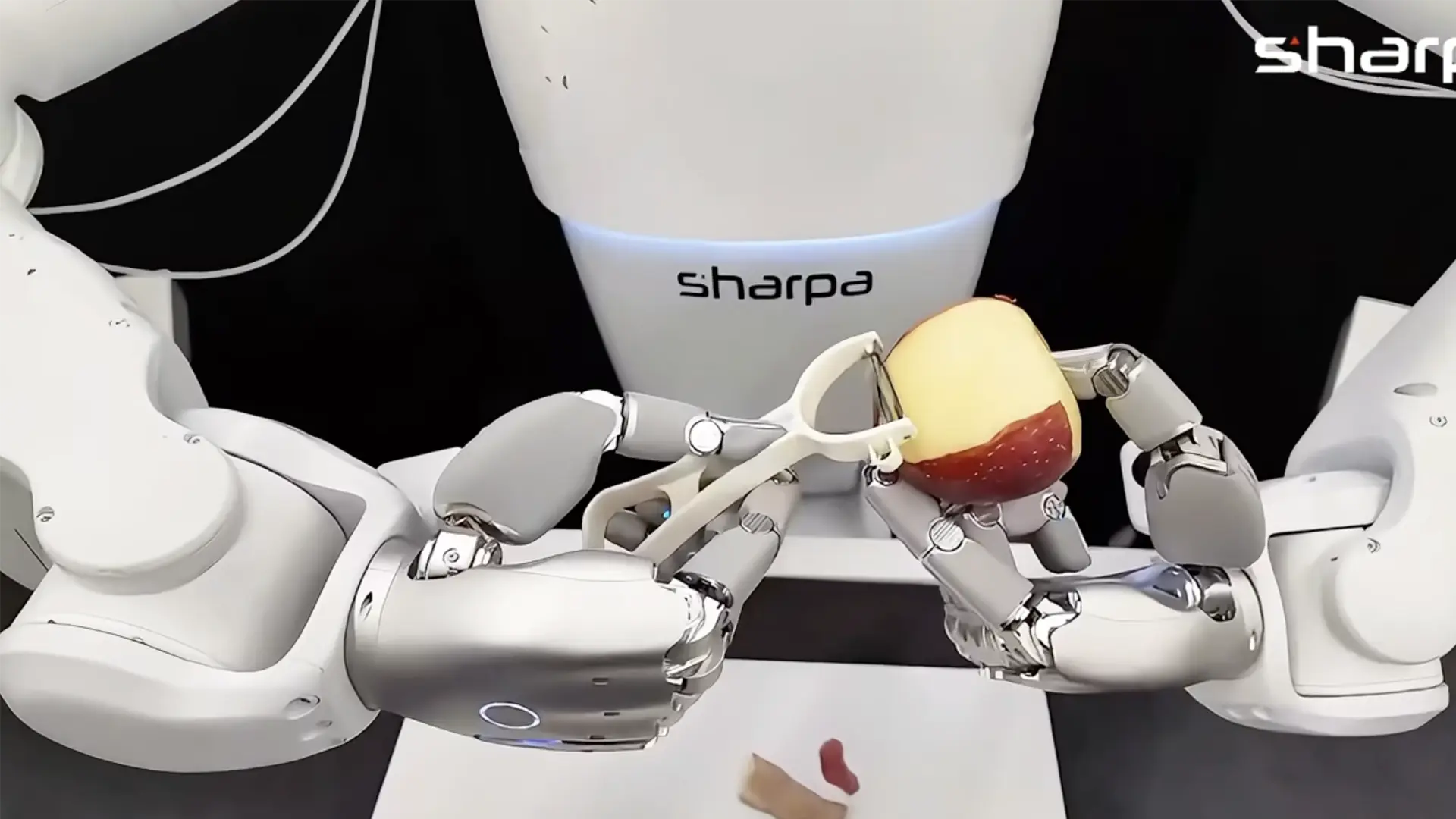
It’s rare that a robotics demo genuinely stops you in your tracks. But watching a robot peel an apple, with two human-like hands, in real time, without crushing the frui, is exactly that kind of moment. This isn’t a stunt. It’s proof that contact-rich, bimanual manipulation is finally within reach for modern robotic systems.
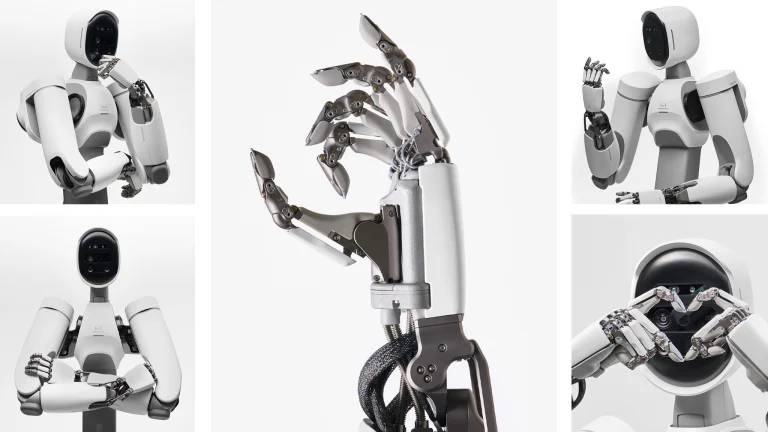
The challenge has always been the gap between perception and action. Today’s AI models are remarkably good at seeing and understanding the world, but translating that into precise finger-level control is an entirely different problem. A human hand has dozens of degrees of freedom that must be coordinated in milliseconds. That’s why robotics has long relied on simple grippers and structured environments, the world had to adapt to the robot, not the other way around.
Video: Sharpa
What makes this approach compelling is the combination of shared autonomy and specialized AI experts. Rather than trying to control every finger directly, the operator triggers pre-learned movement patterns — primitives — while the MoDE-VLA architecture fuses vision, language, force, and touch data to handle the actual coordination. It’s an elegant solution to what is essentially a combinatorial nightmare.
This points toward something far bigger than peeling apples. If robots can handle soft, slippery, and unpredictable objects at this level of precision, it opens the door to tasks in homes, hospitals, and manufacturing that were previously reserved for human hands. It’s still early, but the direction is clear — and humanoid.guide is watching closely.