China’s humanoid robot hands race targets useful manipulation
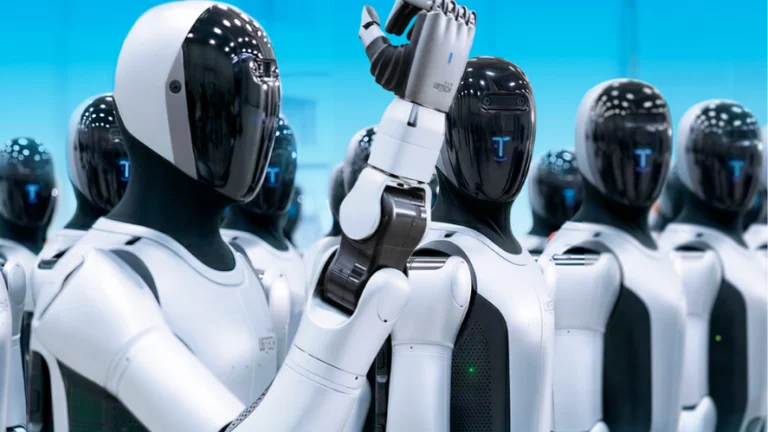
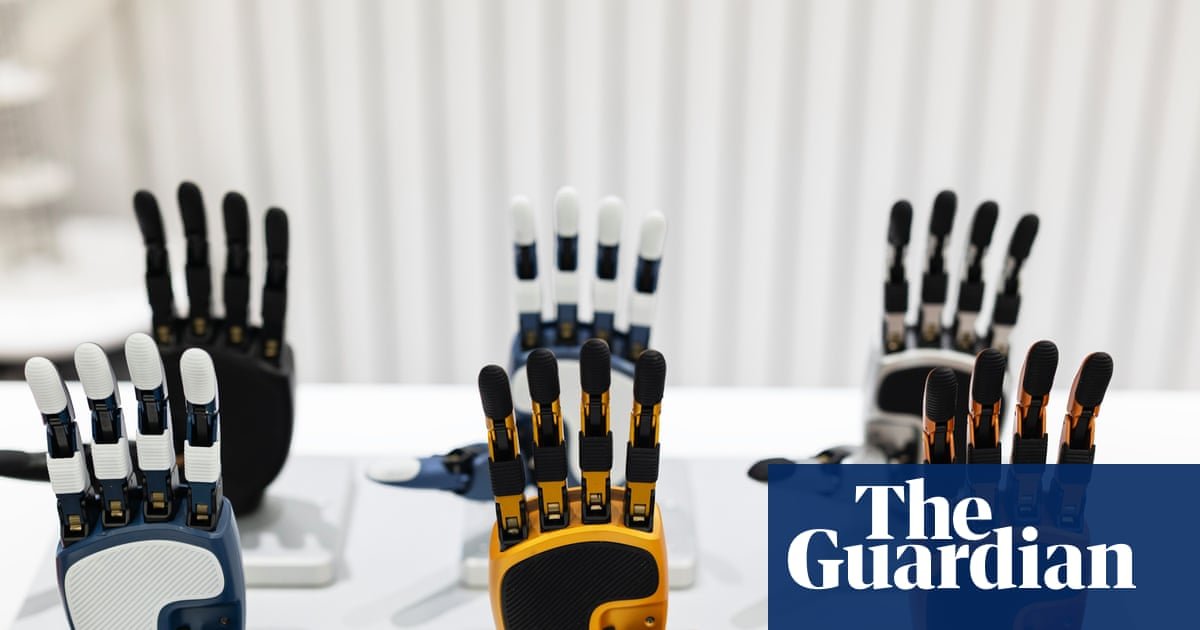
Chinese startups focused on dextrous robotic hands are becoming a central part of the country’s humanoid robotics push, with LinkerBot producing about 5,000 hands a month and Wuji Technology building sensor gloves for manipulation data, according to The Guardian.
The emphasis is technically sensible. Humanoid locomotion has produced public demos, including dancing robots, but useful work in factories and homes depends heavily on hands that can grasp, feel, adjust and use tools. The International Federation of Robotics reached a blunt conclusion in a report last September: “True multipurpose humanoids are far off yet.”
Elon Musk, whose Tesla Optimus program is also trying to solve full body humanoid design, said last year that hands represented the “majority of the engineering difficulty of the entire robot.” Chinese suppliers are now trying to turn that bottleneck into a manufacturing advantage.
Hardware is scaling faster than control
LinkerBot founder Zhou Yong told The Guardian that making a robotic hand is “one hundred times more difficult” than making a humanoid. “Its dexterity is 10 times that of other body parts. But its volume is only one tenth of other body parts,” he said.
Founded in 2023, LinkerBot now makes about 5,000 hands a month and plans to double that figure while pursuing a $6 billion valuation, according to the report. Zhou is also aiming at prosthetics, saying he believes the company can bring the price of a prosthetic hand down to $1,000, compared with current products that can cost tens of thousands of dollars.
The Guardian frames China’s advantage mainly as hardware depth. The country’s electric vehicle supply chain has built up producers of lithium ion batteries, miniaturised motors and other components relevant to robots. Pan Yunzhe, founder of Shenzhen based Wuji Technology, said sourcing constraints pushed him to start the company in China rather than the United States, where he graduated in 2018.
China has registered more than 1 million robotic companies, with registrations in 2025 up 40 percent on the previous year. The dextrous hand industry in China surpassed 50 billion yuan (about $7.4 billion), according to Chinese media cited by The Guardian, up from 13 billion yuan (about $1.8 billion) in 2024.
“Controlling them, now that’s a whole different game … nobody knows how to do that.”Nathan Lepora, University of Bristol
The data problem is still unresolved
The harder question is not only whether humanoid robot hands can be built cheaply and in volume. It is whether they can be controlled well enough for general manipulation.
Nathan Lepora, a professor of robotics and AI at the University of Bristol, told The Guardian that “the challenge of making these hands is getting solved now,” while control remains open. Unlike language models, which can be trained on vast stores of internet text, dextrous manipulation systems need three dimensional movement data, force data and tactile feedback from real interactions.
Teleoperation is one route. The report notes that startups are using remote human operators to generate training data, but even a simple task such as packing a bag of groceries can require hundreds of hours of training. That cost structure is a warning sign for any near term claim that general purpose household manipulation is close.
Wuji’s answer is the Wuji glove, a wearable device designed to capture hand movement as well as pressure and touch. Pan described the two fundamental data problems as capturing how a human moves and what humans are touching or feeling. Those questions, he said, are “super complicated and not solved yet.”
The most credible reading is that Chinese companies may be compressing the hardware cycle for humanoid robot hands, while the software and data side remains comparatively thin. Zhou has described a future in which robotic hands help build more robotic hands with minimal human input. The Guardian report presents that as an ambition, not a demonstrated production system.
Source: theguardian.com