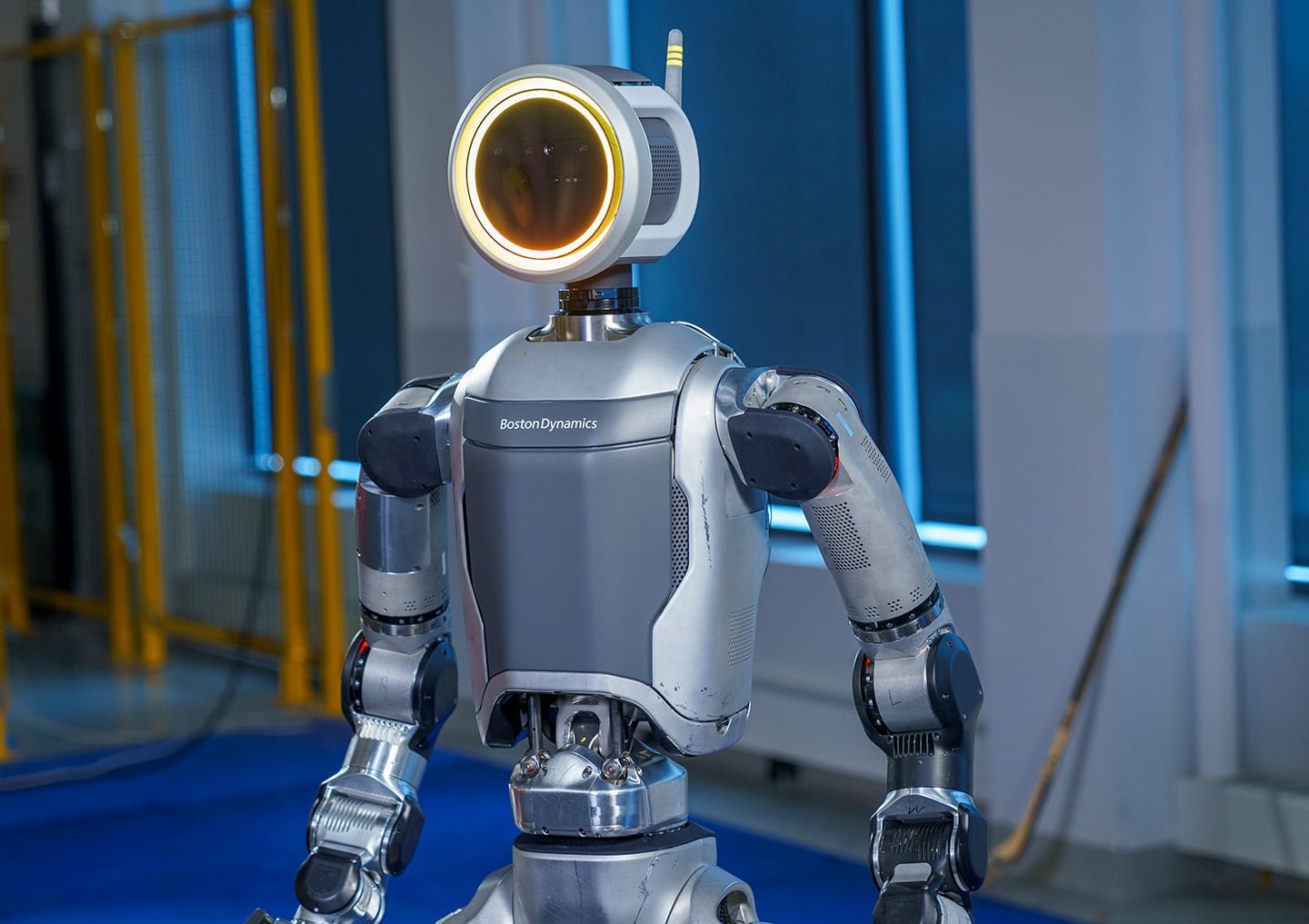
Hyundai plans Atlas humanoid robots for plant rollout by 2028
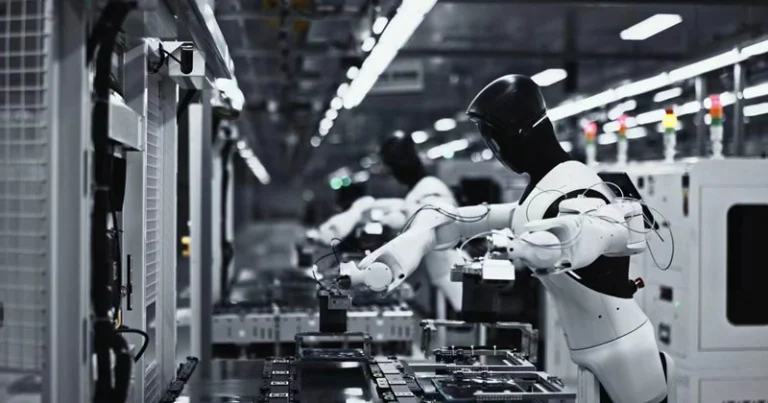
Hyundai plans to deploy more than 25,000 Atlas humanoid robots across its manufacturing operations, starting at its Georgia Metaplant in 2028 and then expanding to Kia’s Georgia plant in 2029. The Atlas humanoid robots are developed by Hyundai’s US robotics arm Boston Dynamics and are intended for physically demanding factory work such as lifting, moving parts, and handling logistics. If executed at the stated scale, the program would push humanoid deployment beyond small pilots and into core plant operations.
Atlas humanoid robots deployment plan
According to eWeek, citing Yonhap News Agency, Hyundai outlined the initiative during recent investor relations sessions hosted by JPMorgan Chase. The company said it is targeting annual production of about 30,000 Atlas humanoid robots by 2028, with more than 25,000 of those units earmarked for use inside Hyundai’s own manufacturing ecosystem. That framing matters because it suggests Hyundai is treating internal plants as the first large proving ground for the platform.
The rollout is expected to be gradual rather than a single site launch. Yonhap reported that Hyundai wants the phased deployment to generate operational data, improve safety systems, and refine robot performance before a broader expansion. Hyundai is also presenting the effort as part of a wider shift from automaking toward mobility and AI-driven technology, with robotics as one of the main industrial applications.
Scaling the supply chain for factory use
Mass deployment depends on more than the robot itself, and Hyundai is investing in the parts pipeline accordingly. The company plans to produce more than 300,000 actuator units annually at US-based facilities, a notable target because actuators function as the joints and muscles of a humanoid system and represent a large share of manufacturing cost. Bringing that capability closer to final robot production could be important if Hyundai wants to reduce unit costs while increasing output.
Before the main factory rollout begins, Hyundai is already using controlled environments to test how robots fit into day-to-day operations. The company has introduced service-style robots for security, delivery, and facility management at its renovated headquarters in Seoul, using the site as a real-world test bed. It is also preparing a Robot Metaplant Application Center in the United States to train robots with AI systems developed with Google DeepMind, according to the investor briefings cited by Yonhap.
What Atlas can do on the line
In Hyundai’s plan, Atlas is being positioned for repetitive and physically demanding tasks rather than general-purpose autonomy. The source says expected assignments include lifting, moving parts, and handling logistics, all of which are common bottlenecks in automotive plants where work cells, material flow, and shift patterns are tightly structured. That makes factories a more measurable environment for evaluation than open-ended service settings.
Boston Dynamics has recently demonstrated Atlas lifting and transporting large objects such as refrigerators. According to eWeek, the robot relies on reinforcement learning and large-scale simulation training, allowing it to practice millions of task variations before deployment. The system also uses proprioception, internal sensing of balance and movement, to adjust in real time when carrying unstable loads.
Implications for the humanoid market
The program puts Hyundai into more direct competition with other companies pursuing industrial humanoids, including Tesla, which the source identifies as developing its own humanoid effort. The difference in Hyundai’s case is that the first customer is Hyundai itself, creating a relatively controlled path to test uptime, safety, maintenance, and economics inside known production workflows. For Boston Dynamics, that arrangement could provide the large-scale usage data that humanoid developers have struggled to obtain outside limited pilots.
The next milestone is not another demonstration video but whether Atlas can operate consistently in plants beginning in 2028. If Hyundai can connect robot production, actuator supply, AI training, and internal deployment on the timeline described, it would offer one of the clearest tests yet of whether humanoids can justify a place in mainstream manufacturing. If not, the bottlenecks are likely to emerge in reliability, safety validation, and cost, the same factors that continue to separate factory pilots from true fleet deployment.
Source: eweek.com