China humanoid robotics scales as policy and factories align
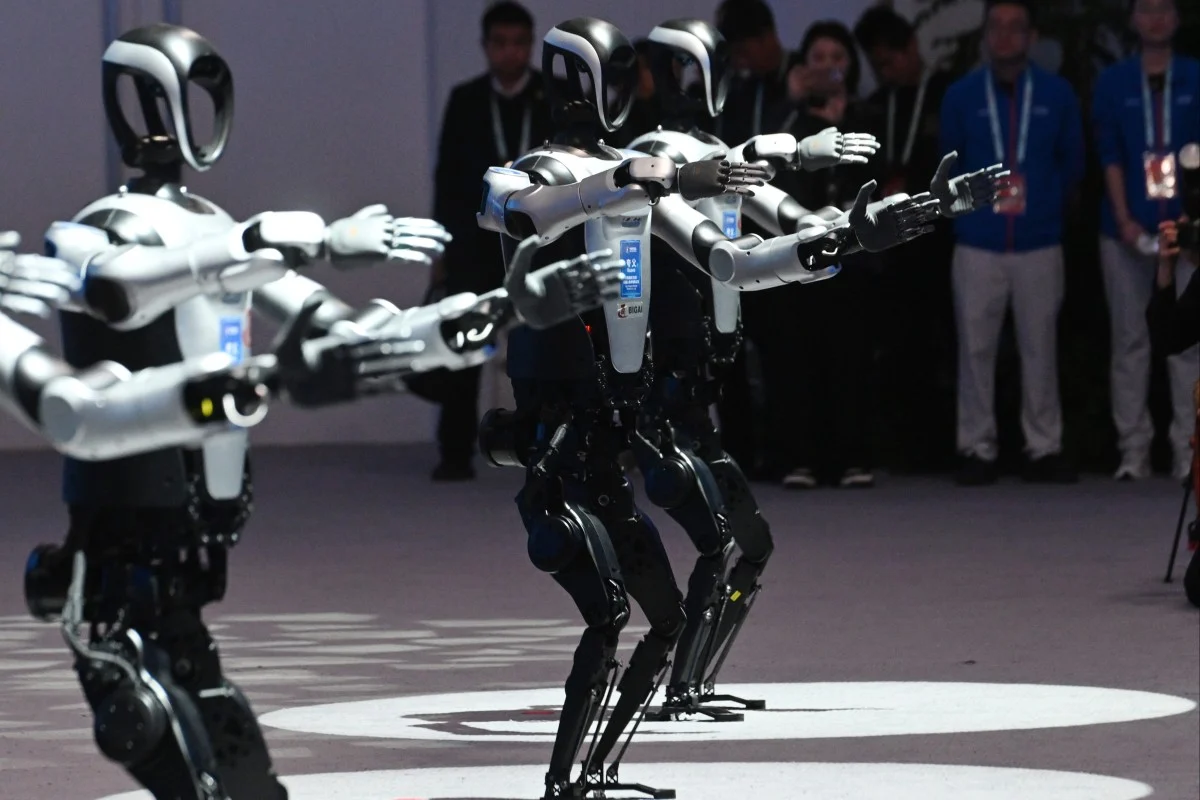
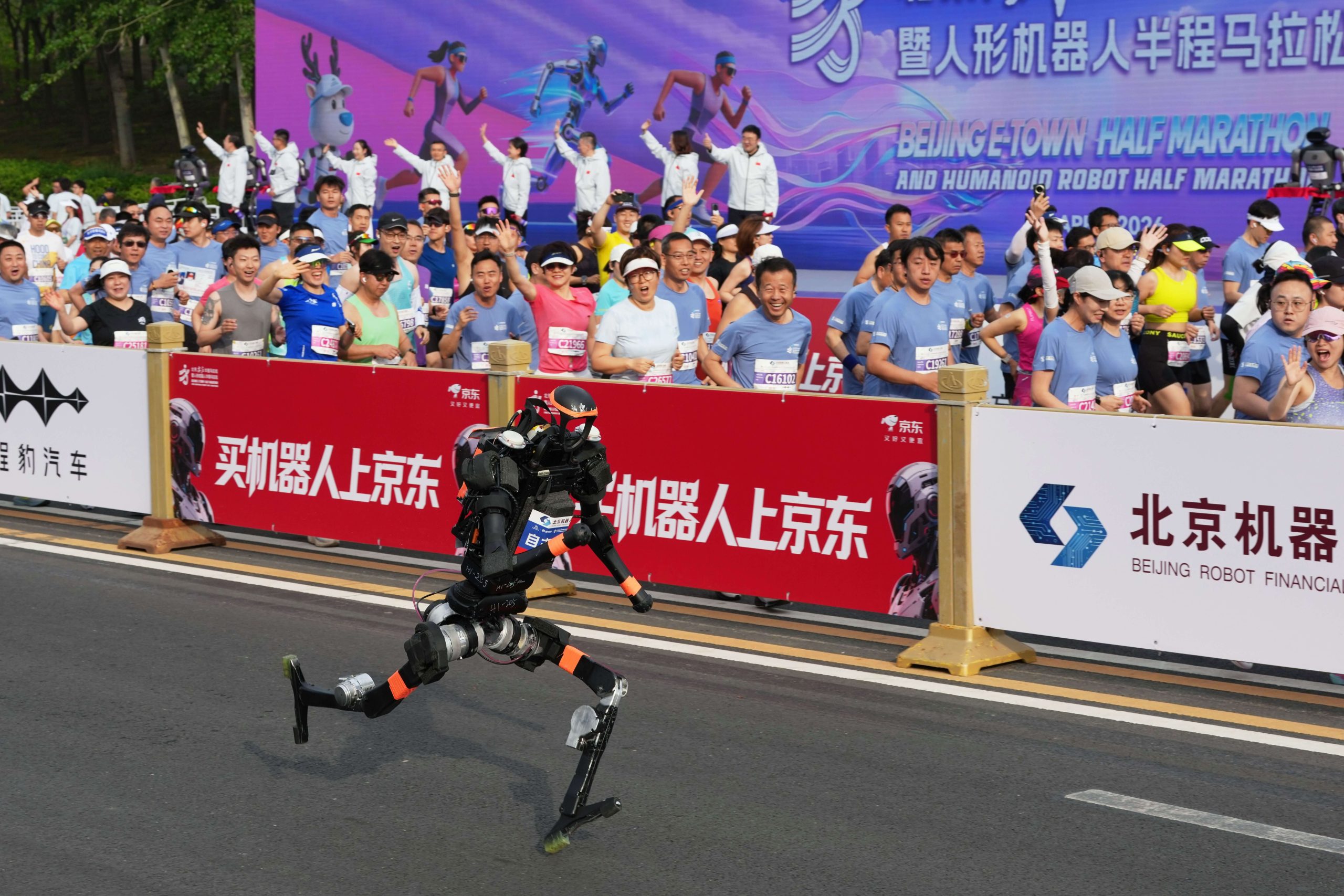
China humanoid robotics is moving from policy priority to early factory trials, according to an Apr. 30 report from MERICS. The think tank says China produced 12,800 humanoids in 2025, about 90 percent of global output, but most machines are still used in research labs, training centers, logistics settings, and tightly bounded manufacturing pilots. For operators and suppliers, the report frames China as the fastest-scaling humanoid manufacturing base, even as dexterity, autonomy, and cost remain unresolved.
China humanoid robotics moves into factory pilots
MERICS places humanoids inside a much larger industrial automation story. China has installed more industrial robots over the past five years than all other countries combined, and Chinese manufacturers supplied more than 57 percent of the domestic industrial robot market in 2024, overtaking foreign competitors for the first time. Humanoids remain a small slice of that market, but they can draw on the same manufacturing scale and supplier base.
The report contrasts China’s 12,800 humanoids produced in 2025 with annual industrial robot production of 556,000 units. It also points to the kinds of deployments now under way: Kepler Robotics’ K2 robot is handling simple logistics tasks such as carrying loads up to 30 kilograms, UBTech is testing Walker humanoids in EV factories for quality inspection, simple component assembly, and material sorting, and Midea’s six-armed MIRO U has been used to support assembly at a washing machine plant in Wuxi.
Policy support is a central part of the picture. Beijing’s Robot+ initiative and AI + Manufacturing roadmap call for humanoid pilot lines and higher robot density by 2030, while the Ministry of Industry and Information Technology has created a standardization committee for humanoid robots. MERICS also notes that a national venture capital guidance fund and three regional funds have allocated CNY 1 trillion, about $139 billion, over 20 years for robotics and other emerging technologies, with some local governments subsidizing up to 30 percent of project costs or offering discounts on humanoid purchases.
Hardware gains, software dependence
One of China’s main advantages is the overlap between EV supply chains and humanoid hardware. Batteries, lidar, cameras, and other components developed for electric vehicles and autonomous driving are already being repurposed for robots. According to the report, China accounts for 63 percent of the key companies in the global supply chain for humanoid robot components, giving domestic builders a meaningful cost advantage in actuators, motors, and magnet-related materials.
That advantage does not extend evenly across the stack. MERICS says Chinese humanoid firms remain heavily dependent on Nvidia for AI chips, development tools, simulation, and training software. Companies including UBTech, Galbot, Unitree, EngineAI, and AgiBot were among the first to receive Nvidia’s Jetson Thor module, underlining how much of China’s humanoid effort still sits on a US software and hardware foundation.
There are also persistent gaps in high-end components. The report says European and Japanese suppliers still provide 90 percent of special ball screws used for precise positioning in robotics, naming Germany’s Schaeffler and Japan’s THK and NSK. That leaves Chinese firms stronger in lower and mid-range segments than in applications where repeatability, fine manipulation, and motion accuracy are critical.
Costs and autonomy remain the bottlenecks
Commercial economics remain difficult even for comparatively low-cost Chinese systems. MERICS says the average humanoid in China still costs CNY 300,000 to 500,000, about $42,000 to $69,000, while one estimate puts commercial viability at CNY 160,000, about $22,000, assuming annual labor costs of CNY 80,000 and a two-year return on investment. The report adds that Unitree’s G1 is priced at about EUR 11,650, or roughly $12,600, versus about EUR 120,000, or roughly $130,000, for Boston Dynamics’ Atlas and about EUR 25,800, or roughly $27,900, for Tesla Optimus.
Capability is the second constraint. MERICS cites UBTech’s founder saying humanoids in Chinese factories are still only half as efficient as humans. The report says Chinese systems continue to struggle with multi-step coordination, fine manipulation, and hand-eye tasks such as cable assembly or small-part insertion, which is why most deployments remain small-scale, single-point trials rather than line-wide production roles.
The report is also cautious about current demonstrations. Many widely shared videos of dancing, kickboxing, or dexterous hand work show robots that are preprogrammed or teleoperated rather than fully autonomous, MERICS says. China’s next test is whether its roughly 150 humanoid companies can turn hardware scale, pilot data, and policy support into repeatable factory performance. If that happens, pressure on European and Japanese component suppliers could increase well before fully general-purpose humanoids arrive.
Source: merics.org