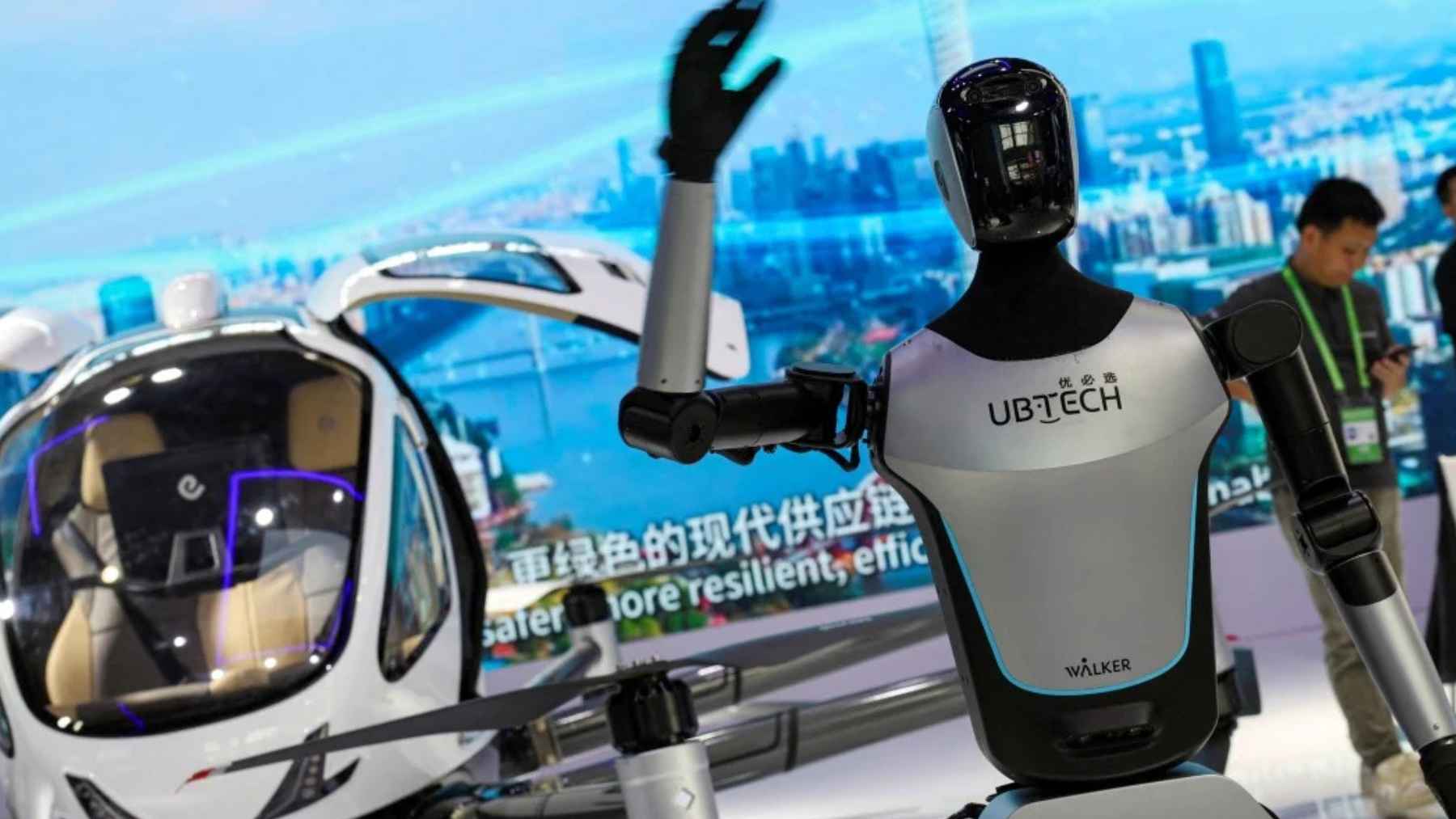
UBTECH targets border control with humanoid robot pilots
UBTECH Robotics is moving closer to real world deployment of humanoid systems through a combination of new capital and early operational contracts, including a reported project at China Vietnam border crossings.
2026 Humanoid Robot Market Report
160 pages of exclusive insight from global robotics experts – uncover funding trends, technology challenges, leading manufacturers, supply chain shifts, and surveys and forecasts on future humanoid applications.

Featuring insights from
Aaron Saunders, Former CTO of
Boston Dynamics,
now Google DeepMind

2026 Humanoid Robot Market Report
160 pages of exclusive insight from global robotics experts – uncover funding trends, technology challenges, leading manufacturers, supply chain shifts, and surveys and forecasts on future humanoid applications.
The Shenzhen based company recently completed a share placement in Hong Kong, raising about HK$3.06 billion in net proceeds, equivalent to roughly $389 million to $394 million. The funding is intended to support expansion in a competitive robotics market where manufacturing scale and supply chain control remain critical constraints.
Alongside the financing, attention has shifted to a contract linked to border control operations in Fangchenggang near Vietnam. According to prior reporting cited in the source, UBTECH secured a 264 million yuan agreement tied to a robotics center where humanoid robots are expected to assist with guidance, inspection tasks, and logistics support.
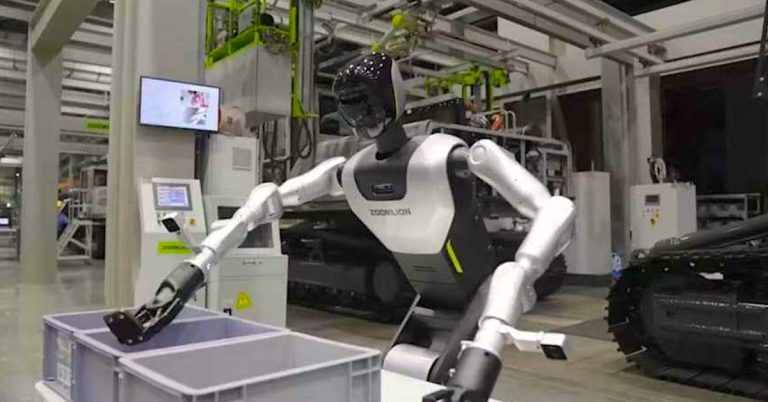
The deployment is centered on the Walker S2, an industrial grade humanoid platform introduced in July 2025. The model is designed for extended operation, including the ability to replace its own battery, a feature aimed at reducing downtime in continuous duty environments. Such capabilities are particularly relevant in border and infrastructure settings where uptime and autonomy directly affect operational value.
UBTECH has indicated plans to deliver 500 units within a short timeframe and to scale production significantly in 2026, with a longer term target of reaching 10,000 units shipped by 2027. These figures point to an ambition to transition humanoid robots from pilot deployments to repeatable commercial rollouts.
The company plans to allocate about three quarters of the newly raised capital toward investments and acquisitions across its supply chain, with additional funds directed to operations, development, and debt obligations. This reflects a broader industry pattern where vertical integration and component control are becoming central to cost reduction and reliability.
For the humanoid robotics sector, the border control use case highlights a shift from demonstration driven narratives to task specific deployments in structured environments. Applications such as guided interaction, routine inspection, and logistics handling offer clearer performance benchmarks than open ended service roles.
While humanoid systems remain at an early stage of commercialization, projects like the Fangchenggang deployment provide insight into how operators evaluate them. Reliability, maintainability, and the ability to sustain continuous operation are emerging as decisive factors, often outweighing more visible but less practical capabilities.
UBTECH’s combined focus on capital raising, supply chain investment, and targeted deployments illustrates the current phase of the humanoid market, where scaling hardware and proving consistent field performance are becoming the primary challenges.
Source: ecoticias.com