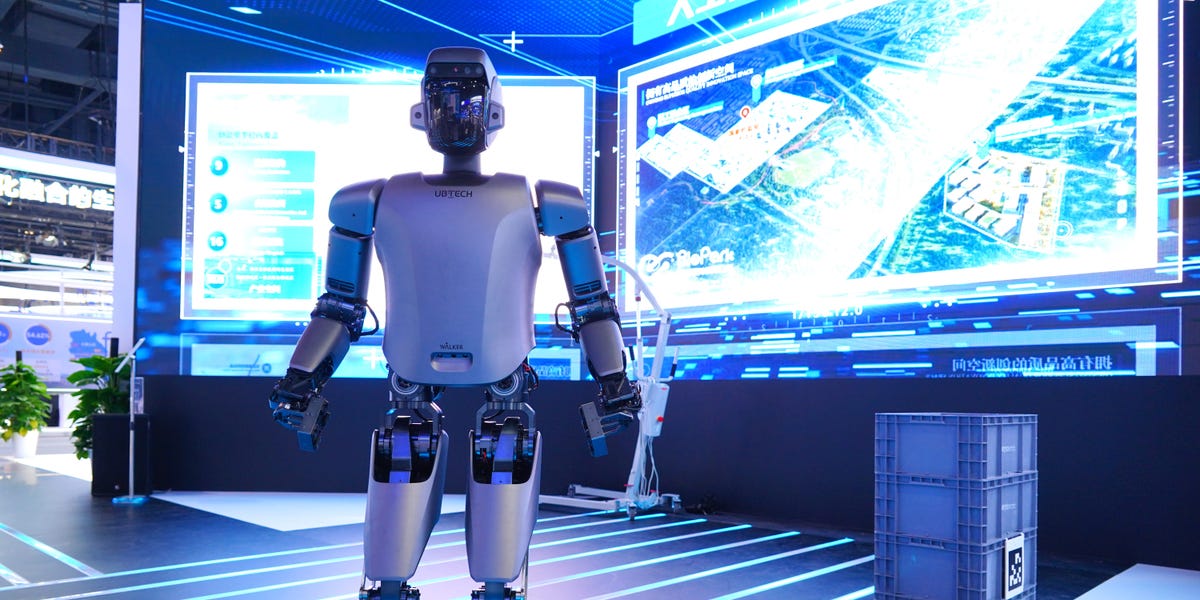
UBTech offers up to $18M for humanoid robotics chief scientist
Chinese humanoid robotics company UBTech has opened a high profile search for a Chief Scientist of Embodied Intelligence, offering a compensation package that can reach 124 million yuan, or about $18 million. The move highlights intensifying global competition for advanced robotics and AI talent, with humanoid systems becoming a focal point.
2026 Humanoid Robot Market Report
160 pages of exclusive insight from global robotics experts – uncover funding trends, technology challenges, leading manufacturers, supply chain shifts, and surveys and forecasts on future humanoid applications.

Featuring insights from
Aaron Saunders, Former CTO of
Boston Dynamics,
now Google DeepMind

2026 Humanoid Robot Market Report
160 pages of exclusive insight from global robotics experts – uncover funding trends, technology challenges, leading manufacturers, supply chain shifts, and surveys and forecasts on future humanoid applications.
According to a company job listing, the role carries a salary range from 15 million to 124 million yuan. The successful candidate will be tasked with advancing UBTech’s humanoid robotics capabilities across manufacturing, services, and consumer oriented applications such as household companionship.
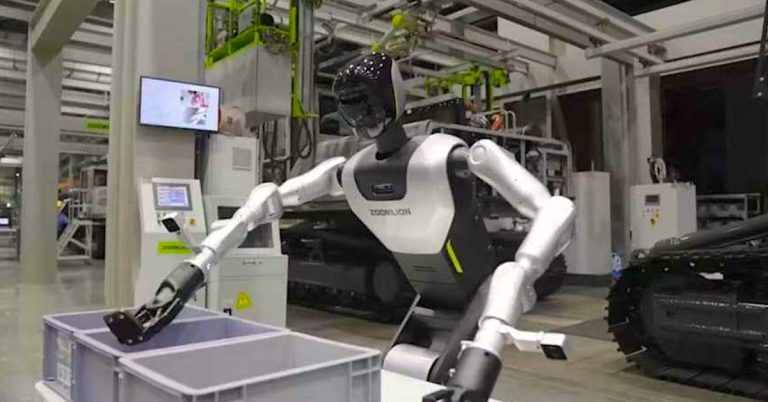
Founded in 2012 and based in Shenzhen, UBTech has emerged as one of China’s most prominent humanoid robot developers. Its flagship platform, the Walker S2, stands approximately 5 feet 9 inches tall and is designed for autonomous operation in industrial environments. The company recently announced a partnership with Airbus to test Walker S2 units on factory production lines, signaling a push toward real world deployment in manufacturing.
The scale of the compensation package reflects a broader shift in China’s robotics sector. While large pay packages have been more commonly associated with Silicon Valley AI firms, Chinese companies are increasingly adopting similar strategies to attract top tier researchers. The offer remains below the highest reported AI compensation levels globally, which have reached as much as $100 million, but marks a notable escalation within robotics.
Market data indicates that Chinese firms are currently leading in humanoid robot deployment, accounting for nearly 90 percent of global shipments last year, according to Omdia. Public demonstrations, including humanoid robot performances during major national events, have also reinforced the country’s focus on advancing embodied AI systems.
Competition is expected to intensify further. Tesla’s Optimus program remains a key reference point for industrial humanoids, with the company targeting scaled production. Industry leaders have acknowledged that Chinese developers represent the most significant competitive pressure in this segment.
UBTech’s recruitment effort underscores a broader trend in humanoid robotics: the convergence of advanced AI research and physical automation is driving demand for specialized expertise. As companies move from prototype demonstrations to commercial deployments, securing leadership in embodied intelligence is becoming a strategic priority.
Source: businessinsider.com