
Ubtech and Unitree Financials Highlight China’s Humanoid Shift
Fresh financial disclosures from Ubtech Robotics and Unitree Robotics provide a detailed look at how two of China’s leading humanoid robot developers are pursuing distinct commercialization strategies as the sector enters a phase of scaled deployment.
2026 Humanoid Robot Market Report
160 pages of exclusive insight from global robotics experts – uncover funding trends, technology challenges, leading manufacturers, supply chain shifts, and surveys and forecasts on future humanoid applications.

Featuring insights from
Aaron Saunders, Former CTO of
Boston Dynamics,
now Google DeepMind

2026 Humanoid Robot Market Report
160 pages of exclusive insight from global robotics experts – uncover funding trends, technology challenges, leading manufacturers, supply chain shifts, and surveys and forecasts on future humanoid applications.
The results, released alongside Ubtech’s 2025 annual earnings report, indicate that full size industrial humanoid robots are beginning to generate meaningful revenue, while smaller developer oriented platforms continue to expand their global footprint.
Ubtech: Industrial Humanoids Become Core Revenue Driver
Ubtech Robotics reported total 2025 revenue of 2.001 billion yuan, up 53.3 percent year on year. Gross profit reached 750 million yuan, a 101.5 percent increase compared with the previous year.
The most significant shift came from the company’s full size embodied intelligent humanoid robots. This segment generated 820 million yuan in revenue, representing a year on year surge of more than twenty times. Unit sales reached 1,079 robots, with a gross margin of 54.6 percent. The category accounted for 41.1 percent of total revenue, making it the company’s largest single business line.
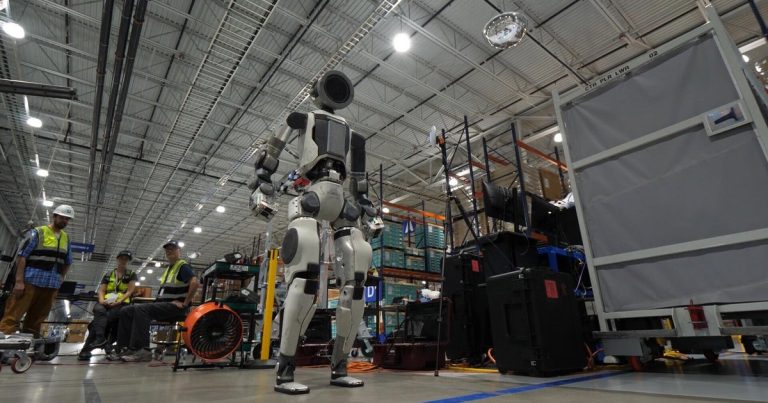
Ubtech stated that it has become the first company globally to deliver more than one thousand industrial humanoid robots. Deployments span automotive manufacturing, smart logistics, 3C electronics, semiconductor fabrication, aerospace manufacturing, and industrial data collection.
In early 2026, Ubtech signed a service agreement with Airbus, marking what the company describes as the first humanoid robot deployment in aviation manufacturing. Partnerships with Siemens, Texas Instruments, Audi FAW, BYD, and Foxconn further position its humanoids in material handling, sorting, and quality inspection workflows.
Embodied Intelligence and R&D Intensity
Ubtech continues to invest heavily in embodied intelligence. In 2025, research and development spending reached 507 million yuan, or 25.4 percent of revenue. Over the past four years, cumulative R&D investment approached 1.9 billion yuan. The company’s R&D team numbers 942 people, nearly half of whom hold master’s or doctoral degrees.
The company has built a technology stack around large embodied intelligence models, including its Thinker embodied large model, a Vision Language Action model known as Thinker VLA, and a world model referred to as Thinker WM. Industrial humanoids have also been upgraded with what the company calls Group Brain Network 2.0 and a Co Agent Industrial Collaboration Intelligent Agent, enabling multi robot coordination and unified scheduling.
Ubtech reports more than 2,900 authorized patents, including over 1,700 invention patents.
Unitree: Motion Focus and Platform Expansion
Unitree Robotics follows a different trajectory. The company concentrates on motion control, body design, and hardware optimization, targeting research institutions, universities, and developers. In the first three quarters of 2025, R&D expenses were approximately 90.2 million yuan, about 7.7 percent of revenue. Annual R&D investment typically ranges from 90 million to 120 million yuan, supported by a team of around 175 engineers.
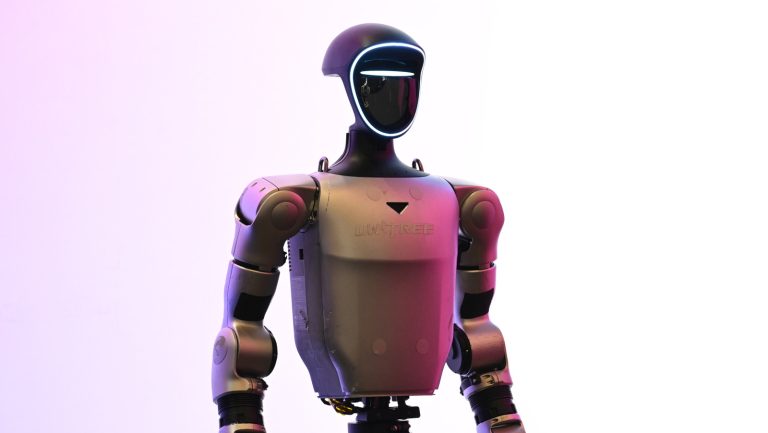
In 2025, Unitree shipped more than 5,500 non full size humanoid robots. Approximately 70 percent were exported to universities and research institutions for algorithm research and teaching. The remainder were used in cultural exhibitions, live events, e commerce demonstrations, and entertainment settings.
While Ubtech emphasizes autonomous operation in industrial production systems, Unitree focuses on flexibility, modularity, and open developer ecosystems. The two approaches reflect differing views on where value creation will occur first in humanoid robotics.
China’s Manufacturing and Cost Advantages
Industry data cited in the report suggests that more than 140 humanoid robot manufacturers are now active in China, with over 330 products released. Total sector financing in 2025 reached 2.65 billion US dollars.
Global shipment estimates vary, with Omdia projecting about 13,000 humanoid units in 2025 and IDC estimating approximately 18,000 units, both indicating triple digit annual growth. Chinese companies are reported to account for the majority of shipments.
Several structural factors underpin this expansion. China’s industrial supply chain covers key components such as reducers, servo motors, sensors, and complete system assembly, with localization rates of core components exceeding 80 percent. Manufacturing clusters enable rapid assembly cycles, with some humanoid systems reportedly moving from component integration to final testing and delivery within hours.
Cost compression is another differentiator. According to the report, domestic joint module prices have fallen from over one thousand yuan to the hundreds of yuan range, and complete machine costs have dropped from the million yuan level to the hundreds of thousands. By comparison, similar humanoid systems in the United States are typically priced around 300,000 US dollars.
From Demonstration to Sustained Operation
The industry narrative is shifting from performance demonstrations to sustained operational capability. Rather than focusing solely on complex motions, buyers are increasingly evaluating whether humanoid robots can complete tasks reliably and repeatedly in defined industrial scenarios.
China has moved to formalize this transition. At the end of 2025, the Ministry of Industry and Information Technology established a Humanoid Robotics and Embodied Intelligence Standardization Technical Committee. In early 2026, the country released its first comprehensive Humanoid Robotics and Embodied Intelligence Standard System, covering the full lifecycle and supply chain.
As R&D requirements escalate, sector observers expect consolidation around companies capable of funding large scale development and managing complex deployment programs. Ubtech and Unitree illustrate two complementary models: one centered on industrial integration and scenario execution, the other on technology diffusion through accessible platforms.
Together, their financial results suggest that humanoid robotics in China is moving beyond pilot projects and into structured commercialization, with industrial scale deployment emerging as a measurable benchmark for progress.
Source: news.futunn.com