Beijing humanoid robot half marathon enters full test phase
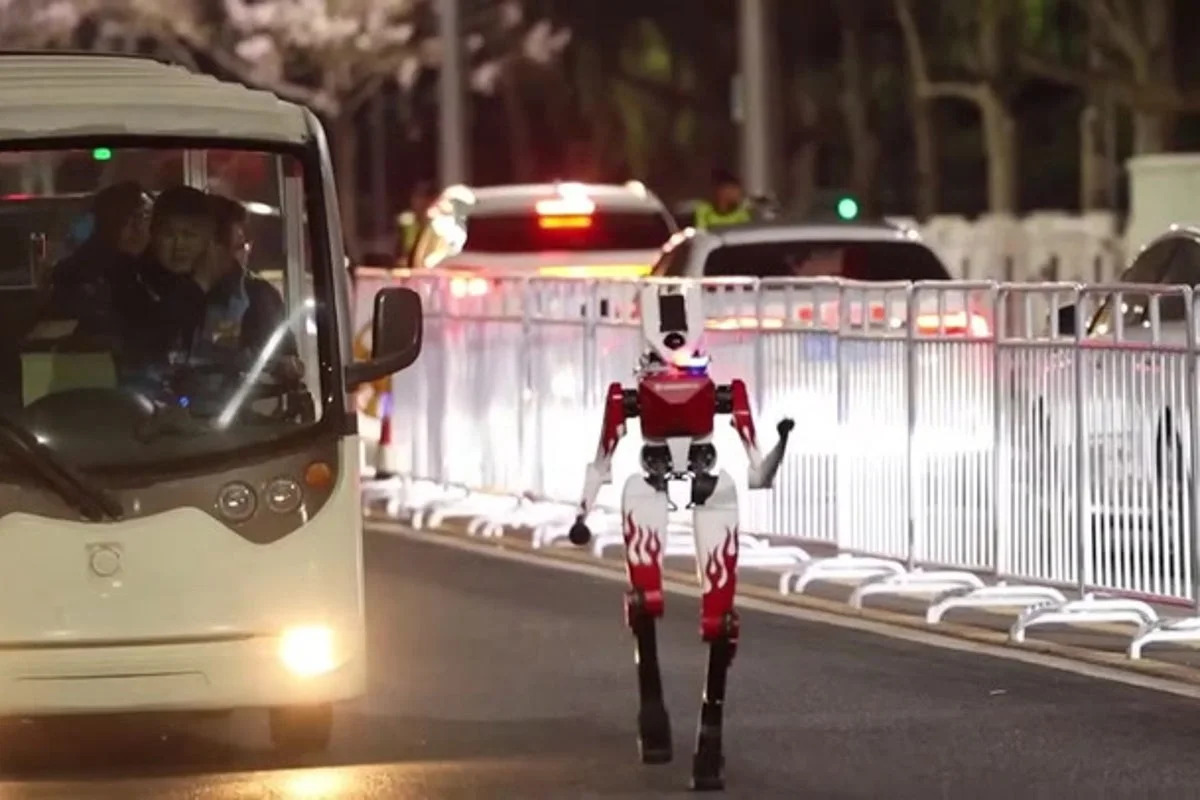
The Beijing humanoid robot half marathon moved into its final test phase on 11 and 12 April, when organizers staged a full-scale rehearsal in Beijing’s E-Town Economic and Technological Development Area ahead of the official race on 19 April. The trial matters because it treated the event as a regulated endurance and operations test, covering route navigation, race timing, equipment coordination and emergency response for humanoid robots over a 21.0975-kilometer course.
What the Beijing humanoid robot half marathon tested
According to The Independent, the rehearsal was designed to simulate every major part of the upcoming race rather than simply showcase robots in short demonstrations. Organizers ran the test under official timing, track rules and support systems, which puts attention on consistency, supervision and logistics as much as on locomotion.
The venue adds practical complexity. The route passes through both urban thoroughfares and ecological park terrain, giving teams a mix of operating conditions within a single event. For humanoid developers, that setup is closer to a field trial than a staged exhibition, because navigation and stability have to hold up across different sections of the course.
Participation rises and autonomy becomes a larger share
The source report says the number of participating teams has increased nearly fivefold from last year, exceeding 100 overall. That jump suggests stronger institutional and developer interest in public humanoid competitions, even though the report does not list the individual teams or the specific robots expected to run.
Autonomous navigation teams account for nearly 40 per cent of the total, according to the report. That detail is notable because it shifts part of the focus from remote supervision toward onboard decision-making and route handling, two capabilities that remain central questions for humanoids expected to operate outside controlled indoor spaces.
Why the 21.0975-kilometer course matters
A half marathon is unusually demanding for bipedal machines. Sustaining motion over 21.0975 kilometers tests much more than top speed, including gait efficiency, thermal management, recovery from minor disturbances and the ability to stay within event rules for an extended period. Even without published robot specifications, the format itself makes endurance a measurable part of the demonstration.
The rehearsal also indicates that organizers are treating support operations as a core variable. Equipment coordination and emergency response were included in the simulation, showing that a public humanoid race depends on more than software and actuators. It also requires procedures for intervention, timing integrity and safe handling if a robot cannot continue.
What to watch on race day
As The Independent reports, the official event is scheduled for 19 April in Beijing’s E-Town district. The rehearsal suggests that organizers now have a tested framework for managing the course, but the race itself will show how well humanoid systems handle prolonged outdoor operation under formal conditions rather than short, repeatable demo loops.
The result will be useful even if the field produces uneven performance. For practitioners following the Beijing humanoid robot half marathon, the main value is not spectacle but a clearer view of where current platforms are strongest, such as steady locomotion, and where gaps remain, especially in autonomy and long-duration reliability. Those are the operating questions that matter when judging whether humanoid systems are moving from staged demos toward repeatable real-world performance.
Source: aol.com